Deconstructing the Frontier: A Structural Thesis on the Garment as Border
The concept of the border is inherently paradoxical. It is both a definitive line and a contested space; a barrier and a membrane; a declaration of sovereignty and an invitation for transgression. For Zoey Fashion Laboratory's SS26 standalone study, "Global Frontier," we dissect this paradox not through geopolitical metaphor, but through the rigorous language of avant-garde couture. This collection posits the human form as the ultimate frontier, and the garment as the architectural negotiation of its limits. Utilizing a trinity of materials—embroidered net, buratto, and silk—we engineer a series of futuristic silhouettes that interrogate protection and exposure, structure and collapse, the corporeal and the ethereal.
Material Dialectics: Net, Buratto, and Silk as Structural Agents
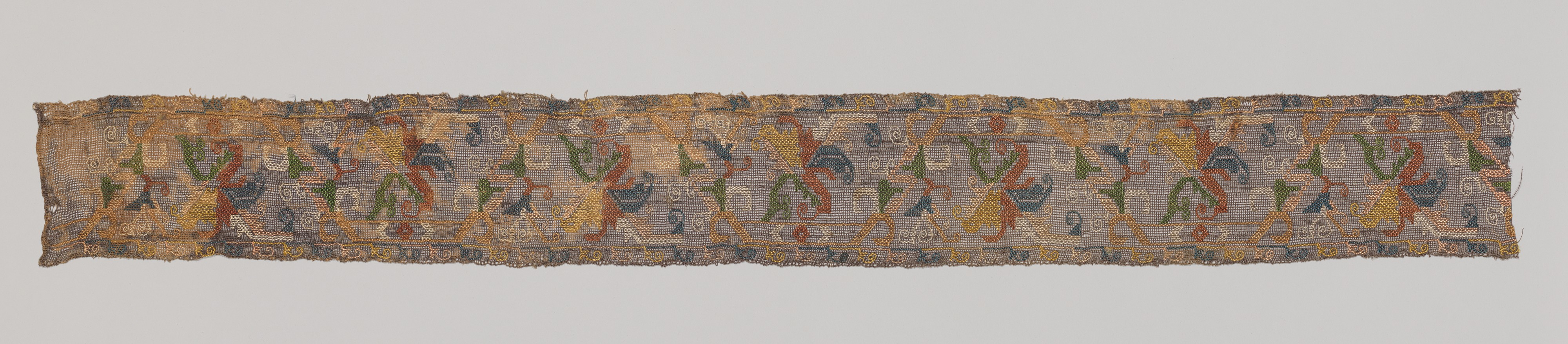
The material selection is the foundational argument of this study. Each fabric is chosen not for decorative value, but for its inherent architectural and conceptual properties. Embroidered net operates as a plotted matrix, a Cartesian grid imposed upon the body. Its embroidery is not floral or figurative, but algorithmic—a series of nodal reinforcements and tension lines that map pressure points and potential pathways of movement, akin to a digital wireframe made tactile.
Buratto, the ancient Italian open-work embroidery, is re-contextualized as a structural, rather than ornamental, technique. Here, it functions as a self-supporting exoskeleton. The hand-stitched bridges and voids within the buratto create load-bearing apertures, allowing sections of the garment to cantilever away from the body without underlying scaffolding. This transforms negative space into a constructive element, rendering the border between body and environment as a series of calculated openings.
Against these rigid lattices, silk is deployed in its most fluid, bias-cut state. It represents the organic, the visceral, the internal systems that the architectural exoskeleton seeks to contain or interact with. In "Global Frontier," silk often appears as encapsulated streams or sudden, liquid eruptions through the buratto framework, creating a dynamic tension between containment and spillage, between the defined border and its inevitable, beautiful breach.
Silhouette as Territory: The Futuristic Architectural Forms of SS26
The silhouettes emerging from this material dialectic are uncompromisingly futuristic, rejecting nostalgia for a vision of sartorial cybernetics. We move beyond the deconstructed to the re-assembled.
Key forms include the Torque Helix Dress, where buratto panels spiral around the torso in a double-helix formation, connected by tensile threads of embroidered net. The silhouette defies traditional front/back orientation, creating a garment that is perpetually in motion, its border rotating with the wearer's gait. Another, the Parabolic Cage Coat, features a buratto structure that extends nearly a meter from the shoulders in a graceful, parabolic curve, a protective energy field rendered in thread. The interior is lined with channels of fluid silk that respond to body heat, changing opacity—a biotechnological response within a rigid framework.
Perhaps the most radical is the Node Point Suit. This ensemble reduces the garment to a series of interconnected buratto nodes at key anatomical junctions (shoulder, elbow, hip, knee), linked by precisely tensioned nets of embroidered silk cord. The vast majority of the body remains exposed, yet is fundamentally re-mapped by this minimalist exoskeletal web. The border here is not a perimeter, but a point-to-point network, defining the body not by its surface but by its kinetic potential.
Structural Innovation: The Mechanics of Liminality
The technical innovation of "Global Frontier" lies in its engineering of liminality—the state of being on a threshold. Borders in this collection are rarely static edges; they are active interfaces.
We have developed a Differential Tensioning System within many pieces. By varying the stitch density and thread composition in the buratto and net, different panels react uniquely to movement: some sections contract and cling, while others expand and bellows. This creates a garment that breathes and transforms with the wearer, its silhouette and border conditions in constant, subtle flux. Furthermore, the integration of thermochromic silk microcapsules within the liquid silk elements introduces an element of environmental dialogue. The internal "visceral" silk responds to external temperature shifts, visually bleeding color or revealing hidden circuitry patterns when moving from climate-controlled interiors to the external urban landscape, making the border between self and environment a responsive, data-visualizing membrane.
Conclusion: The Body as Negotiated Territory
Zoey Fashion Laboratory's "Global Frontier" for SS26 is not a collection of clothing in any traditional sense. It is a series of wearable architectural propositions. By deconstructing the concept of the border through the rigorous application of embroidered net, structural buratto, and fluid silk, we advance a vision of futuristic silhouette that is both intellectually severe and sensually compelling. The body is neither concealed nor revealed, but rather negotiated. These garments are treaties written in thread, establishing dynamic, responsive borders that celebrate the profound tension between the individual as a sovereign entity and the individual as an integral, interacting part of a wider ecosystem. This is avant-garde not as spectacle, but as serious inquiry—a laboratory report from the frontier of the human form itself.