Deconstructing the Perimeter: Edging as Avant-Garde Praxis
The concept of Edging, within the lexicon of Zoey Fashion Laboratory, transcends mere border or finish. It is re-contextualized as a dynamic architectural principle—a study in liminality, tension, and the interrogation of form. Sourced from the conceptual Global Frontier, a non-geographic territory of hybrid cultural codes and post-digital craft, this SS26 investigation posits edging not as a conclusion but as a genesis. It is the precise moment where structure negotiates with void, where the body’s dialogue with space is most acutely articulated. Our medium for this rigorous exploration is one of history’s most intricate embellishments: bobbin lace. By submitting this ancient, time-intensive textile to radical structural and scalar manipulation, we forge a couture language that is simultaneously archival and proto-futuristic.
Material Alchemy: The Structural Re-engineering of Bobbin Lace
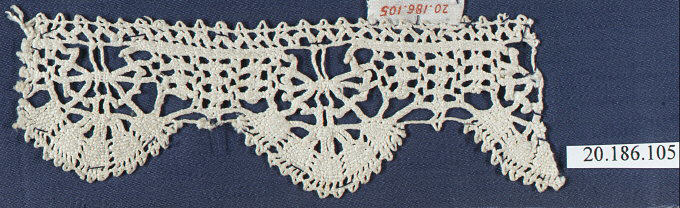
Traditional bobbin lace operates on a binary of positive and negative, thread and air. Zoey Fashion Laboratory seizes this inherent architectural quality. For SS26, we engage in a process of material alchemy. Lace is not applied; it is engineered. Through proprietary techniques involving thermo-bonding polymers and micro-filament reinforcements, the delicate lace matrix is transformed into a self-supporting exoskeletal material. We manipulate scale to extreme proportions, creating macro-scale lace motifs that become load-bearing armatures for garments. Conversely, we compact and fuse lace layers into dense, corseted panels with the rigidity of carbon fiber yet the filigree of a spider’s web. This re-engineered lace loses its association with the ephemeral and gains a new identity as a technical building block for futuristic silhouette construction.
Silhouette Genesis: The Volumetric Void and the Hard-Edge Silhouette
The SS26 silhouette lexicon, derived from this study, bifurcates into two dominant, opposing yet complementary families: The Volumetric Void and The Hard-Edge Silhouette.
The Volumetric Void explores edging as a creator of contained space. Garments are built from lace exoskeletons that define vast, geometric negative spaces around the body—a spherical cage extending from the shoulders, a hyperbolic paraboloid skirt structure. The body exists as a central core, glimpsed through the intricate, hardened lace framework. The edge here is the entire perimeter of these architectural volumes, challenging traditional proportions and redefining the wearer’s spatial footprint.
In stark contrast, the Hard-Edge Silhouette employs edging as a precise, graphic incision. Here, re-engineered lace is used to create razor-sharp, planar constructions that appear to be laser-cut from a single sheet. Seamlines are exaggerated and turned into dominant graphic features, tracing stark geometric pathways across the body. Asymmetrical hemlines terminate with mathematical abruptness, while collars extend into angular wings or high, sculptural cowls that frame the face with severe elegance. The edge is a line of demarcation, clean, decisive, and inherently futuristic.
Contextual Integrity: The Standalone Study as Couture Manifesto
This analysis exists as a standalone avant-garde study, a deliberate move to divorce the collection from transient narrative or thematic spectacle. The focus is purely on the evolution of form, material innovation, and the intellectual rigor of the edging premise. Each piece is a solved equation in garment architecture, a prototype for a future mode of dressing. The context is the laboratory itself—the atelier as a site of pure research. This approach ensures that the work is evaluated not on seasonal trends but on its contribution to the permanent avant-garde discourse, positioning Zoey Fashion Laboratory at the vanguard of structural innovation.
SS26 and Beyond: The Frontier as Continuous State
The SS26 "Edging" study concludes by positing that the frontier is not a place to be reached, but a continuous state of becoming. By harnessing the historic, artisanal logic of bobbin lace and propelling it into a future of structural possibility, we demonstrate that innovation lies in radical re-contextualization. The resulting silhouettes—whether volumetrically expansive or sharply reductive—are blueprints for a new corporeal architecture. They challenge passive adornment, demanding engagement and redefining elegance as a function of intelligent construction and conceptual bravery. This is not fashion as apparel, but fashion as applied philosophy, where every edge is a question, and every silhouette is the beginning of an answer.