Deconstructing the Divine: From Repoussé Relief to Radical Silhouette
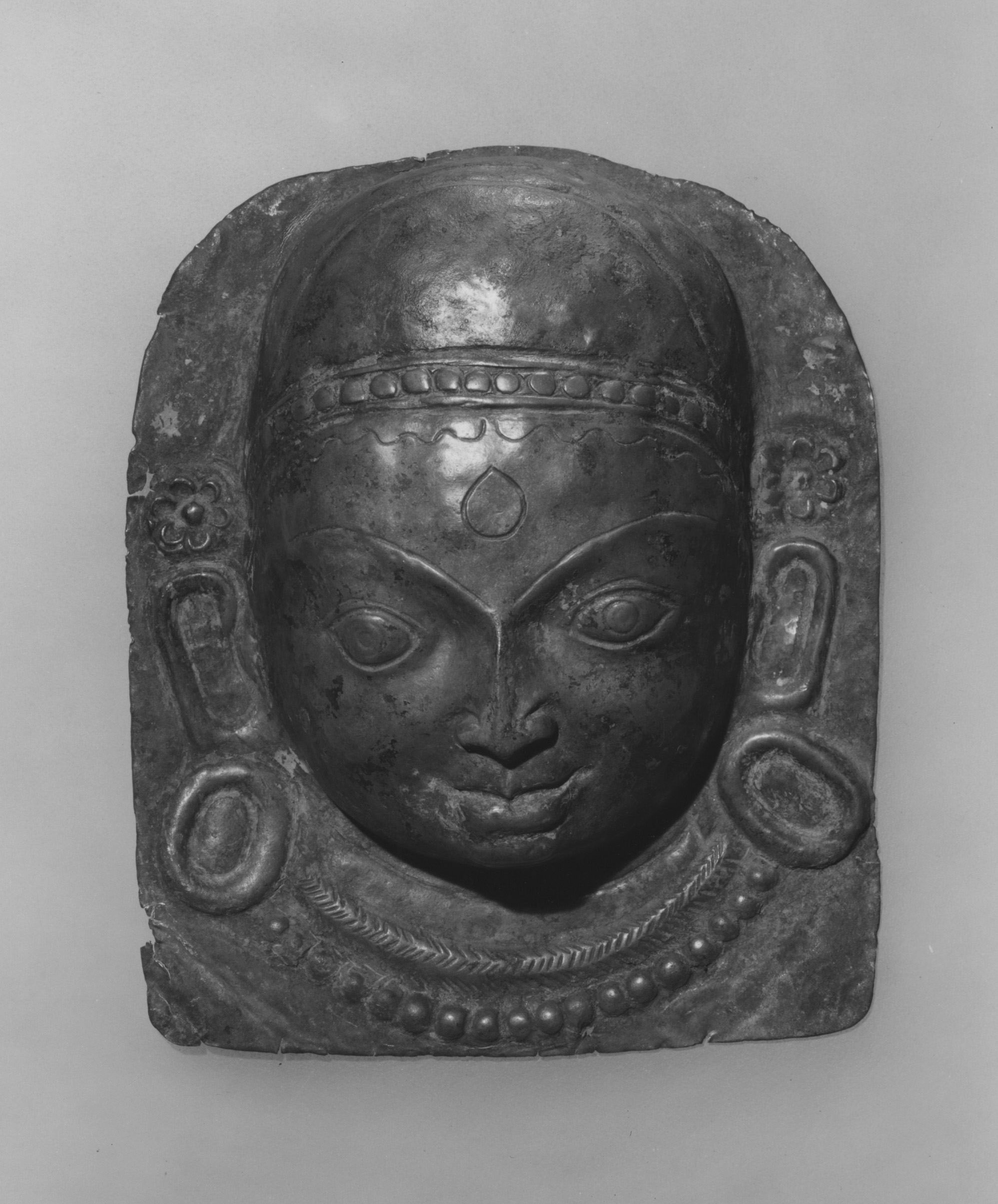
The Relief Plaque of a Hindu Deity from Nepal’s Kathmandu Valley is not merely an artifact; it is a primordial blueprint for structural consciousness. As a standalone study for Zoey Fashion Laboratory’s SS26, this object—crafted in repoussé copper alloy—transcends its ritualistic origins to propose a radical grammar of form. Its essence lies in the negotiation between dimension and limitation: a face meant for procession, simultaneously confined by the plaque’s perimeter yet dynamically projecting into the viewer’s space through masterful hammering. This fundamental tension between the two-dimensional plane and the three-dimensional assertion becomes our core design principle. SS26, therefore, is not an exercise in literal translation, but a surgical extraction of conceptual DNA: the plaque’s frontality, its tectonic layering, its sacred geometry, and its inherent kinetic potential when imagined in motion. We move from static reverence to dynamic, corporeal architecture.
Structural Innovation: The Tectonics of Repoussé
The repoussé technique is a dialogue of force and resistance. For SS26, this translates into a methodology of constructed subtraction and amplified articulation. We abandon traditional pattern-cutting in favor of a "metal-smithing" approach to textiles and composites. Imagine garments built from the inside out, where internal armatures—inspired by the unseen hammer marks on the reverse of the plaque—create unexpected protrusions and hollows. Corsetry becomes exoskeleton, formed from laser-sintered polymer grids laminated with liquid copper-infused latex, mimicking the alloy's sheen. Bodices are engineered through heat-molding, where thermoplastic polymers are vacuum-formed over negative-space molds, creating rigid, shell-like embossments that echo the deity’s raised features. This is wearable topography, where the body’s landscape is re-contoured not by draping, but by strategic structural imposition.
Futuristic Silhouette: The Geometry of Procession
The plaque’s intended use in procession is critical. It implies a silhouette in perpetual dialogue with space and movement. Our SS26 silhouettes are conceived as mobile, architectural forms. Key shapes include the Frontal Monolith—a severe, columnar gown that appears flat from the front, yet reveals profound depth through radical side-projection, created by annular hoops or cantilevered bustles. Conversely, the Radial Aura silhouette deconstructs the deity’s halo or *prabhamandala* into asymmetric, projecting fins or rotational panels made from crystallized organza, anchored to a central spine harness. These panels articulate with the wearer’s gait, creating a dynamic, protective energy field. We also introduce the Kinetic Carapace: a segmented torso piece of interlocking copper-alloy-inspired plates over a tensioned mesh base, allowing for an unprecedented range of motion while maintaining a rigid, iconic facade. The silhouette is no longer a passive outline; it is an active spatial event.
Material Alchemy & Surface Ontology
The copper alloy’s materiality—its inherent warmth, its variable patina, its ceremonial weight—undergoes a futuristic transmutation. We pioneer “smart-patina” finishes using thermo-chromic and electro-luminescent coatings on technical foils, allowing garments to shift hue in response to body temperature or ambient sound, mirroring the living presence of the divine in the artifact. Traditional embroidery is replaced by ultrasonic welding and micro-embossing on layered technical textiles, creating raised, circuit-like patterns that recall repoussé detail. For fluid elements, we develop a non-Newtonian fluid gel encapsulated within silicone channels; it remains rigid when moving swiftly (honoring the plaque’s static majesty) but liquefies and flows during subtle motions. This embodies the dual state of being both icon and living entity.
The Avant-Garde Proposition: Corporeal Architecture
Zoey Fashion Laboratory’s SS26 manifesto, derived from this Nepalese relief, ultimately proposes a new corporeal architecture. It is a collection that questions the very interface between body and garment. The deity’s face, once a focal point for communal veneration, is abstracted into a principle of focused radiance. This may manifest as garments with integrated optical systems—prismatic lenses or light-guiding fibers—that channel and redirect light around the wearer, creating a personal procession of illumination. The work is severe, intellectual, and profoundly emotive. It does not seek to represent the deity, but to emulate its ontological condition: to be a concentrated, structured energy, simultaneously anchored and transcendent, forever poised between the second and third dimension. This is couture as a rigorous, futuristic archaeology, unearthing not relics, but radical possibilities for the human form to command space, narrative, and awe.