Deconstructing the Pictorial: From Domestic Artifact to Avant-Garde Architecture
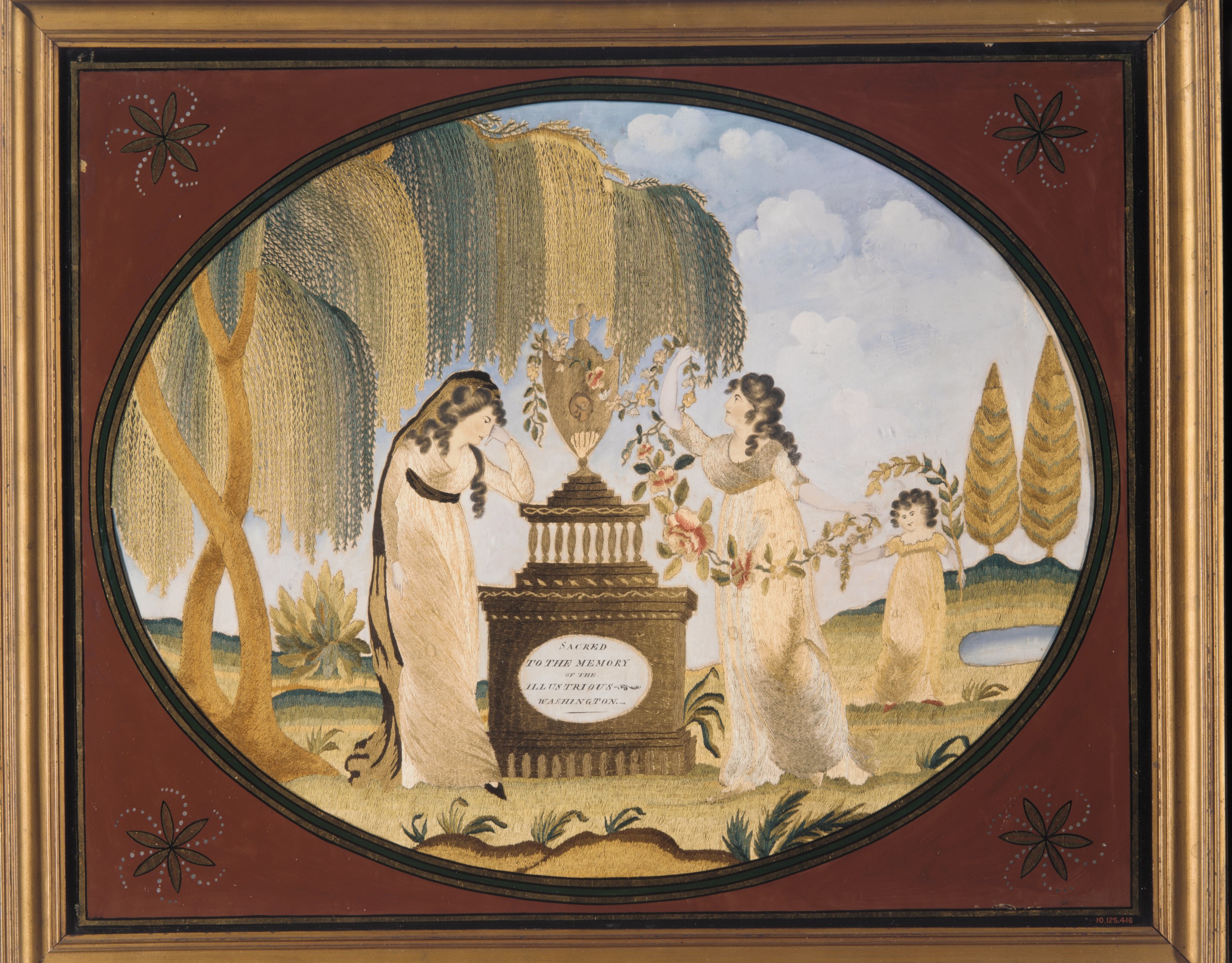
The traditional American embroidered picture, a testament to domestic craft and pictorial representation, presents a profound paradox for the avant-garde couturier. At Zoey Fashion Laboratory, we do not see a quaint relic, but a dense semantic field ripe for radical extrapolation. Its very constitution—silk thread, paint, ink, and paper on silk—provides a foundational manifesto for SS26: a polemic on the hierarchy of materials, the illusion of dimension, and the suture between the decorative and the structural. This analysis proposes a complete transubstantiation of this artifact, moving its narrative from the framed wall to the dynamic, architectural form of the human body, forging a collection that interrogates the future of surface, silhouette, and substance.
Material Alchemy: Substrates as Skeletons
The embroidered picture’s layered ontology is our primary blueprint. We deconstruct its strata not as decorative layers but as load-bearing architectural principles. The foundational silk becomes more than a ground; it is reinterpreted as a engineered second-skin, laser-sintered into porous, breathable membranes that map thermoregulation data onto the body. The "paper" layer is transfigured from a hidden support into a starring structural element. Utilizing molded technical paper-pulp composites and starched non-woven textiles, we create exo-skeletal corsetry and cantilevered bustles that are simultaneously rigid and feather-light. These forms are not concealed but celebrated as the armature upon which the "embroidery" hangs, reversing the traditional relationship between structure and embellishment. The paint and ink migrate from pictorial representation to functional coding, becoming UV-reactive dyes that chart movement or biometric inks that shift hue in response to physiological stimuli, transforming the garment into a living, data-responsive canvas.
The Silhouette of the Stitch: From Line to Volume
Embroidery is, at its core, the manipulation of line to create illusion. SS26 severs this line from its representational duty and reconstitutes it in three-dimensional space. The silk thread escapes the picture plane entirely. We employ robotic filament extrusion and guided aerial threading to create volumetric, self-supporting stitch-work that constructs form from empty space. Imagine a bodice comprised not of fabric, but of a dense, cloud-like matrix of threads, a haute couture aerogel that defines silhouette through density and transparency gradients. Stitching becomes a spatial drawing tool, creating negative-space cages, parametric lattice sleeves, and trailing threadscapes that extend the body’s kinetic energy into the environment. The figurative elements of the original picture—perhaps a pastoral scene or a floral motif—are not printed but algorithmically decomposed. Their contours are translated into laser-cut apertures in structured silk dugeons, or into the paths for articulated, robotic embroidery arms that "draw" evolving patterns on a garment’s base layer in real-time, rendering the silhouette perpetually unfinished and in flux.
Structural Innovation: The Canvas as Chassis
The "standalone" context of the artwork is critical; it implies a self-contained universe of meaning. For SS26, each garment is a standalone architectural study, a wearable ecosystem that integrates its own logic. The flat, framed picture is exploded into a multi-planar, multi-sensory experience. We engineer garments with kinetic folding systems inspired by origami and aerospace deployable structures. A severe, minimalist coat, through a series of precise gestures, unfolds into a dramatic, embroidered-wide cape, revealing the hidden pictorial narrative within its seams. The concept of "painting" on silk is mechanized. Micro-fluidic channels are embedded within laminated silk layers, allowing pigmented solutions—our "paint"—to flow and reconfigure abstract patterns across the garment's surface, controlled by the wearer’s movement or touch, making the textile a literal liquid canvas.
SS26: The Neo-Pictorial Corpus
The final collection, “The Embroidered Field”, will manifest as a series of walking, breathing deconstructed pictures. Silhouettes will oscillate between severe, graphic lines—echoing the frame—and explosive, multi-dimensional textural landscapes where thread, hardened silk, and composite materials coalesce. Looks will feature asymmetric, geometric cut-outs backed by translucent, embroidered tulle, creating a modern trompe l'oeil effect. Elsewhere, garments will appear as if partially unraveled, with threads becoming functional structural tethers or dramatic trailing elements. The color palette will derive from faded inks and aged silks—sepia, oxidized silver, and muted vermilion—juxtaposed with the stark, pure white of technical substrates and the metallic sheen of intelligent threads.
This analysis concludes that the American embroidered picture is not a source of motif, but a theoretical engine for avant-garde practice. By dissecting its material stack, liberating its linear elements into space, and re-engineering its support as chassis, Zoey Fashion Laboratory for SS26 will propose a new model for couture: garments as speculative architectures, where the history of craft is not referenced, but computationally recompiled into a formidable, and profoundly beautiful, future syntax. The body becomes the new gallery, and fashion, the most urgent form of contemporary picture-making.