The Typographic Silhouette: Deconstructing Page 8, Recto for SS26
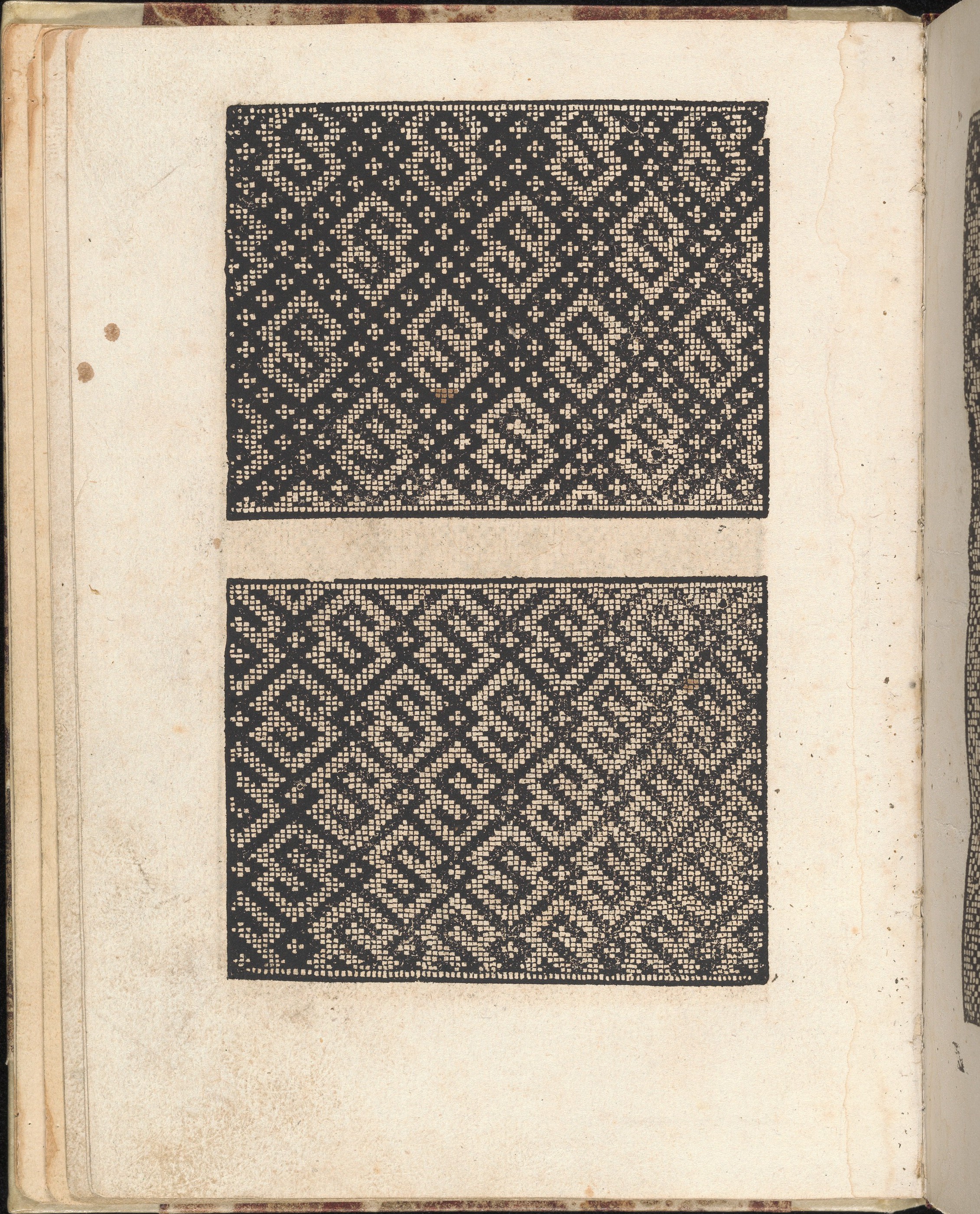
The avant-garde imperative is to dismantle the familiar and reconstruct it as a provocation. In our analysis of the Ein new getruckt model Büchli...Page 8, recto, sourced from the Global Frontier, we encounter a foundational paradox: a static, two-dimensional woodcut from an early printed model book, yet pregnant with the kinetic potential of futuristic couture. For SS26, Zoey Fashion Laboratory posits that this page is not a historical artifact but a structural blueprint for a new taxonomy of garment architecture. The woodcut’s stark, incised lines and its rigid, block-like forms—reminiscent of a typographic matrix—offer a radical departure from fluid draping. Instead, they propose a silhouette forged from negative space, angular plane shifts, and the deliberate misalignment of surface and volume.
From Incised Line to Garment Seam: The Logic of the Woodcut
The woodcut’s defining characteristic is the hard edge. Each line is a boundary, a cut, a declaration of form. Translating this to SS26, we propose a collection where seams are not concealed but celebrated as architectural joints. The recto page, with its repeating, almost modular patterns, suggests a logic of discrete, interlocking panels. Imagine a jacket constructed from laser-cut, rigid panels of recycled carbon fiber bonded to a micro-pleated nylon substrate. The seams are exposed, perhaps even raised, mimicking the woodcut’s embossed impression. The silhouette becomes a three-dimensional grid, where the body is a frame upon which these panels are suspended, not draped.
This approach fundamentally alters the human form. The shoulder line, traditionally a gentle slope, becomes a sharp, horizontal bracket. The waist is defined not by a cinch but by a visual break—a gap between two floating panels that creates a negative-space corset. The woodcut’s recto side, often the first impression, speaks to a front-loaded narrative. For SS26, this translates to garments that are deliberately asymmetrical in their front-to-back relationship. The recto (front) is a solid, graphic statement—a monolithic block of color and line. The verso (back) is a deconstructed, lattice-like structure, revealing the internal scaffolding. This duality echoes the page’s own physicality: the inked surface versus the paper’s raw reverse.
Futuristic Silhouettes: The “Typographic Body”
The futuristic silhouette for SS26 is not about streamlining; it is about disruption. We introduce the “Typographic Body”—a silhouette where the garment’s outline is dictated by the logic of the printed page, not the anatomy beneath. Key forms include:
The Block-Form Torso: Inspired by the woodcut’s rectangular blocks of text and image, the torso is encased in a rigid, box-like cage. Constructed from a hybrid of 3D-printed bio-resin and laser-sintered mesh, this piece creates a geometric armor. The shoulders are squared to a 90-degree angle, and the waist is a sharp, inward cut. The effect is a digital-age stele, a wearable monument to typographic order.
The Negative-Space Skirt: The recto page’s white spaces—the gaps between the woodcut’s lines—are as important as the black ink. For SS26, we design a skirt that is 90% void. A rigid, circular frame at the hips supports a series of floating, horizontal planes made from translucent, UV-reactive film. These planes are connected by thin, carbon-fiber struts, creating a visual rhythm of solid and empty. The silhouette is a fragmented cylinder, shifting with each step, revealing the legs in a staccato, sequential view.
The Typographic Sleeve: Borrowing from the woodcut’s repeated, almost stamp-like patterns, the sleeve becomes a modular appendage. It is constructed from a series of interlocking, hinged plates that can be reconfigured. In its closed state, the arm is encased in a rigid, segmented tube. In its open state, the plates fan out like a mechanical wing, revealing a secondary, skin-tight sleeve of conductive fabric. This duality—static versus kinetic—mirrors the page’s inherent tension between the printed and the potential.
Structural Innovation: The Woodcut as a Construction System
The woodcut is not just a visual reference; it is a construction methodology. The process of carving away material to leave a raised surface is analogous to subtractive garment construction. For SS26, we reject additive draping in favor of subtractive tailoring. Each garment begins as a solid block of material—a composite of recycled polyester felt and biodegradable thermoplastic. Using CNC milling and water-jet cutting, we carve away the negative space, leaving only the “inked” surfaces—the structural seams and panels. This process yields garments with zero waste and an unprecedented precision of form.
Consider a coat derived from a single, rectangular sheet. The woodcut’s recto page defines a front panel with deep, incised pockets and a collar that is actually a folded, raised edge. The verso is a mirrored, but hollowed, back panel. The two are joined not by stitching but by magnetic, interlocking tabs that allow for rapid assembly and disassembly. This system redefines the garment as a temporary structure, a wearable architecture that can be reconfigured for different contexts. The silhouette is brutalist yet ethereal—a massive, block-like form that is paradoxically lightweight and airy due to the carved-out voids.
Materiality and the Global Frontier
The Global Frontier context demands materials that are post-industrial yet primal. The woodcut’s tactile, hand-carved quality is echoed in our use of recycled paper yarn woven into a stiff, canvas-like textile. This material is then coated in a liquid bio-resin that hardens into a wood-like finish, complete with the grain and texture of the original block. Accents are crafted from laser-sintered ceramic, mimicking the woodcut’s ink-black, matte surface. The palette is monochromatic: ink black, paper white, and a single, oxidized copper accent—a nod to the metal type used in early printing.
Conclusion: The Recto as a Manifesto
Page 8, recto, is not a historical document; it is a manifesto for SS26. It demands that we see the garment not as a second skin but as a printed, structural statement. The futuristic silhouette is one of rigid, typographic precision—a body encased in a grid of negative space and hard edges. The structural innovation lies in subtractive construction, modular joinery, and the celebration of the seam as an architectural line. Zoey Fashion Laboratory presents not a collection of clothes, but a system of wearable pages, each one a recto waiting to be turned. The future of couture is printed, carved, and deconstructed. It is, finally, a block of pure form, suspended in the void of possibility.