Deconstructing the Genetic Code of Fabric: An Analysis of Italian Floral Velvet Lengths for Zoey Fashion Lab
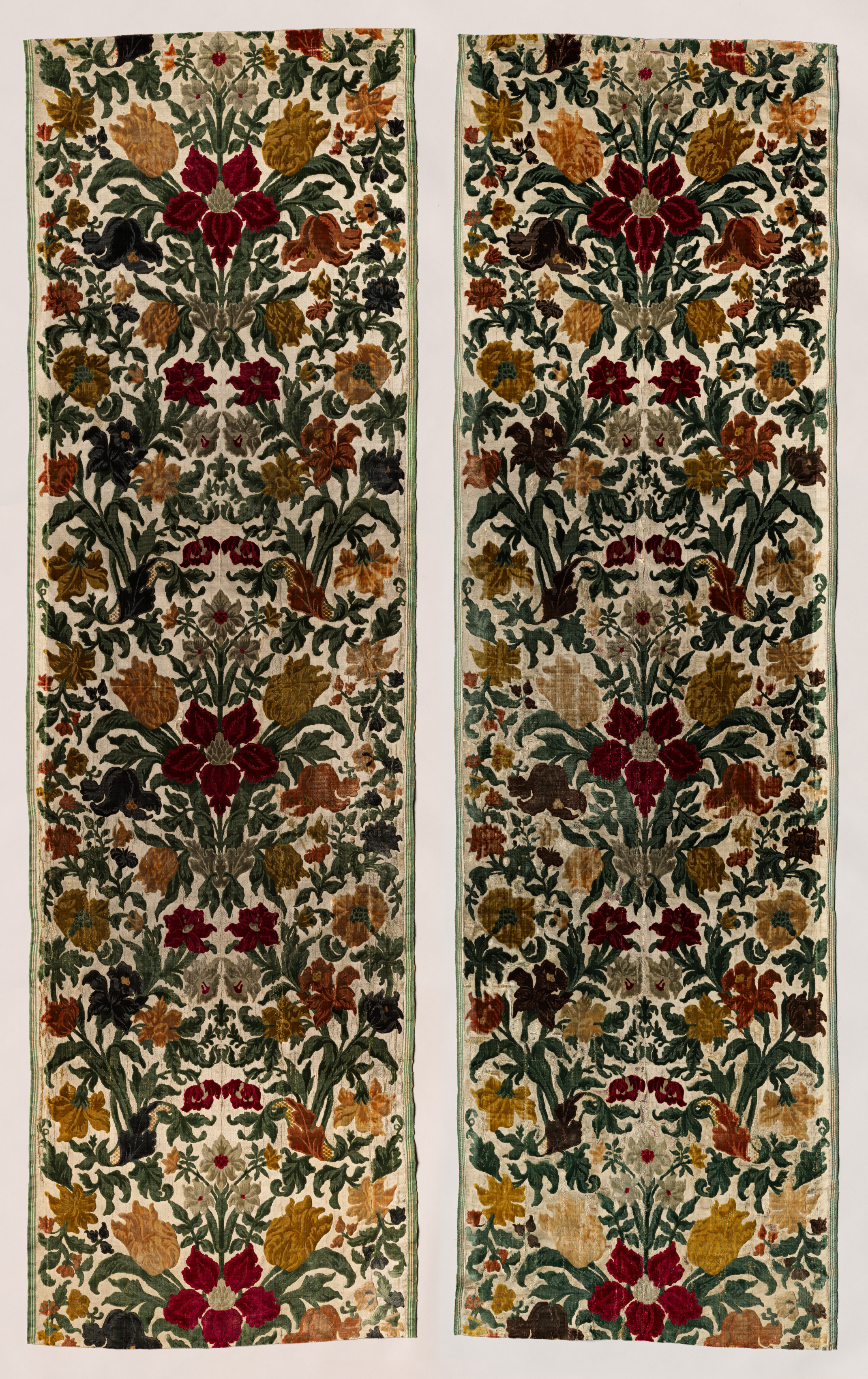
At Zoey Fashion Lab, we do not merely observe fabric; we interrogate its very essence. Our role as Chief Fabric Deconstructionist is to dissect the molecular, historical, and aesthetic DNA of textiles, transforming them into avant-garde statements. The subject of this analysis—Italian Floral Velvet Lengths, originating from the historic textile mills of Genoa—presents a unique paradox. It is a material steeped in Renaissance opulence, yet its technical construction offers a radical blueprint for the future of fashion. This report will deconstruct the velvet's technical composition (cut, uncut, voided, and silk) and its stylistic "New DNA Strand," proposing how Zoey Fashion Lab can re-engineer this heritage fabric into a disruptive, avant-garde narrative.
Technical Deconstruction: The Velvet Trinity
Cut Velvet (Velluto Cesellato)
The foundation of Genoese floral velvet is cut velvet, achieved by slicing the loops of a pile weave to create a dense, lustrous surface. In the context of your "New DNA Strand," this cut pile represents the expressed gene—the dominant, visible trait. For Zoey Fashion Lab, we can subvert this traditional luxury. Instead of standard floral motifs, we propose using a laser-cutting technique to selectively burn away the cut pile, creating a scarred, dystopian landscape on the fabric. This transforms the velvet from a symbol of comfort into a textural map of decay, a deliberate "mutation" in the genetic code.
Uncut Velvet (Velluto Riccio)
The uncut velvet, or loop pile, is the recessive gene in this fabric. It offers a matte, textured contrast to the glossy cut pile. In Genoese florals, uncut loops often outline the petals, providing depth. For an avant-garde application, we can isolate these loops. Imagine a garment where the uncut pile is left intact as a structural grid, while the cut pile is removed. This creates a negative-space floral, a ghost of the original pattern. The loops can also be chemically stiffened, turning them into microscopic hooks or barbs, creating a fabric that actively "grips" the air or other materials. This is not a fabric; it is a textile organism with a tactile memory.
Voided Velvet (Velluto Vuoto)
The most radical technical element for your "New DNA Strand" is voided velvet. This is the deliberate absence of pile, where the ground weave (the warp and weft) is left exposed. In historical Genoese velvet, this created sharp, defined floral outlines. In our deconstruction, the void becomes the primary subject. We can engineer the voids to form a secondary, hidden pattern that only reveals itself under tension or movement. For instance, a dress might appear solid, but when the wearer walks, the voids open, exposing the skin or a contrasting lining. This is the fabric's silent code, a message encrypted in the weave.
The Silk Substrate: The Original Genetic Material
The use of silk as the base for these velvets is non-negotiable. Silk is the original DNA strand—the protein-based filament that has been the carrier of luxury for millennia. Its molecular structure (fibroin) allows for unparalleled light refraction and dye absorption. For Zoey Fashion Lab, we must treat this silk not as a passive backdrop, but as an active agent. We can chemically alter the silk's sericin (the gum that coats the fiber) to create a differential dyeing effect. This would result in a fabric where the silk ground and the velvet pile absorb color at different rates, creating a holographic, chameleon-like effect. The floral motif would shift from pink to violet as the light changes, mimicking the iridescence of a beetle's carapace—a biological echo of the "New DNA Strand."
Style Application: Avant-Garde as Genetic Mutation
The avant-garde is not a style; it is a rebellion against the familiar. To apply these Genoese velvets to Zoey Fashion Lab's aesthetic, we must treat the fabric as a living system subject to mutation, deletion, and splicing.
Gene Splicing: Hybrid Construction
We propose a technique called "Velvet Chimerism." Take lengths of cut, uncut, and voided velvet from different Genoese bolts (different floral patterns, different pile heights) and fuse them using a heat-bonded adhesive. The result is a patchwork not of color, but of tactile frequency. A single garment would have zones of plush softness, rough loops, and bare silk. This is not a floral field; it is a topographical map of a synthetic ecosystem. The wearer becomes the host for this fabric organism.
Gene Deletion: The Anti-Floral
Traditional Genoese velvet is a celebration of nature—roses, pomegranates, acanthus leaves. For the avant-garde, we must perform a genetic deletion. Use a high-powered water jet to selectively cut away all the floral shapes, leaving only the negative space. The resulting fabric is a lace of absence, a skeleton of the original design. This can be layered over a metallic mesh or a liquid latex base, creating a dialogue between the organic (silk velvet) and the synthetic (industrial materials). The floral is no longer depicted; it is haunted.
Gene Amplification: Scale and Distortion
Another strategy is to amplify a single gene of the velvet's DNA. Take the "voided" technique and scale it to a macro level. Instead of a delicate floral outline, create voids that are 10cm wide, forming abstract, cellular shapes. The remaining pile becomes a series of floating islands. This is the velvet as a virus—it has infected the fabric, and the voids are the lesions. The garment would be worn with a transparent underlayer, so the body becomes part of the pattern. This challenges the very definition of "fabric" as a covering, making it a transparent membrane.
Conclusion: The New DNA Strand as a Living Archive
The lengths of Italian floral velvet from Genoa are not artifacts to be preserved; they are raw genetic material for a new species of fashion. By deconstructing its technical elements—cut, uncut, voided, and silk—Zoey Fashion Lab can re-code this heritage fabric into an avant-garde language. The "New DNA Strand" is not a literal design, but a methodology: treat every thread as a nucleotide, every pile loop as a codon, and every void as a mutation. The result is not a floral dress; it is a textile organism that breathes, decays, and evolves on the body. This is the future of fabric—not as a finished product, but as a living system that we, as deconstructionists, are only beginning to sequence.