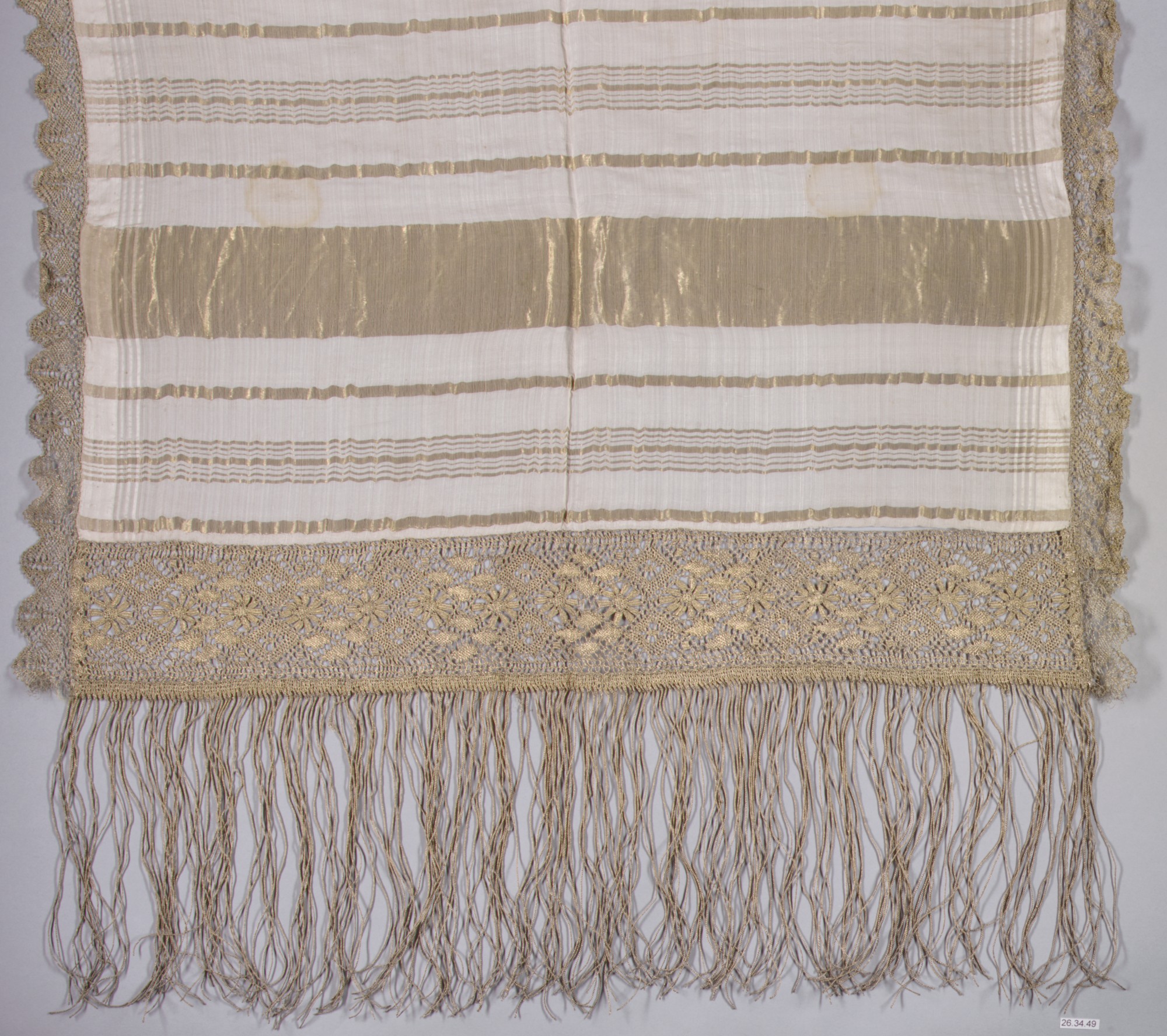
The Deconstructed Horizon: A Silk Scarf as Structural Avant-Garde Architecture for SS26
In the lexicon of conventional fashion, the scarf is an accessory—a decorative afterthought, a whisper of warmth or a splash of color. For Zoey Fashion Laboratory’s SS26 collection, this perception is not merely challenged but surgically dismantled. We elevate the silk scarf from a two-dimensional textile to a three-dimensional architectural proposition, a standalone study in deconstructive aesthetics and futuristic silhouette engineering. This is not about draping; it is about building. The scarf becomes a modular system, a kinetic sculpture that redefines the relationship between fabric and form on the global frontier of avant-garde couture.
Material Transfiguration: Silk Beyond Softness
Silk, historically revered for its fluidity and sensuous drape, is here subjected to a radical material transfiguration. The SS26 scarf does not rely on its natural suppleness alone. Instead, we employ a proprietary structural laminating technique that selectively stiffens the fabric along predetermined axes. This process creates a bi-stable textile: zones of liquid, organic movement coexist with rigid, planar surfaces. The scarf’s edges are heat-sealed and micro-stitched with a carbon-fiber-infused thread, allowing it to hold a memory of shape—a biomimetic quality reminiscent of insect wings or folded origami. The result is a fabric that can be folded, snapped, and locked into place, transforming the scarf into a load-bearing element of the garment architecture.
This is not a scarf that falls; it is a scarf that stands. Its internal structure, invisible to the eye, is a lattice of micro-stays, each one thinner than a human hair yet strong enough to cantilever the silk outward. The material becomes a paradox: weightless in hand but monumental in silhouette. The global frontier of textile innovation meets the poetic fragility of silk, creating a substance that is both ancient and otherworldly.
Futuristic Silhouette: The Scarf as a Wearable Prosthesis
The SS26 scarf abandons the neck. Its primary locus is the shoulder girdle and the upper thoracic spine, where it functions as an exoskeletal extension of the human form. Imagine a single, 2.5-meter length of silk that bifurcates into two asymmetrical wings. One wing rises vertically, a sharp, angular spire that mimics the silhouette of a cybernetic antenna. The other wing unfurls horizontally, a sweeping, aerodynamic plane that arcs around the wearer’s back, creating a negative space between the body and the fabric—a void that suggests both protection and exposure.
The silhouette is not static. The scarf is engineered with magnetic closure points and adjustable tension cables embedded within its hem. The wearer can reconfigure the scarf in real-time: a single gesture transforms a shoulder-sweeping cape into a high-neck collar that frames the face like a futuristic halo, or into a floating back panel that trails the ground like a digital afterimage. This is a garment that responds to the body’s movement, a kinetic sculpture that redefines personal space. The future of silhouette is not about fixed volumes; it is about variable geometry. The scarf becomes a tool for spatial negotiation, a wearable architecture that adapts to the environment, the mood, and the moment.
Structural Innovation: The Lattice of Deconstruction
Deconstruction in avant-garde couture is often mistaken for chaos. At Zoey Fashion Laboratory, we see it as a controlled dismantling of form. The SS26 scarf is a study in this precision. The silk is laser-cut into a series of interlocking geometric panels—hexagons, trapezoids, and irregular polygons—that are then reassembled with exposed seams and raw edges. This is not a repair; it is a celebration of the construction process. The seams are not hidden; they are the feature. Each stitch is a line of tension, a structural chord that holds the garment together.
The innovation lies in the modular connectivity. The scarf is composed of three detachable segments: a central yoke that anchors to the shoulders, and two lateral panels that can be worn separately or combined. Each segment is equipped with a magnetic locking system and a tension-adjustable slider, allowing the wearer to create asymmetrical volumes, overlapping layers, or even separate the scarf into two independent pieces—one for the front, one for the back. This is not a single garment; it is a system of garment architecture. The deconstruction is not destructive; it is generative. It produces an infinite vocabulary of silhouettes from a single textile source.
Contextualizing the Standalone Study: The Global Frontier
This scarf is not designed for a specific climate or occasion; it is a response to the global frontier of fashion—a world where geography is fluid, and the body is a nomadic entity. The SS26 scarf is a universal translator of form. In Tokyo, it might be worn as a rigid, architectural collar that echoes the city’s neon-lit verticality. In Marrakech, its silk panels could be draped to catch the desert wind, becoming a flowing, ethereal shroud. In New York, it could be snapped into a sharp, angular shoulder piece that cuts through the corporate grid.
The materiality of silk, sourced from a pioneering bio-fabrication facility in the global frontier, is treated with a nanotechnology coating that repels water and resists UV degradation, making it viable for a wide range of environments. This is not a precious artifact; it is a functional sculpture. The scarf’s color palette is a study in digital minimalism: a single, continuous gradient from a deep, iridescent black to a metallic silver, mimicking the surface of a liquid mirror. This chromatic shift is achieved through a structural color process, not dyes, ensuring that the scarf’s hue changes with the angle of light and the viewer’s perspective.
Conclusion: The Scarf as a Manifesto
The SS26 scarf from Zoey Fashion Laboratory is more than a garment; it is a manifesto for the future of wearables. It challenges the hierarchy of fashion, where accessories are secondary to clothing. Here, the scarf is the primary structural element, the generator of silhouette, the locus of innovation. It is a study in deconstructive elegance, where exposed seams and modular components are not flaws but features of a new aesthetic language. It is a futuristic silhouette that is not fixed but fluid, a system of possibilities rather than a single form.
In an era where fashion is increasingly digital and virtual, this scarf asserts the power of the physical—the tactile, the structural, the transformative. It is a call to arms for designers to rethink the most humble of textiles, to see the scarf not as an afterthought but as a frontier of avant-garde exploration. The global frontier is not a place; it is a mindset. And this scarf is the passport. Wear it. Fold it. Rebuild it. The future of couture is in your hands.