Introduction: The Loom of Time and the Edge of Tomorrow
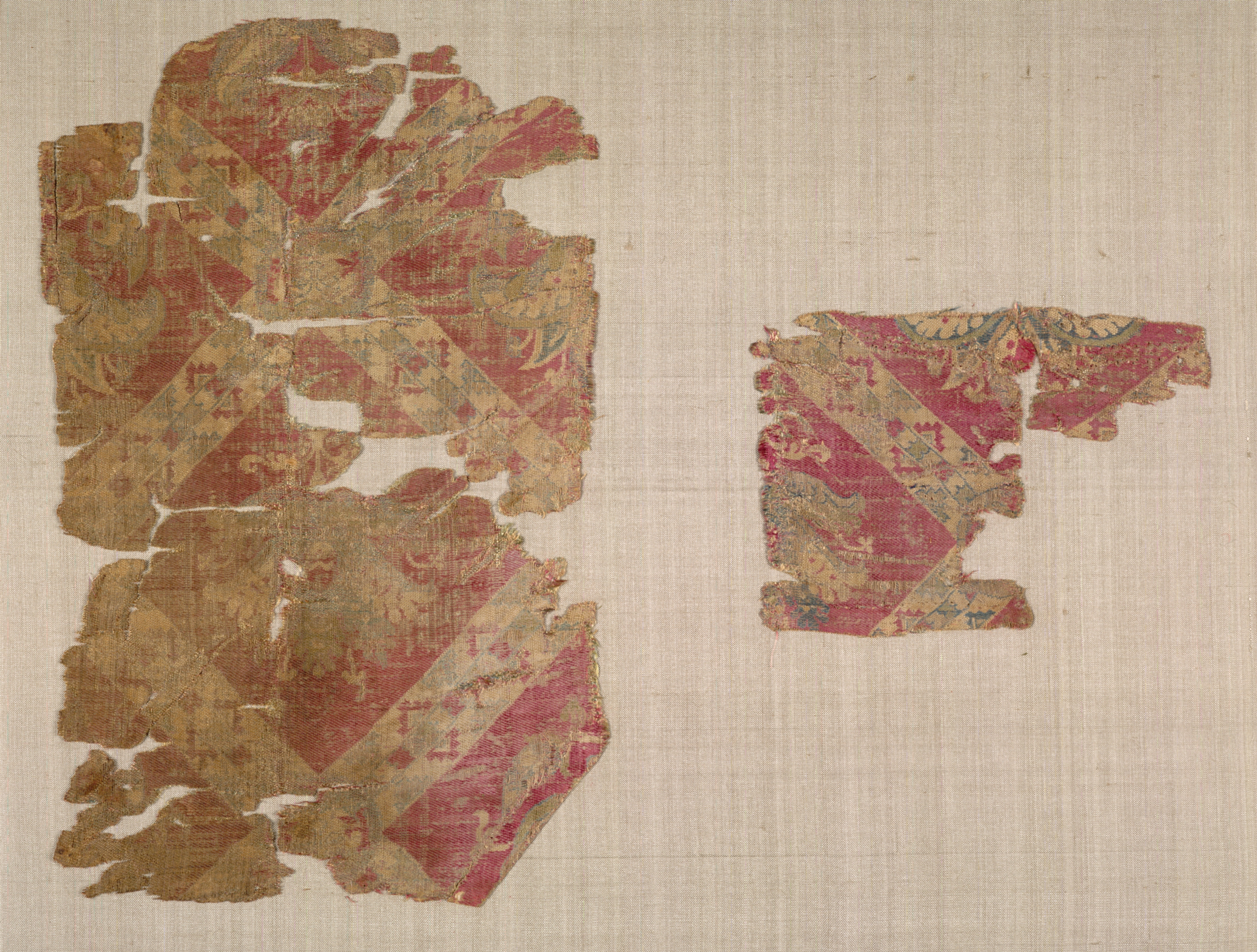
At Zoey Fashion Lab, our mission is to bridge the profound artistry of historical textiles with the disruptive energy of avant-garde design. The subject of this analysis—a fragment of silk woven with palmette blossoms, originating from Egypt or Syria during the Umayyad (661–750) or Abbasid (750–1258) periods—represents a masterpiece of early Islamic textile technology. Its technical structure, complementary weft-faced twill with inner warps (samit), offers not only a glimpse into the sophisticated looms of the medieval Near East but also a new DNA strand for contemporary fashion innovation. This fragment is not merely a relic; it is a blueprint for subverting traditional form, texture, and narrative in the service of an avant-garde aesthetic.
The palmette blossom, a stylized floral motif derived from ancient Near Eastern and Hellenistic art, becomes here a symbol of cyclical renewal. For Zoey Fashion Lab, this fragment is a catalyst for deconstructing historical luxury into something raw, fragmented, and futuristic. This analysis will explore its technical, symbolic, and aesthetic dimensions, and propose how its DNA can be re-engineered into a collection that challenges the boundaries of garment construction and cultural memory.
Technical Analysis: The Samit Structure as a Deconstructive Tool
Understanding Samit Weave
The fragment employs complementary weft-faced twill with inner warps, a structure known as samit. This technique, prevalent in Byzantine and early Islamic weaving, uses two sets of wefts (one for the ground, one for the pattern) that interlace with a warp system to create a dense, reversible fabric. The inner warps—often hidden—provide structural integrity while allowing the surface wefts to create intricate, multi-colored designs. In this fragment, the palmette blossoms emerge through a subtle interplay of silk threads, their organic curves rendered in a geometric, almost pixelated precision.
For Zoey Fashion Lab, this technical DNA is a revelation. The samit structure inherently contains layers of tension and release: the inner warps are the unseen skeleton, while the weft faces the world. In an avant-garde context, we can invert this hierarchy. By selectively cutting or fraying the weft threads, we expose the inner warps, creating a deconstructed surface that reveals the fabric’s hidden architecture. This technique—which we term “archaeological stripping”—mirrors the fragment’s own state of partial survival, turning decay into design.
Material Properties and Manipulation
The silk itself is a protein fiber with a natural luster and drape. In its original state, the samit weave would have produced a fabric both supple and durable, ideal for courtly garments or liturgical textiles. However, the fragment’s age has introduced fragility, fading, and uneven wear. Rather than restoring these qualities, Zoey Fashion Lab embraces them as aesthetic assets. We propose a process of controlled degradation: using laser etching or enzymatic treatments to selectively weaken the weft threads, creating patterns of transparency and opacity that echo the palmette’s organic growth.
This approach transforms the silk from a precious material into a living membrane, one that can be manipulated into asymmetrical folds, layered panels, or even fused with synthetic polymers for structural contrast. The result is a fabric that retains the historical DNA of samit while acquiring a new, post-industrial texture.
Symbolic and Cultural Resonance: The Palmette as Avant-Garde Motif
From Sacred Ornament to Subversive Pattern
The palmette blossom, with its radiating petals and central node, is a motif of fertility, eternity, and divine order in Islamic art. In the Umayyad and Abbasid periods, it adorned everything from mosque mosaics to royal silks, symbolizing the paradise garden. For Zoey Fashion Lab, this motif is ripe for subversion. We reimagine the palmette not as a symmetrical emblem of perfection but as a fractured, asymmetrical glyph—a symbol of cultural fragmentation and hybrid identity.
In our avant-garde collection, the palmette is deconstructed into its constituent parts: the central node becomes a geometric eye, the petals become angular shards. This is achieved through digital printing on silk that has been pre-treated with a resist agent, allowing the pattern to appear only in areas where the fabric is left intact. The result is a ghostly palmette, half-visible, half-erased, as if emerging from the sands of time. This technique speaks to the fragment’s own history of loss and survival, making the garment a wearable archaeology.
Cultural Layering and Identity
The fragment’s dual origin—Egypt or Syria, Umayyad or Abbasid—reflects a period of immense cultural exchange. The palmette itself is a hybrid, blending Persian, Roman, and Central Asian influences. Zoey Fashion Lab leverages this multicultural DNA to challenge monolithic narratives of fashion history. Our designs incorporate elements from other historical textile traditions—such as Japanese shibori or Andean ikat—into the samit structure, creating a palimpsest of techniques that mirrors the fragment’s own layered past.
This approach aligns with our avant-garde ethos: fashion as a site of critical dialogue, not mere ornament. Each garment in this collection would be a statement on the fluidity of cultural identity, using the palmette as a recurring motif that mutates across pieces—sometimes bold and graphic, other times subtle and eroded.
Avant-Garde Application: The New DNA Strand Collection
Garment Construction and Silhouette
The samit fragment’s dense, twill structure naturally lends itself to sculptural forms. For Zoey Fashion Lab, we propose a series of garments that are deconstructed and reassembled like archaeological finds. A dress might feature a bodice woven in samit with palmette motifs, but with sleeves that are deliberately unfinished, their raw edges left to fray. The skirt could be composed of multiple panels of silk, each treated with different levels of degradation, creating a gradient of decay from pristine to tattered.
Silhouettes would be asymmetrical and oversized, with exaggerated shoulders or trailing trains that evoke the fragment’s original grandeur. Inner seams might be exposed, revealing the inner warps as a design feature—a nod to the fabric’s hidden structure. We also explore modular design, where individual palmette motifs are cut out and reattached as detachable brooches or panels, allowing the wearer to reconfigure the garment’s narrative.
Color Palette and Finish
The original fragment likely featured vibrant hues—crimson, indigo, gold—derived from natural dyes. Over centuries, these have faded to muted ochres, dusty blues, and pale greens. Zoey Fashion Lab’s color palette for this collection is inspired by this patina: we use low-impact dyes that mimic the weathered tones of aged silk, with occasional bursts of saturated color in areas that simulate recent restoration. The finish is matte and slightly napped, achieved through mechanical brushing, to replicate the soft, worn surface of the fragment.
Integration with Technology
To push the avant-garde dimension, we incorporate smart textiles that respond to light or temperature. For instance, the palmette motifs could be printed with thermochromic ink that changes color when exposed to body heat, making the garment interactive and ephemeral. This aligns with the fragment’s own transformation over time, turning the garment into a living artifact that evolves with the wearer.
Conclusion: Weaving a Future from Fragments
The silk fragment with palmette blossoms from the Umayyad or Abbasid period is far more than a historical curiosity. For Zoey Fashion Lab, it is a new DNA strand—a genetic code that can be recombined, mutated, and expressed in forms that challenge the very definition of fashion. By embracing its technical complexity, symbolic depth, and material fragility, we create an avant-garde collection that honors the past while propelling it into an uncertain, thrilling future. This is not restoration; it is reincarnation through deconstruction. The loom of time continues to weave, and at Zoey Fashion Lab, we are the ones pulling the threads.