Deconstructing the Codex: A Structural Manifesto for SS26
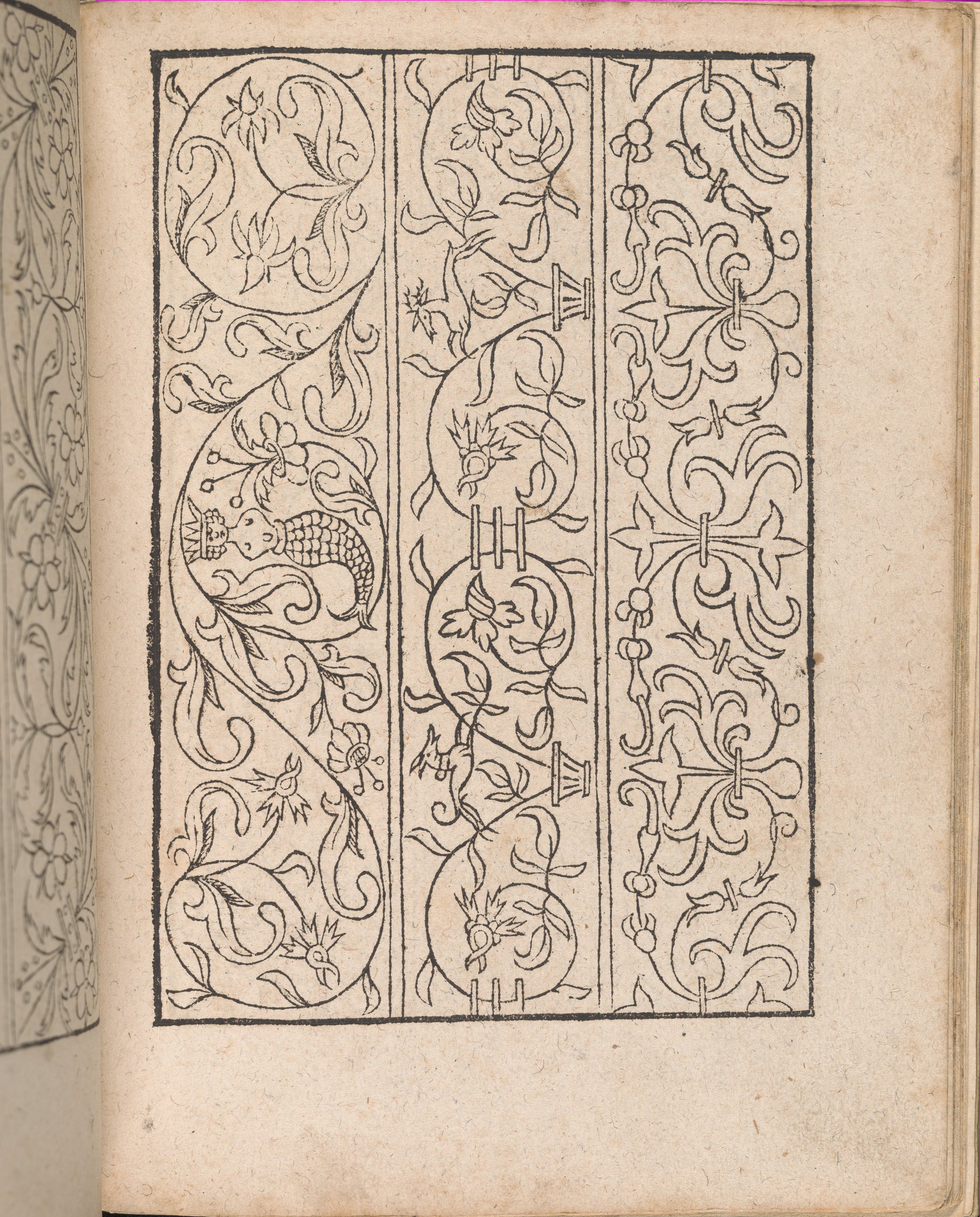
The discovery of the New Modelbüch allen Nägerin u. Sydenstickern, specifically the folio 20r, presents not merely a historical artifact but a radical proto-algorithm for contemporary form. This 16th-century woodcut, a pattern book for tailors and embroiderers, operates on a logic of geometric segmentation and modular assembly that prefigures digital design thinking. For Zoey Fashion Laboratory’s SS26 collection, this folio is not a source of ornament but a foundational operating system. Our analysis moves beyond appropriation; we engage in a critical dialogue with its structural DNA, extracting principles of partition, articulation, and void to architect a wardrobe for the post-physical self. The "Global Frontier" origin is key—it is a psychic territory, a non-place where historical technique collides with speculative biology to form a new sartorial syntax.
Folio 20r: The Archetype of Articulated Armature
Page 20r depicts a garment—likely a doublet or jerkin—exploded into its constituent panels. This is not a flat pattern but a topological map. The woodcut’s thick, assertive lines do not describe drape; they mandate junction. For SS26, we interpret this as the principle of Exoskeletal Articulation. The body is not a form to be covered, but a chassis to be extended. Silhouettes will be built from interlocking rigid shells, fabricated from thermoformed biopolymers and laser-sintered composites, connected via precision hinges or tensile cordage reminiscent of the woodcut’s schematic stitches. These articulations create deliberate points of flexion and expansion, allowing the garment to reconfigure in motion. The silhouette is thus variable, oscillating between a contained, geometric form at rest and a dynamic, expanded architecture in action—a direct translation of the folio’s potential energy from page to corporeal reality.
The Negative Space as Positive Form: A Philosophy of Void
Critically, the spaces between the lines in the woodcut hold equal weight. The stark black-and-white contrast creates a figure-ground ambiguity. SS26 embraces this as the core tenet of Volumetric Displacement. Garments will be engineered to define space as much as occupy it. This manifests in several key innovations: cantilevered bustles that extend horizontally from the lumbar region, creating a suspended void beneath; thoracic cages constructed from open hexagonal frameworks that expose the skin beneath; and sleeves that are not tubes but spiraling wireforms that trace the arm's kinematics while being predominantly air. The body becomes a partial occupant of its own silhouette, challenging the very definition of "wearable." Material choices are paramount here—transparent, electrochromic films and rigid mesh will be deployed to blur the boundary between structure and skin, solid and void.
From Wood Grain to Data Grain: Material Transmutation
The "Material: Woodcut" specification is a directive. We do not replicate wood but its process-logic: the grain’s directional resistance, the cut’s decisive cleavage, the impression’s transfer of information. SS26 fabrics will be engineered with embedded grain. Think of heat-welded seams that are not hidden but raised and tactile, like a woodcut's ridge; jacquard weaves whose patterns are not floral but diagrammatic, mimicking the folio’s technical layouts; and laminated textiles with deliberate delamination, creating controlled, fractal edges that echo the organic yet precise break of a wood grain. Furthermore, the "print" will be literalized through 3D printing directly onto the body-form in atelier, building up garments layer by additive layer, with each pass visible as a topographic line. This is couture as deposition, a direct material analogy to the woodblock’s impression.
SS26: The Global Frontier as Cognitive Territory
The assigned "Origin: Global Frontier" dissolves geographic and temporal specificity, placing the work in a conceptual continuum. For Zoey Fashion Laboratory, SS26 is an expedition into this frontier. The collection, titled MODELBÜCH 20r: PROTOCOLS FOR A SOFT MACHINE, will present a series of looks that are neither wholly clothing nor wholly sculpture. They are wearable protocols. Key pieces include the Articulated Carapace Dress, with a spine of interlocking, sound-emitting ceramic plates; the Ventilated Blazer, whose lapels are hyperbolic paraboloids in carbon fiber, framing the face with geometric negative space; and the Impressions Gown, a gown seemingly composed of ghostly, overlapping tracings of itself, achieved through layered silicone imprints on tulle.
This is avant-garde not as shock, but as rigorous re-calibration. We are not designing for a future world, but for a future body-consciousness—one that understands itself as an articulated structure moving through augmented spaces. The New Modelbüch provided a codex for assembling fabric to flesh. Zoey Fashion Laboratory’s SS26 provides a manifesto for assembling identity, space, and movement into a singular, formidable, and profoundly considered architectural proposition. The frontier is not out there; it is the very interface between the historical line and the future silhouette.