The Poetics of Dissolution: Li Bai’s Line as Structural Blueprint for SS26
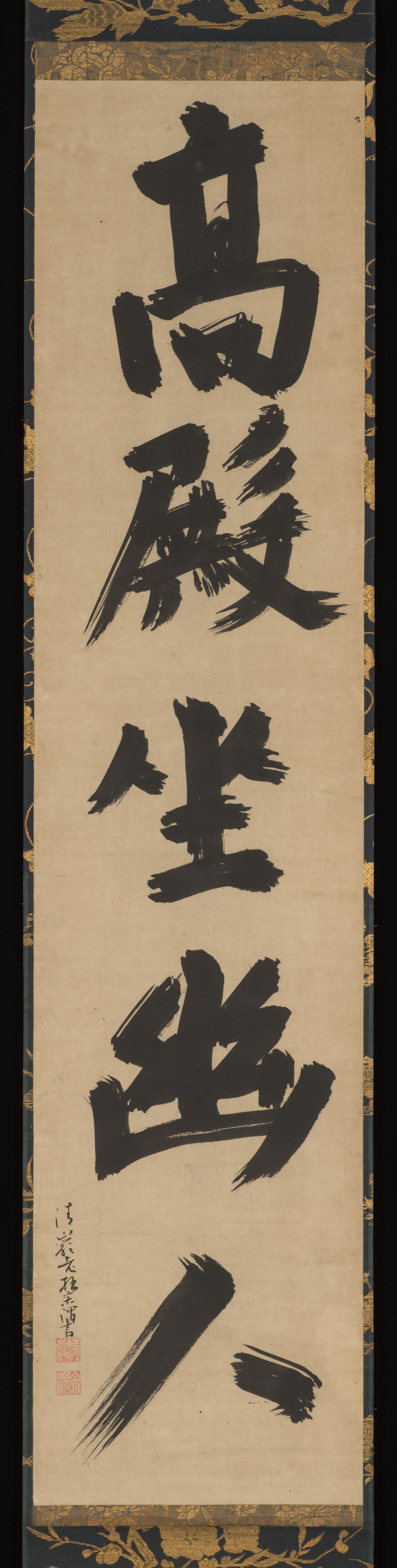
In the rarefied atmosphere of Zoey Fashion Laboratory, where the garment is reimagined as a living sculpture, the SS26 collection draws its primal energy from a single line by the Tang dynasty poet Li Bai: “The water flows, but the moon remains.” This fragment, inscribed on a Japanese hanging scroll—ink on paper, aged by centuries—becomes a manifesto for a new kind of deconstruction. The line speaks to a paradox: motion and stillness, ephemerality and permanence. For the avant-garde, this is not mere metaphor but a structural challenge. How does one engineer a silhouette that flows like water yet holds the moon’s immutable presence? The answer, unveiled in this analysis, lies in a radical interplay of fluid drapery and rigid architectural frames, a dialogue between the transient and the eternal.
Deconstructing the Scroll: Materiality as Narrative
The hanging scroll, a quintessentially Japanese medium for calligraphy, embodies a tension between the brushstroke’s spontaneity and the support’s permanence. For SS26, this duality is translated into fabric through ink-stained washi paper laminated onto tensile mesh. The paper’s fragility is preserved, but its edges are sealed with a liquid polymer that mimics the ink’s flow—creating a surface that is both brittle and resilient. The garment’s silhouette begins as a blank sheet, then is torn, layered, and suspended. The core innovation lies in the “moon pocket”: a concave, rigid structure sewn into the back of a jacket, holding a circular disc of reflective mylar that catches light, echoing the moon’s stillness amidst the fabric’s cascading waves. This is not decoration but structural anchor—a point of gravity around which the entire garment orbits.
Futuristic Silhouettes: The Flowing Moon
Li Bai’s line demands a silhouette that defies static form. The SS26 collection introduces the “Liquid Horizon” coat, a floor-length piece constructed from hundreds of hand-cut strips of dyed silk organza, each strip weighted at its tip with a tiny ceramic bead. When the wearer moves, the strips ripple like water, but the garment’s shoulder yoke is a solid, laser-cut titanium frame—a moon-shaped crescent that remains motionless. The contrast is deliberate: the body becomes a river, the frame a celestial body. The silhouette is asymmetrical, with the left side extending into a train that pools on the ground, while the right side is cropped sharply at the waist, revealing a second layer of ink-stained paper shards. This asymmetry mirrors the calligraphy’s uneven brushstrokes, where the ink seeps into the paper’s fibers, creating unpredictable edges. The garment’s structural innovation is the “flow-lock” seam: a hidden zipper system that allows the wearer to adjust the train’s length, transforming the piece from a dramatic gown to a sleek tunic—a literal embodiment of water’s variability.
Structural Innovation: The Ink Rib and the Void
To translate the scroll’s ink-on-paper texture into three-dimensional form, Zoey Fashion Laboratory has developed the “Ink Rib”—a flexible, carbon-fiber spine that runs vertically down the center of each garment. This rib is painted with a gradient of black ink, from dense at the nape of the neck to translucent at the hem, replicating the calligraphy’s weight. The rib is not merely decorative; it is a load-bearing element that supports the garment’s architecture. Around it, panels of fabric are suspended like torn paper, creating negative space—voids that suggest the moon’s absence, its presence felt only through the light that passes through. The key innovation is the “void panel”: a section of the garment where fabric is entirely absent, replaced by a grid of fine, phosphorescent threads that glow faintly in low light. This grid references the scroll’s margin, the empty space around the poem that allows the ink to breathe. In motion, the void panel shifts, creating a visual echo of the moon’s reflection on water—a ghostly, fleeting image.
The Japanese Influence: Wabi-Sabi as Engineering Principle
The scroll’s Japanese origin introduces the aesthetic of wabi-sabi—the beauty of imperfection and impermanence. For SS26, this is not a superficial nod but a rigorous engineering principle. Each garment is designed to age and change over time. The ink-stained paper will crack and fray, the titanium frame will develop a patina, and the phosphorescent threads will dim. The silhouette is intentionally asymmetrical and raw, with unfinished hems and exposed seams that mimic the scroll’s torn edges. The structural innovation here is the “kintsugi seam”: a technique where broken fabric panels are rejoined with a line of gold-hued resin, referencing the Japanese art of repairing broken pottery with gold. This seam is not hidden but celebrated, becoming a visual marker of the garment’s history. The moon, in this context, is not a perfect circle but a crescent, a sliver of light that acknowledges its own incompleteness.
Conclusion: The Garment as Poem
Li Bai’s line, “The water flows, but the moon remains,” is reimagined in SS26 as a living, breathing garment that defies taxonomy. It is neither pure sculpture nor pure clothing, but a hybrid—an architectural poem that moves with the body while holding its own stillness. The futuristic silhouette is not about speed or efficiency but about temporal paradox: the garment is both fleeting and eternal, like the moon’s reflection. The structural innovations—the Ink Rib, the void panel, the kintsugi seam—are not gimmicks but philosophical tools that ask the wearer to reconsider their relationship with time, material, and space. In a world obsessed with the new, Zoey Fashion Laboratory offers a garment that ages gracefully, that carries the memory of its own creation. This is not fashion for the faint of heart; it is wearable metaphysics, a testament to the power of a single line from a poem to reshape the very fabric of reality.