Deconstructing the Velvet Fragment: An Avant-Garde Analysis for Zoey Fashion Lab
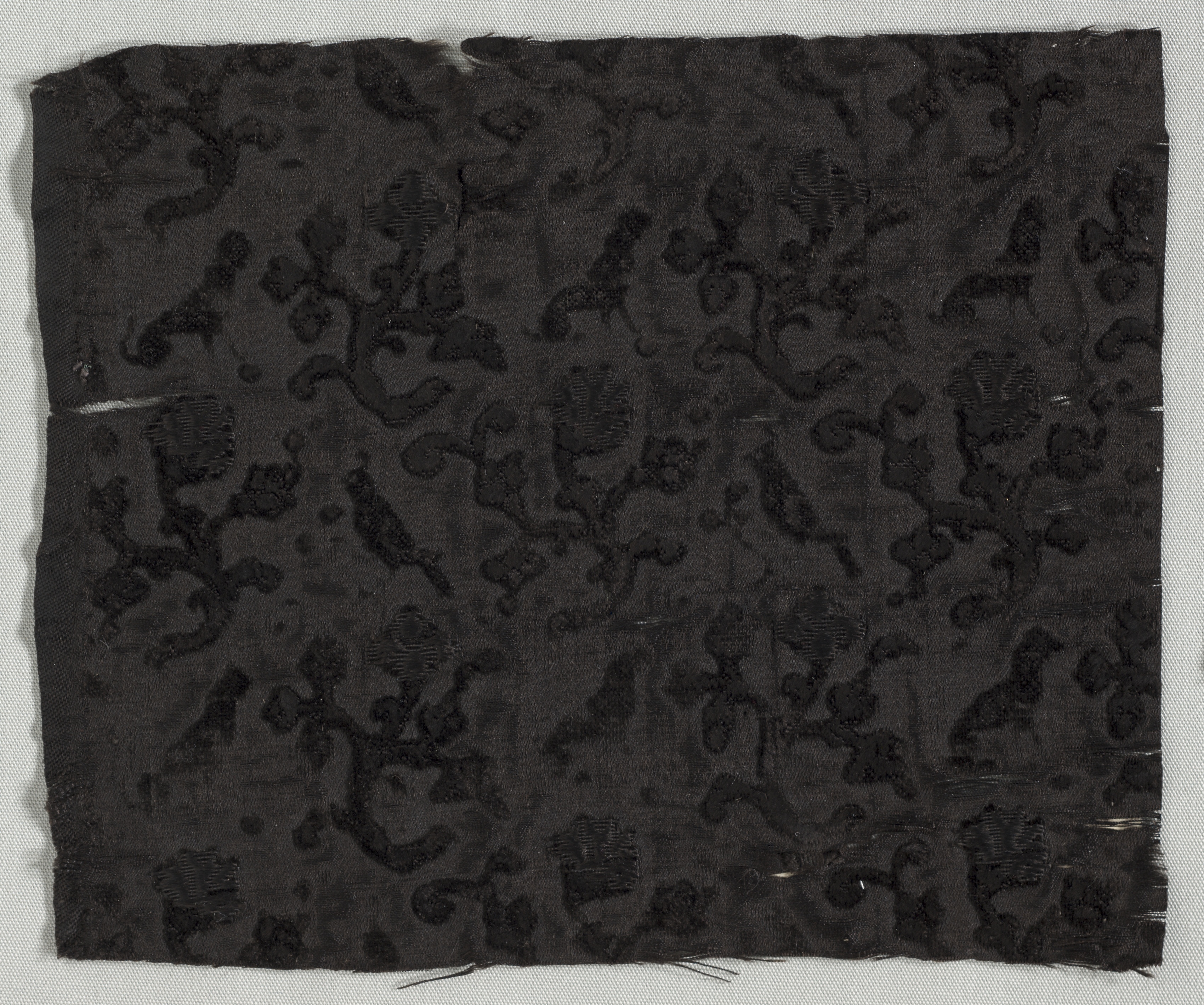
At Zoey Fashion Lab, our mission is to transcend the conventional boundaries of textile history, viewing each fragment not as a relic of the past but as a living, breathing New DNA Strand for future design. The subject of this analysis is a velvet fragment originating from Italy, circa early 18th century. This piece, while technically a classic velvet, offers a profound opportunity for avant-garde reinterpretation. We will deconstruct its material, historical, and structural DNA to extract a blueprint for radical, contemporary fashion.
I. Historical Context: The Italian Velvet as a Cultural Artifact
Early 18th-century Italy was a crucible of opulence and artistic fervor, particularly in centers like Venice, Florence, and Genoa. Velvet, especially silk velvet, was not merely a fabric; it was a symbol of power, wealth, and ecclesiastical or aristocratic status. This fragment likely originated from a garment, a liturgical vestment, or an upholstery piece for a palazzo. Its very existence speaks to a society that valued intricate craftsmanship, with weavers spending weeks on a single yard of fabric.
For Zoey Fashion Lab, this historical weight is not a burden but a foundational tension. The avant-garde thrives on subverting established narratives. We see this fragment as a text that once communicated hierarchy and tradition. Our role is to recode that text into a language of rebellion, fluidity, and self-expression. The fragment’s age is not its expiration date but its source of radical energy—a whisper from the past that we will amplify into a scream of the future.
II. Technical Analysis: The Velvet Construction as a System
From a technical standpoint, this velvet fragment is a masterpiece of pile weaving. The fabric consists of two layers: a ground weave (typically silk warp and weft) and a secondary warp that forms the pile loops. In the case of this fragment, the pile is cut velvet, created by slicing the loops to produce a dense, plush surface. The fibers are likely silk sericin and fibroin, giving it a characteristic luster and drape.
Key technical observations include:
- Pile Density: The fragment shows a high thread count, indicating a fine, expensive weave. The pile stands upright, suggesting minimal crushing or wear.
- Color Retention: The dye, likely derived from natural sources like cochineal for crimson or woad for indigo, retains remarkable vibrancy, hinting at sophisticated mordanting techniques.
- Structural Integrity: The ground weave remains intact, though there is evidence of slight fraying at the edges—a sign of age but also of potential for deconstruction.
For the avant-garde designer, these technical attributes are parameters to be broken. The pile’s density can be laser-cut to create topographic patterns. The natural dyes can be chemically altered or overdyed with synthetic pigments to create jarring, post-modern color clashes. The ground weave’s integrity invites strategic unraveling—pulling threads to create transparency, latticework, or even three-dimensional sculptural forms. The velvet’s plushness, traditionally a sign of comfort, can be weaponized through aggressive texturing, such as burning, shearing, or embedding with metallic or plastic elements.
III. The New DNA Strand: Avant-Garde Reimagining
At Zoey Fashion Lab, we treat every historical fragment as a genetic sequence that can be mutated, spliced, and recombined. This velvet fragment’s DNA is defined by three core genes: Luxury, Structure, and Time. Our avant-garde intervention will modify each gene:
- Luxury → Decay: The opulence of the velvet will be subverted by introducing controlled degradation. We will treat sections with enzymes or UV exposure to mimic natural decay, creating a ruin aesthetic. This is not about destruction but about revealing the material’s fragility—a commentary on the impermanence of status.
- Structure → Chaos: The precise weave will be disrupted by digital fabrication. Using CNC embroidery or robotic cutting, we will introduce algorithmic patterns that contradict the original hand-woven logic. The pile will be selectively removed to form glitch-like, pixelated voids, turning a smooth surface into a digital artifact.
- Time → Anachronism: The fragment’s 300-year age will be collided with hyper-contemporary materials. We will bond the velvet to recycled PET mesh or bio-based polymers, creating a hybrid that is both ancient and futuristic. The result is a time-traveling textile—a garment that exists in multiple eras simultaneously.
IV. Design Applications: From Fragment to Garment
Based on this deconstruction, we propose three avant-garde design directions for Zoey Fashion Lab:
1. The Deconstructed Gown: Using the velvet fragment as a patchwork base, we will integrate it into a garment that is asymmetrical, with one side preserved in its original state and the other aggressively deconstructed. The pile will be sheared in geometric patterns, revealing the ground weave. The edges will be left raw, and the fragment will be suspended within a transparent silicone or resin shell, treating the historical textile as a specimen in a futuristic vitrine.
2. The Armored Bodice: The velvet’s structural integrity will be reinforced with carbon fiber or 3D-printed lattice, creating a hybrid of soft and hard. The pile will be burned in controlled patterns using laser technology, producing a charred, tactile surface that contrasts with the original plushness. This piece will be a body armor for the digital age, protecting the wearer with history while confronting the future.
3. The Kinetic Accessory: The fragment will be miniaturized and embedded into a wearable kinetic sculpture, such as a collar or cuff. Using shape-memory alloys or micro-motors, the velvet will undulate or shift in response to the wearer’s movement or ambient data. This transforms the static historical object into a living, responsive organism, blurring the line between textile and technology.
V. Conclusion: The Fragment as a Catalyst
This Italian early 18th-century velvet fragment is not a dead artifact. It is a catalyst for radical creation. At Zoey Fashion Lab, we see its New DNA Strand as a code that can be rewritten. Through our avant-garde lens, the velvet becomes a site of contradiction: it is both precious and disposable, structured and chaotic, ancient and newborn. The final garment will not be a mere reproduction but a dialogue across centuries—a wearable manifesto that honors the past by dismantling and reimagining it. This is the essence of Zoey Fashion Lab’s approach: to deconstruct not just fabric, but the very idea of what fashion can be.