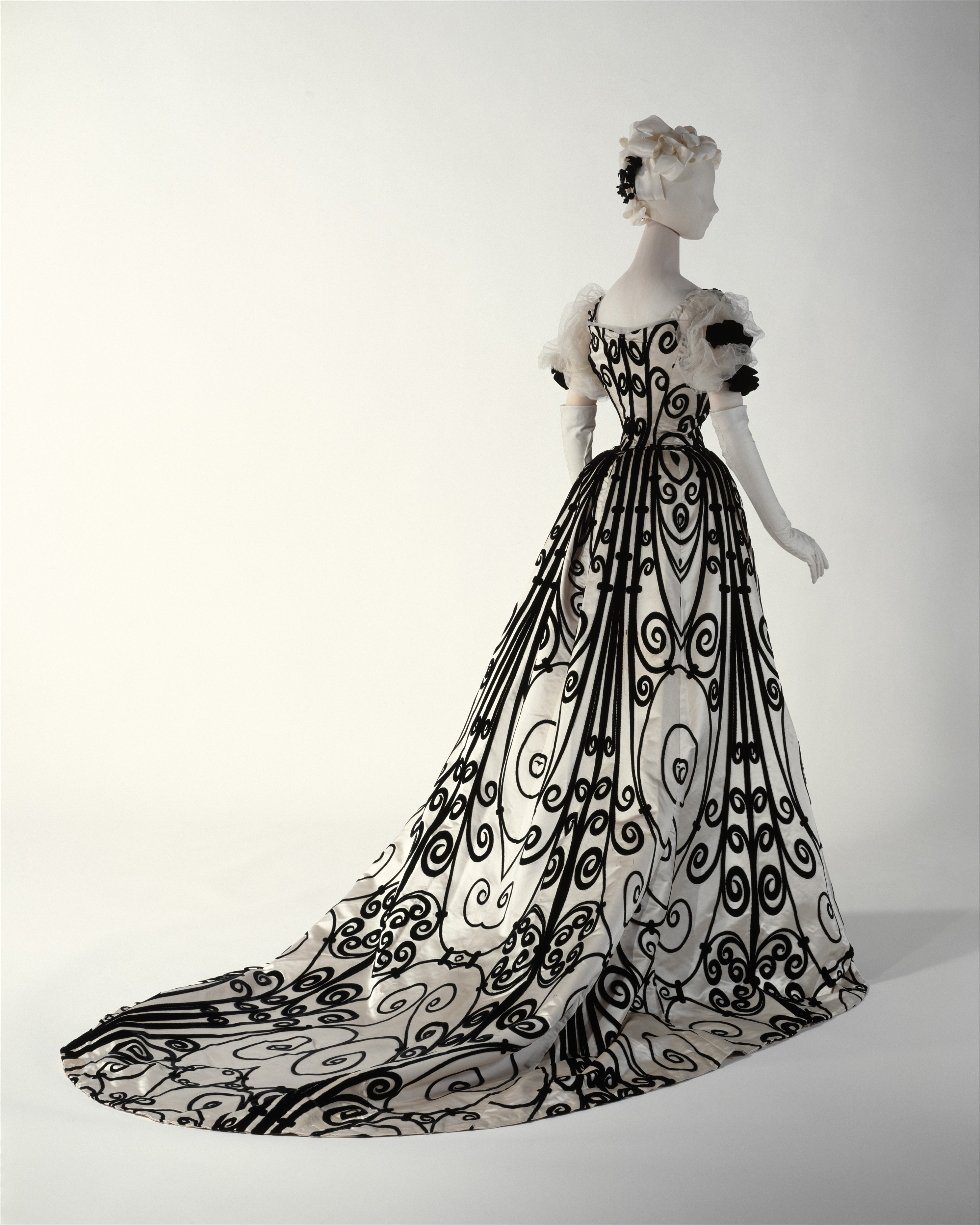
Deconstructing the Temporal Veil: A Futurist Analysis of the French Silk Evening Dress for SS26
The evening dress, a perennial bastion of haute couture, stands at a precipice. For SS26, Zoey Fashion Laboratory interrogates this archetype through the lens of French craftsmanship and the paradoxical fluidity of silk, proposing a silhouette that is not merely worn, but inhabited. This analysis dissects a singular garment—a French silk evening dress reimagined as a structural manifesto for the coming season. It is not a dress for repose, but for propulsion into a future where fabric becomes architecture, and the body is both anchor and escape.
Material Dialectics: Silk as Structural Paradox
Silk, historically synonymous with luxury, drape, and the soft caress of tradition, is here weaponized as a structural paradox. The SS26 iteration employs a double-faced silk gazar, a fabric known for its crisp hand and ability to hold sharp pleats without sacrificing luminosity. However, the avant-garde intervention lies in its strategic deconstruction. The silk is not left in its pristine state; it undergoes a process of controlled disintegration. Laser-cut micro-perforations, invisible to the naked eye at a distance, create a lattice of breathable voids along the garment’s lateral seams. This technique—dubbed “Aerodynamic Moulting”—allows the silk to behave like a second skin, releasing thermal energy while maintaining its monolithic appearance. The material becomes a living membrane, a futuristic nod to biomimicry where the dress regulates the microclimate of the wearer, anticipating movement before it occurs.
Silhouette: The Anti-Gravitational Column
The silhouette of this French evening dress rejects the traditional A-line or mermaid forms in favor of what Zoey Fashion Laboratory terms the “Anti-Gravitational Column.” It is a cylindrical, almost architectural form that appears to float around the body, anchored only at the clavicle and the mid-thigh. The innovation lies in the internal scaffolding: a series of semi-rigid, translucent resin stays, dyed to match the silk’s hue, are embedded within the fabric’s seams. These stays create a negative space between the garment and the skin, a void of approximately three centimeters. This gap, visible only in profile, produces a dramatic, floating effect. The dress does not cling; it hovers. The hemline is asymmetrical, cascading from a sharp, knife-edge point at the left hip to a sweeping, floor-length train on the right, creating a dynamic, forward-leaning vector. This is not a dress for standing still; it is a dress for the kinetic future, where every step is a statement of intentional displacement.
Structural Innovation: The “Origami Core” and Kinetic Pleating
Central to the dress’s avant-garde identity is the “Origami Core,” a structural innovation that redefines the waist. Instead of a belt or a seam, the silk is folded into a series of precise, angular pleats that radiate from a central, hidden magnetized clasp. These pleats are not merely decorative; they are load-bearing. Each fold is heat-set at 180 degrees Celsius, locking the silk into a rigid, geometric grid that mimics the folds of a paper crane. The pleats expand and contract with the wearer’s breathing, creating a dynamic, kinetic surface that shifts from a closed, monolithic block to an open, fan-like structure. This is a direct response to the SS26 trend of “Architectural Fluidity”—the marriage of rigid form with organic movement. The dress’s back features a “Cascade Spine” of overlapping silk panels, each one laser-cut with a gradient of opacity. As the wearer moves, the panels reveal and conceal the skin in a choreographed sequence, a visual echo of a digital glitch.
Deconstructive Aesthetics: The “Exposed Seam” and the Unfinished Finish
In keeping with the avant-garde mandate, the dress celebrates the unfinished. Seams are not hidden; they are exposed and exaggerated. French seams, traditionally a mark of invisible perfection, are here turned outward and stitched with a contrasting, metallic thread—a blend of silver and silk—that catches light like a circuit board. The raw edges of the silk are left un-hemmed, fraying into delicate threads that form a deliberate, “halo of chaos” around the hemline and armholes. This is not a sign of neglect but a conscious act of deconstructive rebellion. The dress’s interior reveals a lattice of transparent, silicone-coated seams that act as a second skeleton, visible only when the garment is turned inside out. This duality—the perfect exterior and the exposed interior—mirrors the contemporary human condition, where the polished digital self coexists with the raw, unfiltered reality.
Futuristic Silhouette and the Body as Interface
The SS26 evening dress repositions the body as an interface for technological and aesthetic exploration. The “Neural Neckline”—a high, asymmetric collar that extends from the left shoulder to the right ear—is embedded with flexible, conductive threads that can be connected to a discreet wearable device. This allows the dress to pulse with light in response to the wearer’s heartbeat or ambient sound. The light, a soft, bioluminescent blue, emanates from the silk itself, which is treated with a photoluminescent coating that absorbs ambient UV light and re-emits it in the dark. This is not mere decoration; it is a functional augmentation, turning the dress into a wearable beacon of personal data. The silhouette, with its sharp, angular lines and floating column, evokes a cyborgian elegance, a fusion of the organic and the synthetic. The dress does not hide the technology; it celebrates it as an integral part of the garment’s architecture.
Conclusion: The Future of French Silk
This French silk evening dress for SS26 is not a garment for the passive observer. It is a provocation, a manifesto for a new era of couture where material, structure, and technology converge. The deconstructive aesthetics challenge the very notion of finish, while the futuristic silhouettes—the Anti-Gravitational Column, the Origami Core, the Neural Neckline—redefine the relationship between the body and its covering. Zoey Fashion Laboratory’s analysis reveals that silk, the most traditional of fabrics, can be the most radical. It is a medium for temporal fluidity, capable of holding the past while projecting the future. The dress is a wearable paradox: a static object that is in constant motion, a French classic that is entirely new. It is the definitive avant-garde statement for SS26, a garment that does not merely dress the body but redefines its potential.