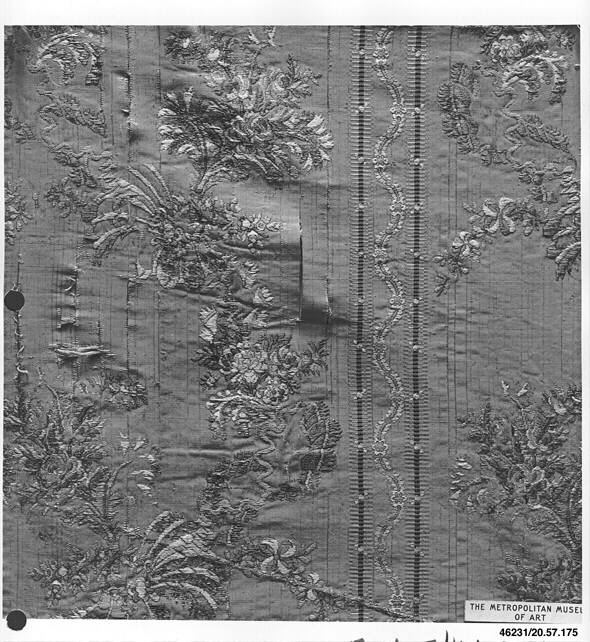
The Architectural Body: Deconstructing the Silk and Metal Thread Silhouette for SS26
In the crucible of contemporary fashion, where the boundaries between garment and sculpture dissolve, Zoey Fashion Laboratory presents a singular artifact for the SS26 season: a piece born from the Global Frontier, a conceptual territory where material science meets radical form. This is not merely a dress, a top, or a coat; it is a wearable architecture, a study in tension, light, and the redefinition of the human silhouette. The selected materials—silk and metal thread—are not arbitrary; they are the foundational dialectic of this collection. Silk, the ancient symbol of luxury and fluidity, is subjugated by metal thread, an emblem of industrial precision and future-forward rigidity. The result is a garment that breathes with the body yet stands defiantly apart from it, a paradox that defines the avant-garde.
Material Dialectics: Silk as Substrate, Metal as Structure
The choice of silk and metal thread is a deliberate act of material deconstruction. Traditionally, silk signifies drape, softness, and organic movement. In this piece, it becomes the substrate—the canvas upon which a new structural language is inscribed. The metal thread, woven or embroidered into the silk, acts as a skeletal system. It does not merely decorate; it reinforces, bends, and holds. This is not embroidery in the classical sense; it is structural engineering at the micro-scale. The metal thread creates rigid panels that contrast with the silk’s inherent fluidity, generating a dialogue between the soft and the hard, the organic and the mechanical.
Consider the thermal and tactile properties. Silk regulates temperature against the skin, while metal thread introduces a cool, conductive presence. This dual sensory experience is central to the piece’s identity. The wearer becomes a living interface between natural fiber and industrial alloy. The metal thread also interacts with light: it catches reflections, creating a luminous, almost liquid effect on the surface, while the silk absorbs and diffuses light in matte planes. This interplay of sheen and matte, of rigidity and flow, is the visual signature of the Global Frontier aesthetic.
Silhouette Innovation: The Anti-Gravity Drape and the Suspended Form
The silhouette of this piece is its most radical departure. It rejects the traditional shoulder-to-hem line in favor of an anti-gravity drape. The metal thread is strategically concentrated at key structural nodes—the shoulders, the waist, the hips—creating cantilevered forms that appear to float away from the body. Imagine a jacket that does not rest on the shoulders but instead hovers via a network of metal-thread-reinforced seams, creating a gap between fabric and skin. This is not a garment that clings; it is a garment that defines space around the body.
The silhouette can be described as asymmetric, volumetric, and fractured. One sleeve may be elongated and rigid, formed entirely from metal-thread lattice, while the other is a soft, silk cascade. The hemline is not a straight line but a topographical contour, rising and falling in response to the internal structure. The metal thread allows for self-supporting pleats and folds that hold their shape without interfacing or boning. This is a new kind of tailoring—one where the thread itself becomes the bone, the seam, and the silhouette.
Furthermore, the piece incorporates negative space as a design element. Gaps between the metal-thread-reinforced panels reveal the skin or an underlayer, creating a deconstructed, almost architectural lattice. This is not a garment that covers; it is a garment that frames. The wearer’s body is not hidden but exhibited through structural absence. This technique, which we term “void construction,” is a hallmark of the SS26 vision, pushing the silhouette toward a futuristic, almost cyborgian aesthetic.
Structural Innovation: The Thread as Load-Bearing Element
At the core of this piece’s innovation is the redefinition of the thread as a load-bearing element. In traditional couture, thread is a connector, a fastener, or a decorative device. Here, metal thread is engineered to bear tension. The garment employs a technique we call “tensile webbing,” where multiple strands of metal thread are woven into a grid that supports the silk panels. This grid is not hidden; it is exposed as a structural feature, much like the steel frame of a building.
The seams are not merely joins; they are articulated joints. Where silk meets metal thread, the seam is reinforced with a micro-welded or hand-stitched alloy that allows for movement without compromising structural integrity. This allows the garment to flex and bend at specific points while remaining rigid elsewhere. The result is a kinetic sculpture that moves with the wearer but maintains its architectural form.
Another key innovation is the use of metal thread as a heat-reactive element. Under body heat, the metal thread can undergo a subtle phase change—not to melt, but to slightly expand or contract, altering the garment’s drape over time. This introduces a temporal dimension to the piece: it is not static but adaptive. The wearer’s body becomes the catalyst for the garment’s evolution, a concept that aligns with the Global Frontier’s emphasis on responsive design.
Contextualizing the Avant-Garde: A Standalone Study for SS26
This piece is not part of a collection; it is a standalone study, a proof-of-concept for the SS26 season. Its value lies not in commercial viability but in its provocation. It challenges the industry to reconsider the relationship between material, structure, and the body. The Global Frontier context implies a lack of geographical or temporal boundaries; this piece could exist in a cybernetic future, a post-industrial wasteland, or a minimalist art gallery. Its futurism is not nostalgic—it does not reference sci-fi tropes but instead invents its own material logic.
The avant-garde function of this piece is to disrupt the expected. It forces the viewer to question: What is a garment? Is it a second skin, a cage, a frame, or a machine? By using silk—a material of comfort and luxury—in conjunction with metal thread—a material of industry and coldness—the piece creates a cognitive dissonance that is central to the avant-garde. It is a wearable manifesto for a new kind of fashion: one where structure is not hidden but celebrated, where the body is not passive but active, and where the material is not merely decorative but performative.
In conclusion, this silk and metal thread piece from the Global Frontier represents a quantum leap in silhouette and structural innovation. It is a testament to the power of material deconstruction and engineering-driven design. For Zoey Fashion Laboratory, it is a definitive statement: the future of fashion is not in fabric alone, but in the architecture of the thread. The body, once a passive mannequin, is now the site of structural exploration. And the garment, once a simple cover, is now a living structure—a bridge between the organic and the synthetic, the fluid and the fixed.