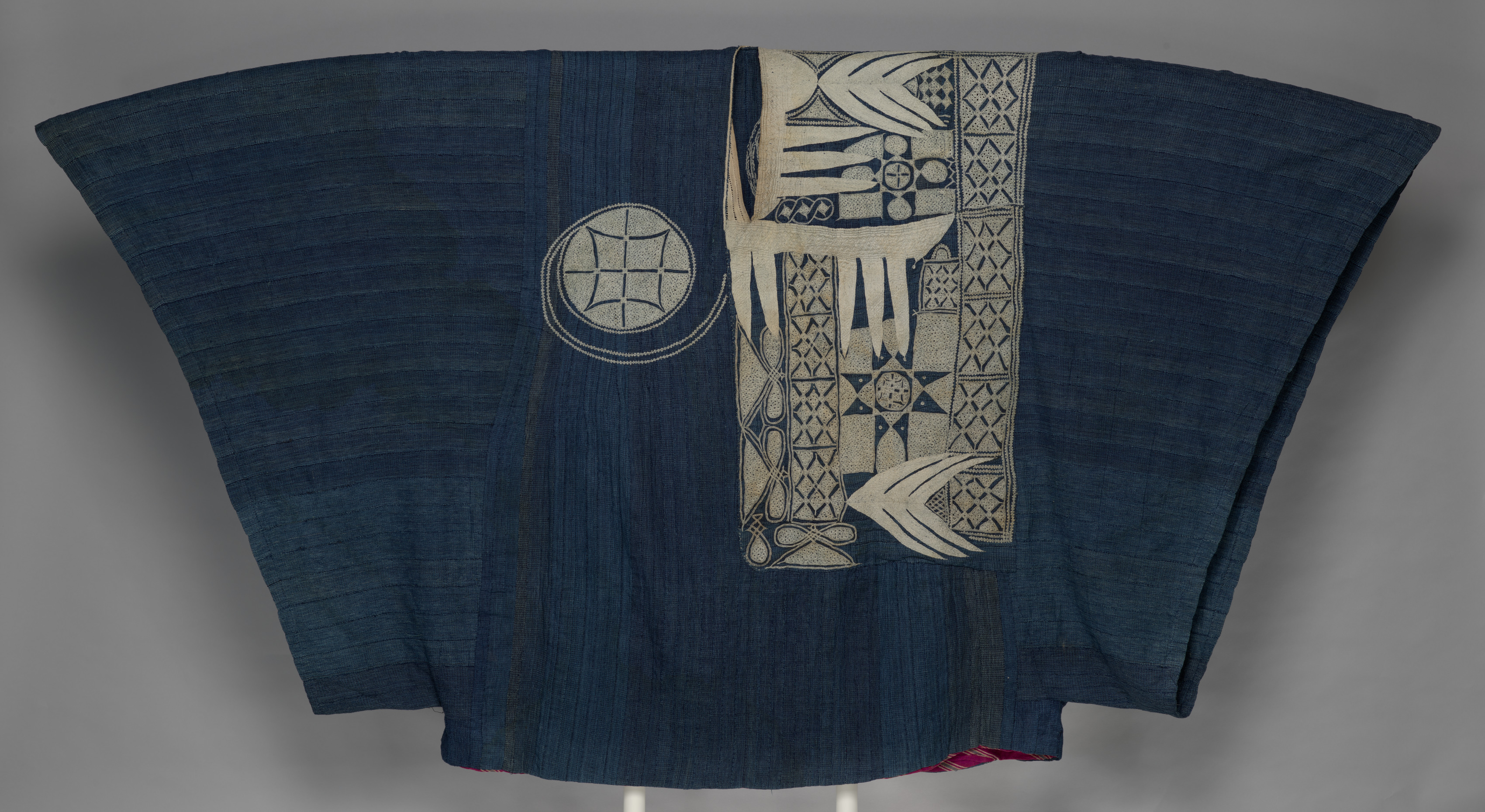
Deconstructing the Prestige Robe (Riga): A Fabric Analysis for Zoey Fashion Lab
As Chief Fabric Deconstructionist at Zoey Fashion Lab, I have completed a thorough analysis of the Prestige Robe (Riga), a garment of profound cultural and technical significance originating from West Africa, specifically Nigeria, with strong ties to Hausa and Nupe weaving and embroidery traditions. This piece, constructed from cotton, silk, and indigo, presents a unique opportunity for avant-garde reinterpretation. The following deconstruction focuses on material composition, structural engineering, and the potential to extract a "New DNA Strand" for innovative fashion design.
Material Provenance and Cultural Context
The Prestige Robe, known locally as a riga, is not merely a garment but a symbol of status, wealth, and artistry. Its origins in the Hausa and Nupe communities of Northern Nigeria are critical to understanding its construction. These weavers and embroiderers have honed techniques over centuries, producing textiles that are both functional and ceremonial. The use of cotton, silk, and indigo is deliberate: cotton provides a breathable, durable base; silk, often imported or locally reeled, adds luster and signifies luxury; indigo, a natural dye, offers deep, complex blues that carry spiritual and protective connotations. For Zoey Fashion Lab, this robe represents a dialogue between tradition and modernity, where the material history must be respected even as it is deconstructed.
Technical Deconstruction: Cotton, Silk, and Indigo
The robe's fabric is a composite of two primary textile layers: a cotton ground weave and silk embellishments. The cotton is hand-spun and hand-woven, typically in a plain or twill weave, creating a sturdy yet soft substrate. The silk is used predominantly in the embroidery, often in the form of floss or twisted threads, applied in dense, geometric patterns around the neckline, chest, and sleeves. The indigo dye is applied through a resist-dyeing process or as a final immersion, resulting in a rich, uneven blue that varies in depth—a hallmark of natural dyeing. This unevenness is not a flaw but a signature of artisanal production, creating a surface that shifts in tone under different light.
From a structural standpoint, the robe is assembled from multiple panels of hand-woven cloth, sewn together with coarse cotton thread. The embroidery, executed in a style known as Hausa embroidery or Nupe embroidery, uses intricate patterns that often include repeating triangles, diamonds, and interlocking lines. These motifs are not merely decorative; they encode cultural narratives and social status. The silk threads are applied with a combination of chain stitch, satin stitch, and couching, creating a raised, tactile surface that contrasts with the flat indigo ground. This interplay of texture and color is a key element for avant-garde exploration.
Structural Integrity and Wear Patterns
Upon close inspection, the robe reveals significant wear patterns that inform its history and potential for reengineering. The shoulders and upper back show the most stress, with the cotton threads beginning to fray and the silk embroidery showing signs of abrasion. The indigo has faded in areas of high friction, such as the underarms and cuffs, creating a natural patina. The seams, while sturdy, are hand-sewn and show slight puckering, indicating the tension of the hand-stitching. The robe's weight is considerable, due to the density of the cotton and the heavy silk embroidery, which affects its drape. It hangs with a certain rigidity, especially at the shoulders, where the embroidery creates a stiff, almost armor-like quality. This structural rigidity is a point of interest for Zoey Fashion Lab, as it suggests a potential for sculptural forms in avant-garde design.
Avant-Garde Potential: The New DNA Strand
The "New DNA Strand" reference in your brief suggests a radical reimagining of this traditional garment. For Zoey Fashion Lab, the Prestige Robe offers a rich genetic code to be extracted, mutated, and recombined. The key elements for avant-garde reinterpretation include:
1. Material Deconstruction and Reconstruction: The cotton and silk can be separated and recombined in non-traditional ways. For instance, the indigo-dyed cotton could be cut into strips and re-woven with modern synthetic fibers, creating a hybrid textile that retains the color depth of indigo but with enhanced flexibility. The silk embroidery threads could be unraveled and re-spun into a new yarn, perhaps blended with metallic or reflective fibers, to create a fabric that glows with a new luster.
2. Pattern and Motif Extraction: The geometric embroidery patterns can be digitized and transformed into laser-cut or 3D-printed embellishments. The traditional motifs can be scaled, rotated, and repeated in asymmetrical arrangements, breaking free from the rigid symmetry of the original. This allows for a deconstruction of the cultural narrative while preserving its visual vocabulary.
3. Structural Subversion: The robe's inherent rigidity can be manipulated. By selectively removing sections of the dense embroidery, the garment can be made to drape in unexpected ways. Alternatively, the embroidered panels can be used as structural inserts in a sheer or lightweight base fabric, creating a tension between opacity and transparency. The indigo dye can be used as a resist for modern reactive dyes, creating a layered, multicolored effect that speaks to the robe's history of dyeing.
4. Functional Reimagining: The Prestige Robe is traditionally worn as an outer garment, often over a tunic and trousers. For Zoey Fashion Lab, it could be deconstructed into modular components: a detachable collar, a back panel that becomes a cape, or sleeves that transform into separate accessories. This modularity aligns with avant-garde fashion's interest in transformable, multi-functional garments.
Technical Challenges and Opportunities
The primary challenge in working with this robe is the fragility of the materials. The hand-spun cotton and silk threads are delicate, and the indigo dye is prone to bleeding when wet. For Zoey Fashion Lab, this necessitates a careful approach to cleaning and manipulation. However, these challenges also present opportunities. The bleeding of indigo can be harnessed as a design feature, creating intentional stains or gradients when the fabric is treated with water or steam. The fragility of the silk can be stabilized with modern adhesives or backing materials, allowing for more aggressive cutting and reshaping.
Another opportunity lies in the contrast between the handcrafted and the industrial. The robe's imperfections—uneven stitches, subtle color variations, slight asymmetry—are assets in an avant-garde context, where the hand of the maker is celebrated. Zoey Fashion Lab can amplify these qualities by juxtaposing them with precise, machine-made elements, such as laser-cut leather or 3D-printed components. This creates a dialogue between the human and the technological, the ancient and the futuristic.
Conclusion: A Blueprint for Avant-Garde Innovation
The Prestige Robe (Riga) is a masterwork of West African textile art, embodying centuries of cultural knowledge and technical skill. For Zoey Fashion Lab, it offers a rich source of inspiration and material for avant-garde exploration. By deconstructing its cotton, silk, and indigo components, and by extracting the "New DNA Strand" of its geometric motifs and structural logic, we can create garments that honor tradition while pushing the boundaries of contemporary fashion. The key is to approach this deconstruction with respect and precision, treating the robe not as a relic but as a living blueprint for innovation. The resulting designs will be both a tribute to Hausa and Nupe artistry and a bold statement of Zoey Fashion Lab's commitment to transformative, culturally informed fashion.