The Deconstructive Drape: Reimagining the Spanish Cape for SS26
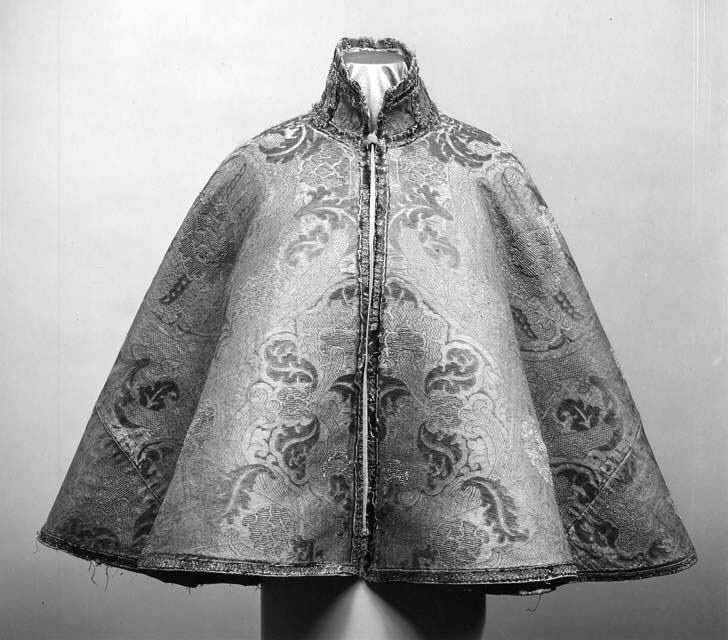
The cape, a garment steeped in centuries of ceremonial and military tradition, undergoes a radical transmutation in the SS26 avant-garde collection at Zoey Fashion Laboratory. Originating from the rich textile heritage of Spain, this iteration is not a mere homage but a deliberate deconstruction of form, material, and cultural memory. We dissect the archetype of the Spanish cape—its dramatic volume, its hierarchical weight, its association with matador, monarch, and cleric—and reassemble it through a lens of futuristic minimalism. The result is a standalone study in structural innovation, where silk and metal thread become the dual protagonists in a narrative of tension, fragility, and engineered grace.
Material Dialectics: Silk as Skin, Metal as Skeleton
The choice of materials is a critical dialectic. The silk, sourced from a historic Spanish mill, is not the heavy, opulent brocade of the past. Instead, it is a lightweight, almost liquid charmeuse with a matte finish, chosen for its ability to catch and diffuse light in unpredictable ways. This silk acts as a second skin, draping with a fluidity that suggests movement even at rest. Its softness is the foundation of the garment’s organic, almost sentient quality.
In stark contrast, the metal thread is not a decorative afterthought. It is an integrated structural armature. Woven into the silk at precise, algorithmically determined intervals, the thread creates a network of micro-ribs and tension points. These are not visible as traditional embroidery; they are embedded within the fabric’s weave, creating a topography of subtle ridges and valleys. The metal thread, a fine silver alloy, is both rigid and flexible, allowing the cape to hold a sculptural silhouette while still yielding to the wearer’s movement. This is not adornment; it is structural engineering at the molecular level, where the metal thread acts as a skeleton, and the silk as the living tissue.
Silhouette as Architecture: The Negative Space and the Unbalanced Drape
The SS26 cape abandons the symmetrical, bell-shaped silhouette of its Spanish ancestors. Instead, we propose an asymmetrical, almost aerodynamic form. The cape is cut on a dramatic bias, with one side extending to the floor in a sweeping, liquid train, while the other is cropped sharply at the hip. This imbalance is not arbitrary; it is a study in kinetic tension. The longer side, weighted by a dense concentration of metal thread, pulls the garment downward, creating a gravitational anchor. The shorter side, lighter and freer, lifts upward, suggesting a counterforce of air or wind.
The key innovation lies in the negative space. Traditional capes envelop the body; this cape frames it. The armholes are not simple slits but are engineered as sculptural cutouts, reinforced with a flexible metal thread border that maintains the opening’s shape even when the arm is raised. The back of the cape is almost entirely open, with only two narrow straps of silk and metal thread crossing the shoulder blades. This creates a dramatic V-shaped void that exposes the spine, transforming the wearer’s back into an integral part of the garment’s architecture. The cape no longer hides the body; it articulates it, turning the human form into a structural component of the design.
Structural Innovation: The Living Hinge and the Thermal Gradient
Two specific innovations define this piece for SS26. The first is the living hinge at the collar. Instead of a traditional clasp or button, the cape closes via a series of interlocking, laser-cut metal thread loops that are woven directly into the silk. These loops are not sewn on; they are an extension of the fabric’s own structure. When the wearer brings the two sides together, the loops interlock, creating a flexible, almost organic joint that moves with the neck and shoulders. This eliminates the need for any external fasteners, achieving a seamless, monolithic appearance.
The second innovation is the thermal gradient embedded in the metal thread pattern. Using a proprietary weaving technique, the density of metal thread increases from the top of the cape to the bottom. At the shoulders, the thread is sparse, allowing the silk to breathe and the skin to feel cool. As the garment descends, the thread becomes denser, creating a gradient of thermal conductivity. The lower edge, where the metal thread is most concentrated, feels noticeably cooler to the touch. This is not a gimmick; it is a functional response to the microclimate of the body. The cape actively manages temperature, cooling the wearer as they move, while the silk’s natural insulating properties keep the core warm. This is biomimetic design, inspired by the way a plant’s leaves regulate temperature through a gradient of vascular structures.
Cultural Deconstruction: From Ceremony to Cyborg
This cape is a deliberate rupture from its Spanish ceremonial origins. The traditional Spanish cape, with its heavy embroidery and rigid form, was a symbol of power and stasis. Our SS26 version is a symbol of fluidity and transformation. The metal thread, reminiscent of armor, is here repurposed not for protection but for articulation. The silk, once a signifier of luxury and wealth, is now a medium for light and shadow, a canvas for movement. The garment does not command a room through static presence; it commands through dynamic potential.
In the context of a futuristic wardrobe, this cape functions as a portable architectural module. It can be worn over a bare body, its open back allowing for maximum skin exposure, or it can be layered over a sheer, metallic bodysuit, creating a dialogue between transparency and opacity. The asymmetrical hemline allows it to be paired with high-waisted trousers or a deconstructed skirt, creating a silhouette that is both grounded and airborne. It is a garment that exists in the interstice between the organic and the technological, the historical and the speculative.
Conclusion: A New Vocabulary for the Cape
This Spanish cape for SS26 is not a revival; it is a reinvention. By treating silk as a responsive membrane and metal thread as a flexible skeleton, we have created a garment that is both a sculpture and a tool. It challenges the wearer to reconsider the cape not as a garment of concealment or ceremony, but as a dynamic interface between the human body and the environment. The asymmetrical silhouette, the living hinge, the thermal gradient—these are not design details; they are the building blocks of a new sartorial language. In the Zoey Fashion Laboratory, the cape is no longer a relic of the past. It is a blueprint for the future of wearable architecture.