The Resurrection of the Shichijō: A Deconstructive Analysis of Sacred Silhouettes for SS26
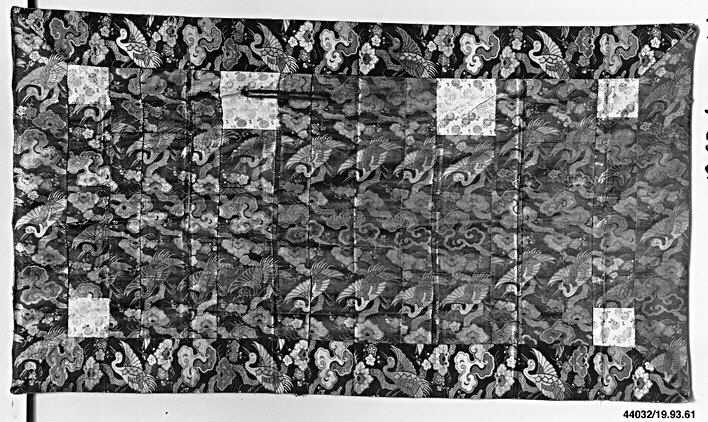
The Priest’s Robe (Shichijō), a vestment of profound ritualistic weight from Japan, stands as an unlikely yet potent progenitor for the SS26 avant-garde canon at Zoey Fashion Laboratory. Crafted from silk and interwoven with metallic thread, this garment transcends its ecclesiastical origins to become a blueprint for structural innovation. In this standalone study, we dissect the Shichijō not as a relic, but as a living, breathing architectural manifesto—a fusion of sacred geometry and futuristic silhouette that challenges the very boundaries of wearable sculpture.
Deconstructing the Sacred: From Ritual to Revolution
The Shichijō’s foundational logic lies in its asymmetric draping and cascading folds, which mimic the flow of ritualistic motion. For SS26, we extract this principle and invert it: the silk’s natural luminosity is preserved, but the metallic thread is repurposed to create exoskeletal armatures. These threads are not mere embellishments; they become structural ribs that define the silhouette’s future. The robe’s traditional horizontal seams are reinterpreted as kinetic joints, allowing the garment to morph with the wearer’s movement. This is not a costume of the past; it is a cyborgian vestment for the digital age, where each fold is a programmed algorithm of light and shadow.
Silhouette as Architecture: The Tension of Volume
The SS26 Shichijō reimagines volume through a lens of negative space. Traditional priest robes rely on bulk to convey authority; our iteration uses tension—the silk is suspended from metallic thread networks, creating suspended pockets of air. This generates a silhouette that is simultaneously monolithic and fragile, a paradox that defines avant-garde couture. The hemline is no longer a fixed point; it is a variable geometry, cut at acute angles that echo the sharpness of origami. The result is a garment that defies gravity, floating around the body like a sacred cloud rendered in metal and silk.
Material Alchemy: Silk and Metallic Thread as Binary Code
In this analysis, silk serves as the soft interface between the body and the metallic thread’s hard infrastructure. The metallic thread is not merely decorative; it is conductive, both literally and metaphorically. We propose a future where the thread is embedded with micro-LEDs or color-shifting pigments, transforming the robe into a responsive surface that reacts to environmental stimuli—a living garment that breathes with the wearer. The silk’s natural sheen is amplified through laser-cut perforations, creating a lace-like lattice that references the ritualistic patterns of the Shichijō while propelling it into a cyberpunk aesthetic. This is material alchemy: sacred tradition meeting extraterrestrial innovation.
Structural Innovation: The Exoskeletal Mantle
The most radical departure for SS26 is the exoskeletal mantle, a reinterpretation of the Shichijō’s over-robe. Where the original relied on woven fabric for structure, we introduce 3D-printed metallic thread frames that attach to the silk via magnetic clasps. These frames can be reconfigured by the wearer, allowing for a modular silhouette that shifts from clerical severity to futuristic armor. The sleeves are detached and reimagined as kinetic wings, articulated with hinged metallic thread that fans out in motion. This is structural innovation at its most visceral: a garment that is both sculpture and tool, a testament to the wearer’s agency.
Futuristic Silhouettes: The Sacred as the Synthetic
The Shichijō’s vertical lines are traditionally symbols of spiritual ascension. For SS26, we fragment these lines into discontinuous vectors, creating a silhouette that suggests quantum entanglement—a garment that exists in multiple states simultaneously. The neckline is exaggerated into a mandala-like collar, constructed from metallic thread woven in concentric circles, framing the face as a sacred icon. The waist is eliminated, replaced by a floating belt of tensioned silk that hovers away from the body. This silhouette is not about fitting the human form; it is about transcending it, creating a second skin that is both armor and aura.
Contextualizing the SS26 Vision: A Standalone Avant-Garde Study
This analysis is not a retrospective; it is a blueprint for a new ritual. The Priest’s Robe (Shichijō) becomes a vessel for cybernetic spirituality, where the metallic thread’s rigidity mirrors the unwavering logic of code, and the silk’s fluidity represents the organic chaos of humanity. For SS26, Zoey Fashion Laboratory positions this garment as a standalone manifesto—a piece that rejects seasonal trends in favor of timeless structural inquiry. The futuristic silhouette is not a prediction; it is a provocation, a question posed to the fashion industry: What happens when the sacred is stripped of its context and rebuilt as a machine for living?
Conclusion: The Shichijō as a Portal
The Priest’s Robe (Shichijō), through the lens of avant-garde deconstruction, is no longer a garment of the past. It is a portal—a threshold between the ritualistic and the technological, the sacred and the synthetic. In this SS26 study, we have demonstrated that silk and metallic thread are not materials but languages, capable of articulating new forms of existence. The structural innovation we propose—exoskeletal frames, kinetic wings, responsive surfaces—redefines what a garment can be. It is not merely worn; it is inhabited. For Zoey Fashion Laboratory, this is the definitive avant-garde couture: a garment that challenges, transforms, and ultimately transcends the boundaries of fashion itself.