The Fragment: A Deconstructive Lexicon for SS26
The avant-garde couture landscape for Spring/Summer 2026 demands a radical departure from the monolithic garment. At Zoey Fashion Laboratory, we dissect the very notion of completion, finding profound resonance in the Fragment. This is not a mere remnant of a forgotten past, but a deliberate, generative force—a tectonic plate shift in garment architecture. The fragment, in our analysis, becomes a primary structural unit, a building block for a new, unfinished future. It is a statement against the tyranny of the seamless, the pristine, and the resolved. For SS26, we propose that the future of fashion lies not in the whole, but in the eloquent, deliberate fracture.
Deconstructive Aesthetics: The Fragment as a Narrative Device
The fragment is no longer a sign of decay or loss; it is a powerful narrative tool. In our SS26 study, the fragment functions as a semiotic rupture, interrupting the expected flow of the garment’s silhouette. It introduces a deliberate tension between the visible and the invisible, the structured and the chaotic. Consider the classic trench coat, deconstructed into a series of floating, asymmetrical panels. Each panel is a fragment—a self-contained architectural element that refuses to connect to its neighbor. The resulting silhouette is a study in negative space, where the body becomes the connective tissue. This is not a garment that is “falling apart”; it is a garment that is assembling itself from disparate, powerful parts. The fragment, therefore, becomes a narrative of process, of the hand of the designer, and of the garment’s own becoming. It challenges the viewer to complete the story, to fill the voids with their own interpretation. This is a couture of active participation, not passive observation.
Material Innovation: Bobbin Lace as a Structural Scaffold
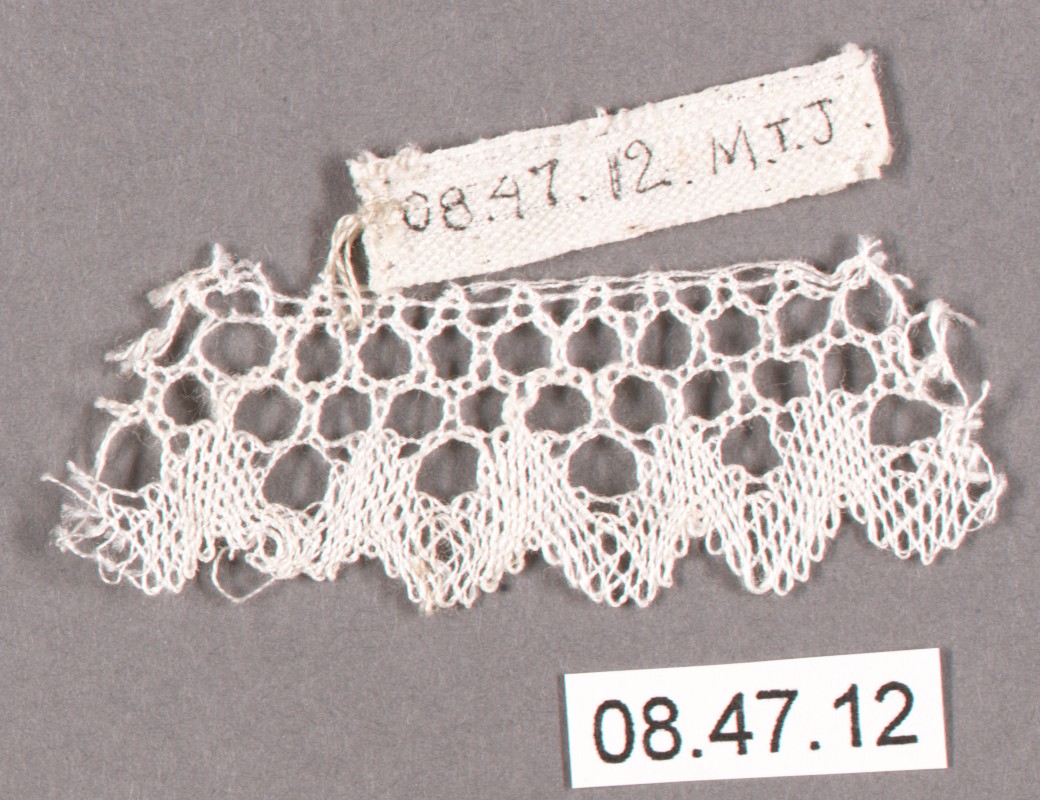
The choice of Bobbin Lace as the primary material for this fragment-based study is a deliberate act of material alchemy. Traditionally associated with delicacy, heritage, and intricate ornamentation, bobbin lace is here re-engineered as a structural scaffold for the future. We are not using lace as a decorative overlay; we are using it as a load-bearing architectural membrane. The geometric, grid-like foundation of bobbin lace—its threads and pins—is perfect for creating a matrix of fragments. Instead of a solid fabric panel, we create a lace “field” where certain areas are densely woven (the fragment’s core) and others are left as open, negative space (the void). The fragment is then cut, not with scissors, but with laser-precision heat sealing, leaving a crisp, non-fraying edge that mimics the clean break of a geological fault line.
This technique allows for a radical new silhouette: a bodice constructed from a single, continuous lace structure that is then “broken” into multiple, independently articulated fragments. Each fragment is a self-contained lace composition—some with dense floral motifs, others with stark, linear grids. The fragments are then reconnected not by seaming, but by micro-scaled magnetic clasps and invisible tensile cables. This creates a kinetic, breathing garment where the fragments shift and realign with the wearer’s movement. The lace, once a symbol of fragility, becomes a symbol of adaptive resilience. It is a material that holds its form while allowing for a dynamic, fragmented silhouette that is both ethereal and structurally rigorous.
Futuristic Silhouettes: The Architecture of the Incomplete
The SS26 silhouette, born from the fragment and bobbin lace, is defined by what we term the “Incomplete Envelope.” This is a silhouette that deliberately avoids closure. It does not wrap the body; it frames it. Key structural innovations include:
- Floating Shoulder Caps: A fragment of a sleeve, anchored only at the shoulder point, floats above the arm. The bobbin lace is stiffened with a bio-resin to create a cantilevered effect. The arm is visible through the lace’s openwork, creating a ghostly, fragmented limb.
- Asymmetric Hemlines as Fracture Lines: The hem is not a straight line but a series of jagged, overlapping fragments. One fragment might end at the hip, while another descends to the knee, and a third, smaller piece hovers at the calf. The overall effect is a vertical deconstruction of the skirt’s volume.
- Backless and Frontless Construction: The garment is composed of two distinct, non-connecting fragments: a front panel and a back panel. They are held together solely by the wearer’s body and by a single, invisible magnetic clasp at the nape of the neck. The sides are completely open, revealing the body’s architecture as a fundamental part of the design.
- Layered Fragments of Transparency: Multiple layers of bobbin lace fragments, each with a different density and pattern, are layered over one another. The light plays through them, creating a constantly shifting moiré effect of shadows and highlights. The silhouette is not a solid form but a luminous, volumetric cloud of lace fragments.
Structural Innovation: The Fragment as a Modular System
Beyond the aesthetic, the fragment introduces a radical new paradigm for garment construction: modularity through fragmentation. Each lace fragment is designed as a standalone, interchangeable unit. The magnetic clasps and tensile cables allow the wearer to reconfigure the garment in real-time. A skirt fragment can be detached and reattached as a sleeve cap. A shoulder fragment can be lowered to become a hip drape. This is a couture of infinite permutation, where the garment is never finished, never static. It responds to the wearer’s environment, mood, and desire. The fragment, therefore, becomes a tool for personal expression, a system of dynamic self-assembly. This moves beyond traditional tailoring into a realm of adaptive, living architecture for the body.
Conclusion: The Fragment as a Manifesto
The SS26 collection from Zoey Fashion Laboratory is not a collection of garments; it is a manifesto for the incomplete. By embracing the fragment, by re-engineering bobbin lace as a structural scaffold, and by designing for the “Incomplete Envelope,” we propose a future where couture is a dialogue between the designer, the material, and the wearer. The fragment is not a flaw; it is a feature. It is the space for imagination, the invitation to participate, and the ultimate expression of a fashion that is always becoming, never finished. This is the new frontier of avant-garde couture: a landscape of eloquent, deliberate, and powerful fragments.