The Architecture of Absence: Deconstructing Fragment for SS26
In the relentless pursuit of the new, Zoey Fashion Laboratory redefines the very lexicon of garment construction with its latest avant-garde study, Fragment. This is not a collection in the traditional sense, but a radical proposition on the nature of form itself—a manifesto for the Global Frontier, where cultural boundaries dissolve and the future of silhouette is forged through subtraction. The subject, Fragment, is not a mere design motif; it is a philosophical and structural principle, interrogating how a garment can exist as a series of deliberate, interconnected voids. For SS26, we abandon the tyranny of the whole, embracing the potent narrative of the incomplete, the interrupted, and the intentionally broken.
The Material Dialectic: Embroidered Net and Punto à Rammendo
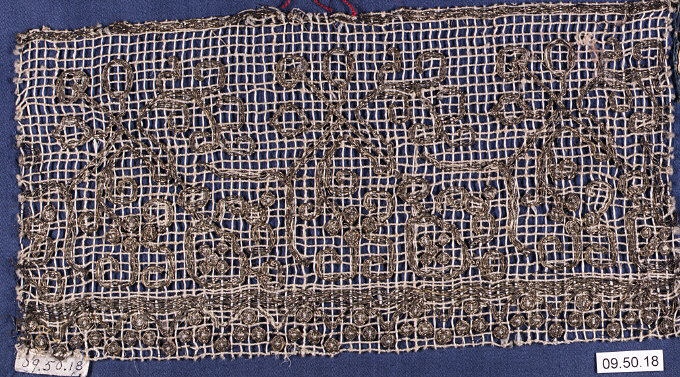
Central to this investigation is a radical material dialogue between embroidered net and punto à rammendo. The embroidered net serves as the foundational matrix—a translucent, industrial mesh that captures light and air, rendering the body as a spectral presence. Its geometric rigidity provides a counterpoint to the organic, almost surgical precision of the punto à rammendo. This ancient Italian mending stitch, traditionally used for invisible repairs, is here weaponized as a tool of deliberate fragmentation. Each stitch is a scar, a visible seam that celebrates the rupture. The net is not covered; it is selectively exposed, with the punto à rammendo acting as a tensile thread that pulls the fragmentary pieces into a controlled, dynamic tension. The result is a fabric that is simultaneously fragile and armored, a living archive of its own construction and deconstruction.
Structural Innovation: The Silhouette as a Fracture Field
The futuristic silhouettes of Fragment reject organic drape and linear flow. Instead, they are engineered as fracture fields. Garments are constructed from overlapping, asymmetrical panels that do not connect at conventional seams. A sleeve may terminate mid-bicep, its edges left raw, with the punto à rammendo stitching a ghostly extension of the limb. A bodice might appear as a shattered exoskeleton, with sections of embroidered net suspended between rigid, carbon-fiber-reinforced frames. The structural innovation lies in the negative space—the voids between fragments become active participants in the silhouette. The eye is forced to complete the form, creating a dynamic, ever-shifting perception of the garment. This is not a dress; it is a three-dimensional drawing in space, where the line is defined by absence.
The Global Frontier: A Lexicon of Cultural Dislocation
Drawing from the Global Frontier, Fragment appropriates and decontextualizes motifs from disparate cultures—a fragment of Japanese sashiko, a sliver of Andean weaving, a shard of Ottoman embroidery. These are not applied as decoration but as structural elements, stitched into the net with punto à rammendo. The result is a garment that speaks of migration, of the forced and chosen breaks in cultural continuity. It is a post-colonial wardrobe, where identity is no longer a fixed garment but a series of assembled, fractured references. The wearer becomes a nomad, carrying the fragments of a globalized world on their body, each stitch a testament to dislocation and re-assembly.
Case Study: The "Fractured Torso" Bodice
As a definitive example, consider the "Fractured Torso" bodice. Here, the embroidered net is laser-cut into a honeycomb of irregular polygons. Each polygon is then individually connected to its neighbor using punto à rammendo, but with deliberate gaps of 2-5 centimeters. The bodice does not encase the torso; it hovers, a lattice of fragments that reveals the skin in unexpected geometries. The structural support comes from a secondary, transparent polymer frame that follows the body's contours, invisible beneath the net. The silhouette is a paradox: it is both rigid and ephemeral, a cage that liberates through exposure. This piece exemplifies the SS26 directive: to create garments that are not worn, but inhabited as architectural environments.
The Future of Deconstruction: Beyond the Garment
Fragment is not a nostalgic return to the deconstruction of the 1990s. It is a forward-facing, computational approach to garment architecture. The fragments are not random; they are algorithmically derived from body scans and movement data, ensuring that each void and stitch facilitates a specific kinetic or visual effect. The futuristic silhouette is one of controlled chaos, where the human form is both the generator and the disruptor of the garment's logic. For SS26, Zoey Fashion Laboratory posits that the most powerful statement is not in the whole, but in the shard—the fragment that implies a lost whole, a future history, a story waiting to be completed by the wearer. This is the definitive avant-garde study of our time: a garment that is never finished, always becoming, and eternally fragmented.