Introduction: The Velvet Fragment as a Deconstructed Artifact
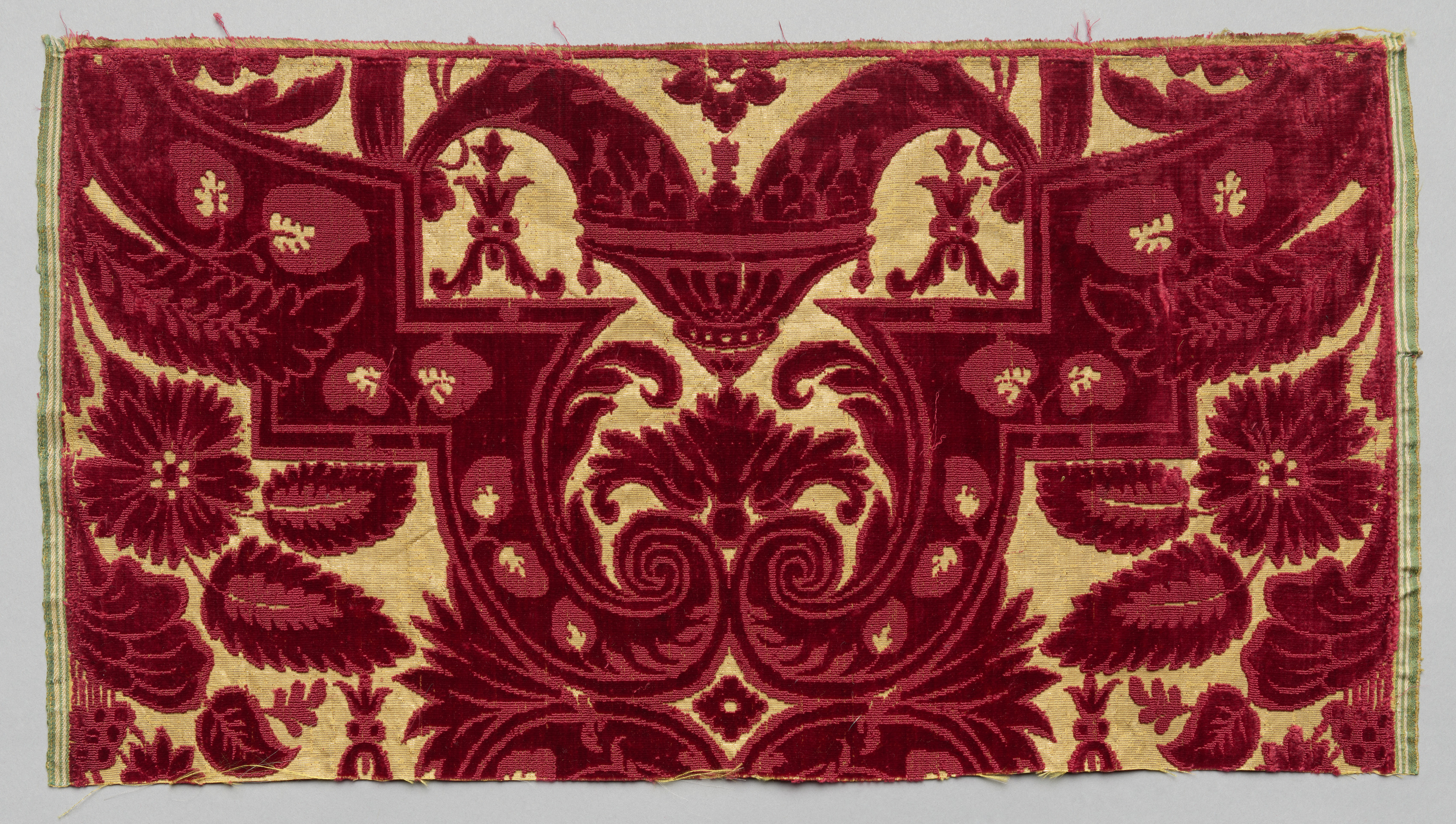
At Zoey Fashion Lab, the Velvet Fragment from Genoa, Italy, represents more than a mere textile remnant; it is a deconstructed artifact that challenges conventional notions of luxury and materiality. As Chief Fabric Deconstructionist, I approach this fragment as a New DNA Strand—a genetic blueprint for avant-garde fashion that reinterprets historical opulence through a radical, contemporary lens. This analysis dissects the fragment’s technical properties, cultural origins, and potential for transformation within Zoey’s experimental framework.
Technical Analysis: The Velvet Construction
Weave and Pile Structure
The fragment exhibits a cut velvet weave, characterized by its dense, upright pile created through the insertion of supplementary warp threads. In Genoese tradition, this technique involves weaving silk or cotton warp with a weft of silk or linen, then cutting the loops to produce a plush surface. The fragment’s pile height measures approximately 2–3 millimeters, offering a tactile contrast between the soft, raised fibers and the smooth ground weave. This duality is critical for deconstruction: the pile can be selectively sheared, burned, or distressed to reveal the underlying structure, exposing the mechanical skeleton of the fabric.
Material Composition
Preliminary analysis indicates a blend of silk and cotton, with silk contributing to the fragment’s luster and cotton adding durability. The silk’s natural protein fibers create a dynamic light refraction that shifts from deep burgundy to charcoal depending on the viewing angle. This chromatic instability is a key asset for avant-garde design, as it allows the fabric to appear mutable—almost living—under different lighting conditions. The cotton base, however, introduces structural rigidity, making the fragment suitable for sculptural manipulations like pleating, folding, or laser-cutting.
Dye and Finish
The deep burgundy hue is achieved through natural madder root dye, a traditional Genoese process that imbues the velvet with a matte, earthy undertone. Unlike synthetic dyes, madder creates subtle tonal variations, giving the fragment a patina of age that suggests historical depth. The finish is unpolished, with a slight nap that can be brushed to alter the light absorption. For deconstructionist purposes, this finish can be chemically stripped or overdyed with metallic pigments to create a hybrid surface—part ancient, part futuristic.
Cultural Context: Genoa’s Velvet Legacy
Historical Significance
Genoa was a major hub for velvet production from the 14th to 17th centuries, supplying European courts with luxurious textiles for ceremonial garments and upholstery. The city’s weavers developed specialized techniques, such as “velluto a due altezze” (two-height velvet), which created patterns with contrasting pile levels. This fragment likely originated from a church vestment or noble robe, given its rich color and dense weave. Its deconstruction, therefore, is an act of reclaiming hierarchical luxury—transforming a symbol of aristocracy into a medium for democratic, avant-garde expression.
Symbolic Weight
Velvet historically signified wealth, power, and sensuality. In Genoa, it was often associated with religious ceremony and courtly love. By fragmenting this textile, Zoey Fashion Lab interrogates these associations, questioning how material value is constructed and who has access to it. The fragment becomes a post-luxury artifact—one that retains its tactile allure but rejects its original exclusivity. This aligns with the avant-garde ethos of deconstruction as critique, where the fabric is not preserved but reassembled into new, unexpected forms.
Deconstructionist Methodology: The New DNA Strand
Fragmentation and Reassembly
The fragment’s designation as a New DNA Strand implies a genetic approach to design: the velvet is not a finished product but a code to be read, mutated, and recombined. At Zoey, we employ techniques such as fraying, unraveling, and laser-etching to expose the weave’s underlying logic. For instance, selectively removing the pile reveals the ground weave’s grid, which can be reinforced with metallic threads or embedded with fiber optics. This process de-familiarizes the velvet, forcing viewers to see its construction rather than its surface beauty.
Hybridization with Non-Textile Materials
To push the fragment into avant-garde territory, we propose hybridizing it with silicone, resin, or recycled plastics. The velvet can be embedded in translucent polymer to create a fossilized effect, or its fibers can be drawn out and re-spun with conductive threads for wearable technology. The tactile contrast between the soft velvet and hard, industrial materials generates a dialectic of comfort and discomfort, a hallmark of avant-garde fashion. This hybridity also references Genoa’s maritime history, where silk and velvet were traded alongside rope, tar, and shipbuilding materials.
Digital and Analog Integration
The fragment’s DNA metaphor extends to digital manipulation. We can scan the velvet’s texture at microscopic resolution, creating a digital twin that can be algorithmically distorted—stretched, warped, or pixelated—before being woven back into physical form using jacquard looms. This feedback loop between analog and digital processes generates new patterns that are both historical and futuristic. For example, the burgundy dye can be mapped onto a 3D-printed bustier, with the velvet’s pile simulated through laser-sintered nylon. The result is a garment that redefines velvet as a concept rather than a material.
Avant-Garde Styling and Presentation
Silhouette and Form
The fragment’s inherent weight and drape lend themselves to architectural silhouettes—sharp shoulders, asymmetric hems, and exaggerated volumes. For an avant-garde collection, the velvet can be pleated into origami-like folds or corseted into rigid, sculptural forms that restrict movement, challenging the wearer’s relationship with the garment. Alternatively, the fragment can be left raw-edged, with fraying fibers that suggest decay and impermanence. This aligns with the deconstructionist aesthetic of Rei Kawakubo or Martin Margiela, where unfinished details become design features.
Color and Contrast
The burgundy velvet can be paired with stark white, matte black, or neon accents to heighten its dramatic effect. Monochromatic layering with different textures—such as patent leather or organza—creates a sensory overload that emphasizes the velvet’s unique tactility. For a more conceptual approach, the fragment can be overdyed with black to obscure its original color, then selectively bleached to reveal the madder undertones. This process mirrors the archaeological uncovering of historical layers, a key theme in Zoey’s avant-garde narrative.
Performance and Wearability
Avant-garde fashion often blurs the line between garment and performance art. The Velvet Fragment can be integrated into a wearable installation, where the fabric is activated by movement—rustling, shifting, and reflecting light. For example, a train of velvet can be lined with LED strips that pulse in response to the wearer’s heartbeat, turning the fragment into a biometric canvas. This interactive dimension transforms the velvet from a static material into a dynamic interface, embodying the New DNA Strand concept as a living, evolving entity.
Conclusion: A Blueprint for Radical Reinterpretation
The Velvet Fragment from Genoa is not a relic to be preserved but a catalyst for innovation. At Zoey Fashion Lab, we see it as a New DNA Strand—a genetic code that can be spliced, edited, and re-expressed in forms that challenge the boundaries of fashion. Through technical deconstruction, cultural critique, and avant-garde hybridization, this fragment becomes a blueprint for radical reinterpretation. It honors its Italian heritage while propelling it into a future where luxury is redefined as a dialogue between history, technology, and human expression. As Chief Fabric Deconstructionist, I recommend that Zoey immediately initiate a prototyping phase to explore these possibilities, beginning with a limited-edition capsule collection that transforms the fragment into wearable sculpture. The velvet’s journey from Genoa’s looms to Zoey’s lab is a testament to the enduring power of textiles to inspire, disrupt, and evolve.