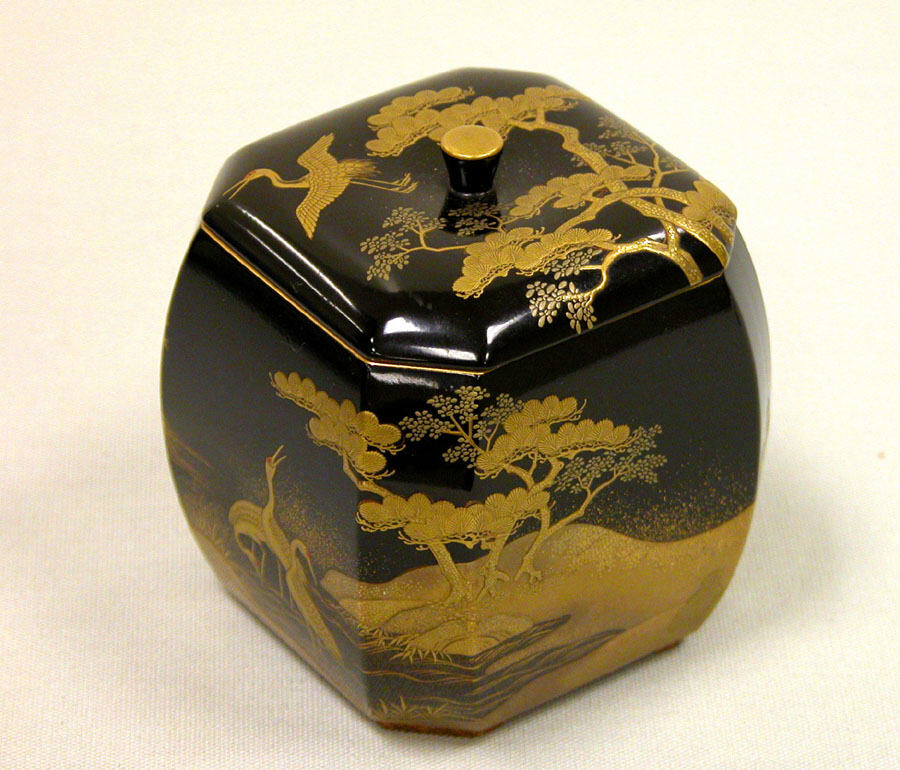
The Lacquer Void: Deconstructing the Japanese Tea Jar for SS26
The avant-garde imperative is not to represent, but to transubstantiate. For Zoey Fashion Laboratory’s SS26 collection, we abandon the pedestrian narrative of the garment as mere covering. Instead, we approach the object—a Japanese tea jar (natsume) of black lacquer with gold—as a generative architectural seed. This is not a study in cultural appropriation; it is a study in material ontology. The tea jar, a vessel for the ephemeral, becomes the blueprint for a new kind of body: a portable void, a lacquered exoskeleton of restraint and radiance. We are not designing clothes; we are designing containment systems.
1. The Silhouette: From Vessel to Void
The traditional natsume is a study in convex compression—a swollen belly that tapers to a narrow neck and a flat lid. For SS26, we extrapolate this into a futuristic, anti-anthropomorphic silhouette. The human form is no longer the subject; it is the armature. The primary construction is a double-layered, structural shell.
The “Void Coat” exemplifies this. Its shoulders are not padded; they are cantilevered. Using a lightweight carbon-fiber-reinforced polymer base (invisible to the eye), the garment’s upper torso expands into a perfect, rigid dome that mirrors the top half of the tea jar. The fabric—a matte, optical-black Japanese polyester with a micro-ribbed texture—is stretched taut over this armature. The arms emerge not from the sides, but from slit openings at the exact midpoint of the dome, where the vessel’s “shoulder” would meet its “neck.” This creates a disembodied, almost robotic proportion. The wearer becomes a piece of architecture, a walking lacquer box.
Below the waist, the silhouette inverts. The “Void Coat” flares into a geometric, asymmetrical hem that mimics the jar’s slightly uneven, hand-thrown base. A single, gold-lamé panel—cut with laser precision to emulate the gold leaf’s crackled texture—is inset at the left hip, catching light like a fissure in the void. The overall form is one of compressed power: a solid, impenetrable upper block that releases into a fractured, dynamic lower structure.
2. The Material Dialogue: Black Lacquer and Liquid Gold
The tea jar’s materiality is a binary opposition: the deep, absorbing black of the urushi lacquer versus the reflective, assertive gold. We translate this not as fabric choice, but as surface treatment and structural layering.
The “Urushi Shell” technique is the collection’s signature. A base layer of sculpted, black neoprene is coated in a proprietary solvent-free, high-gloss resin that is heat-set to achieve the exact depth and reflectivity of the original lacquer. This is not a print; it is a skin of material memory. The resin is applied in multiple coats, sanded to a glass-like finish, and then strategically cracked using controlled thermal shock. These cracks—fine, dendritic lines—are then inlaid with a liquid-gold pigment suspension that is cured under UV light. The result is a garment surface that is simultaneously monolithic and fractured, a mappable terrain of time and repair.
For the gold accents, we reject metallic fabrics. Instead, we employ laser-fused, 24-karat gold leaf on a flexible, micro-mesh substrate. This is used for the structural seams, the cuffs, and the “lid” closures—circular, magnetic fasteners that echo the jar’s lid. The gold is not decorative; it is functional tension. It acts as a visual and physical hinge, a point of rupture and connection.
3. Structural Innovation: The Kinetic Armature
The tea jar is static; the body is not. Our structural innovation lies in kinetic architecture. The garments are engineered to shift between states of compression and release, mirroring the act of opening the jar to access the tea.
The “Kinetic Natsume” dress is the apotheosis. It is a single piece of black lacquered neoprene, molded into a spiral form that wraps the body from the left shoulder to the right hip. The spiral is not sewn; it is magnetic. A series of rare-earth magnets, encased in the gold-leaf mesh, allow the garment to be worn in two distinct configurations: sealed (the spiral is closed, creating a smooth, cylindrical column) or open (the spiral is unfurled, revealing a sheer, black organza underlayer with a gold-leaf grid). The transition is a performance. The wearer becomes the curator of their own volume.
Furthermore, the “Lid Collar” is a detachable, rigid structure that sits above the collarbone. It is a perfect circle of the lacquered resin, with a hollow center. This collar does not rest on the shoulders; it is suspended by a titanium wire frame that connects to the back of the garment, creating a 5-centimeter gap between the collar and the skin. It is a literal void, a negative space that frames the neck. This is not a necklace; it is a structural portal.
4. The Futuristic Context: SS26 and the Philosophy of Containment
In an era of digital saturation and algorithmic fashion, SS26 for Zoey Fashion Laboratory is a manifesto of physicality. The tea jar—an object of ritual, precision, and precious emptiness—offers a counter-narrative to fast fashion’s chaos. Our garments are objects of meditation. They demand slowness. The act of dressing becomes an act of sealing oneself—not from the world, but into a state of focused presence.
The futuristic silhouette is not about speed or aerodynamics. It is about silence. The black lacquer absorbs light; the gold cracks emit a controlled, internal glow. The wearer is a monument to stillness in motion. The structural innovations—the magnetic spirals, the suspended collars, the cracked resin—are not gimmicks. They are philosophical tools for re-negotiating the relationship between the body, the garment, and the space around it.
This is the definitive avant-garde study: to take a humble tea jar and, through deconstruction and material alchemy, produce a garment that is more than clothing. It is a vessel for the self. A void made visible. A lacquer box for the future.