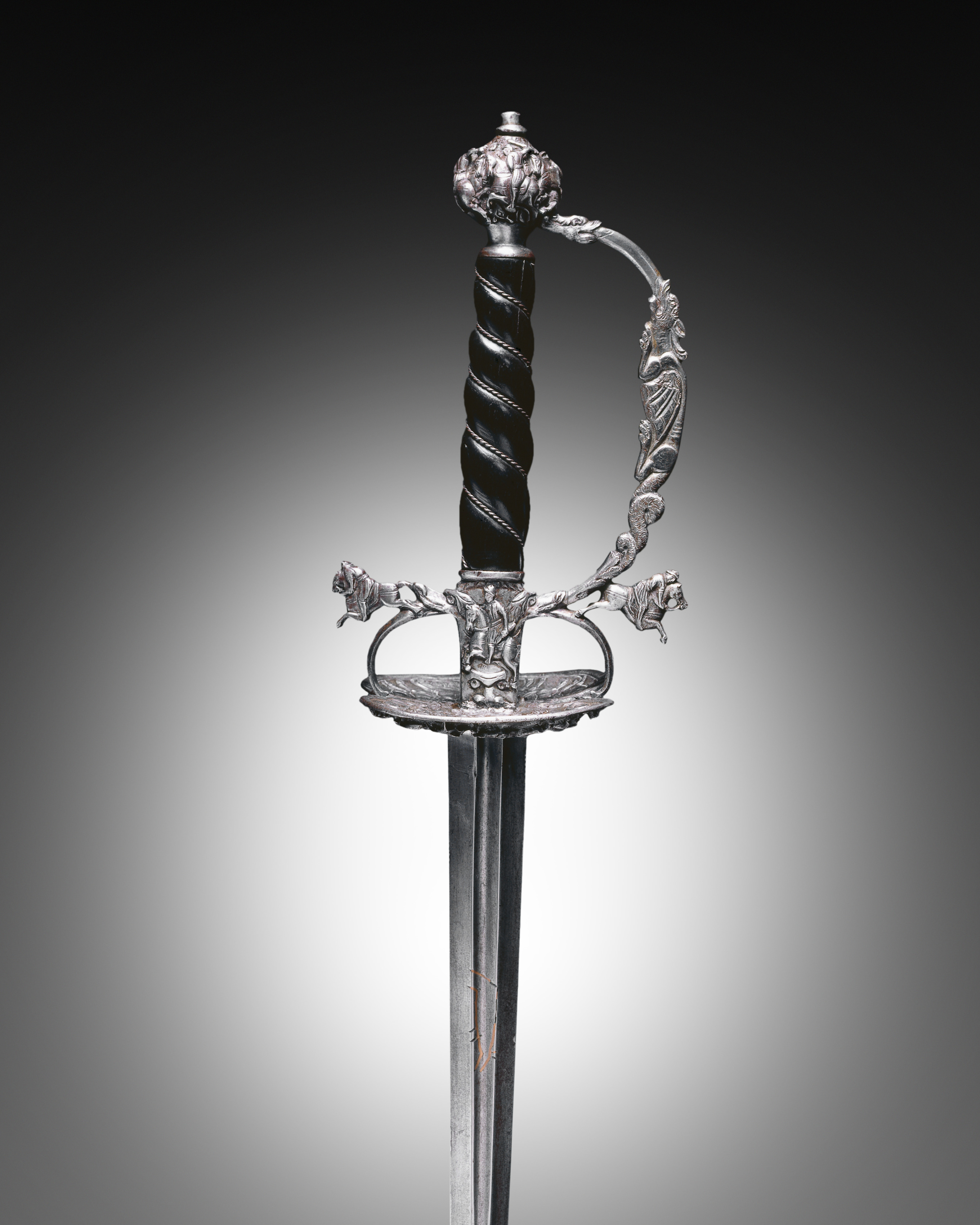
Deconstructing the Small Sword: A Technical and Stylistic Analysis for Zoey Fashion Lab
At Zoey Fashion Lab, we approach historical artifacts not as relics to be preserved in amber, but as genetic material to be decoded and recombined. The subject of this analysis—a German Small Sword, likely from Passau, circa 17th century—presents a compelling case study in structural tension, surface narrative, and material alchemy. Its core components—steel, wood, steel wire, copper, chiseled shell guard, with a blued, gilded, pierced, and engraved blade—offer a lexicon of avant-garde possibilities. This is not a weapon of war; it is a weapon of presence, a statement of identity worn at the hip. For our lab, it represents a New DNA Strand—a foundational code for disrupting contemporary fashion’s reliance on softness, drape, and passive decoration.
1. The Structural Paradox: Rigidity and Flexibility
The Small Sword’s defining characteristic is its structural paradox. The blade, forged from high-carbon steel, is a study in controlled rigidity. Its tapering, triangular cross-section is engineered for maximum thrust with minimal weight—a pure expression of linear force. Yet this rigidity is counterbalanced by the chiseled shell guard, a sculptural element that introduces organic, flowing curves. For Zoey Fashion Lab, this tension is the foundation of a new silhouette. We envision a garment where the steel wire, traditionally used for the grip’s wrapping, is reinterpreted as an exoskeletal framework. Imagine a jacket where blued steel wires are woven into the seams, creating a structure that is both supportive and flexible—a literal “skeleton” that allows the wearer to move while maintaining a geometric, armored presence. The wooden core of the grip, usually hidden beneath wire, becomes a visible element: a carved, ergonomic spine running down the back of a coat, offering both tactile comfort and a visual anchor.
2. Surface as Narrative: Bluing, Gilding, and Piercing
The blade’s surface is not merely functional; it is a painted canvas of status and threat. The bluing—a controlled oxidation that transforms steel into a deep, midnight blue—is a chemical process that simultaneously protects and beautifies. In the 17th century, this indicated a weapon of ceremonial or dueling purpose, not battlefield use. For our avant-garde interpretation, bluing becomes a chromatic signature. We propose a textile dyeing process that mimics this oxidation, creating fabrics that shift from deep indigo to near-black under different light, evoking the patina of age and the sheen of polished metal.
The gilding, applied in intricate patterns along the blade’s ricasso and fuller, introduces gold as a counterpoint to the dark steel. This is not mere ornament; it is a hierarchical marker, a flash of light that draws the eye to the weapon’s most dangerous part. In our lab, gilding is translated into metallic embroidery or laser-cut gold leaf applied to strategic points of a garment—the cuffs, the collar, the hemline—creating a visual “edge” that signals power and precision. The piercing and engraving of the blade, often featuring floral or geometric motifs, adds another layer. Piercing reduces weight and introduces negative space; engraving creates texture. For fashion, this translates into laser-cut leather panels with intricate, sword-inspired patterns, or 3D-printed metal mesh that mimics the openwork of the blade, allowing glimpses of skin or underlying fabric.
3. The Chiseled Shell Guard: Sculpture in Miniature
The chiseled shell guard is the most architecturally complex element of the Small Sword. Typically formed from a single piece of steel, it is a protective cup for the hand, but its surface is often carved with grotesques, scrolls, or mythological figures. This is where the swordsmith’s artistry reached its peak. For Zoey Fashion Lab, the shell guard is a prototype for wearable sculpture. We deconstruct its form into modular, articulated components. Imagine a shoulder piece made of polished steel and copper, hinged to move with the arm, its surface engraved with a continuous narrative—a modern-day “sword story” told in metal. The copper element, often used for the guard’s inner lining or as an accent, introduces a warm, conductive contrast to the cold steel. In our designs, copper wiring becomes a visible, functional element—perhaps integrated into a garment’s closure system, or used as a woven metallic thread in a structural knit, its reddish glow echoing the historical material.
4. Material Alchemy: Steel, Wood, Wire, and Copper
The combination of materials in this sword is a lesson in contrast and complement:
- Steel (blade and guard): Represents strength, precision, and coldness.
- Wood (grip core): Introduces warmth, organic grain, and ergonomic comfort.
- Steel wire (grip wrapping): Adds texture, tension, and a tactile grid.
- Copper (accent): Offers conductivity, a reddish hue, and a softer metallic tone.
For our lab, this material palette is a DNA sequence to be recombined. We envision a collection where blued steel plates are riveted onto carved wooden corsets, the wood’s grain visible through the metal’s openings. Copper chains replace traditional zippers, and steel wire is knitted into a fine, flexible mesh that forms sleeves or hoods. The piercing technique is translated into cut-out patterns on leather or bonded fabric, creating a lattice that reveals a blued silk lining beneath—a direct reference to the blade’s oxidized surface.
5. The Avant-Garde Silhouette: From Weapon to Wearable
The Small Sword’s silhouette is linear and thrusting—a straight line from hand to tip. For fashion, this translates into exaggerated verticality. We propose a silhouette that elongates the body: high-shouldered jackets with sharp, blade-like lapels; floor-length coats with a single, dramatic slit reminiscent of a sword’s edge; and asymmetric hemlines that mimic the blade’s taper. The shell guard inspires a new approach to the shoulder and hip: sculpted, protective forms that are both structural and decorative. Think of a chiseled metal shoulder that curves around the wearer’s arm, or a copper hip plate that echoes the guard’s protective function.
6. Conclusion: The Sword as Genetic Code
The 17th-century German Small Sword is not a finished garment; it is a blueprint for deconstruction and reconstruction. Its elements—steel, wood, wire, copper, bluing, gilding, piercing, and engraving—are not merely historical details but active design principles. For Zoey Fashion Lab, this artifact provides a New DNA Strand: a code that merges the precision of metallurgy with the fluidity of fashion, the rigidity of armor with the flexibility of movement, and the narrative of status with the anonymity of avant-garde expression. Our analysis reveals that the Small Sword’s true legacy is not in its function as a weapon, but in its potential as a wearable system of tension, contrast, and surface storytelling. In our hands, it becomes a collection that is both a tribute to the past and a provocation for the future—a fashion that is, quite literally, forged.