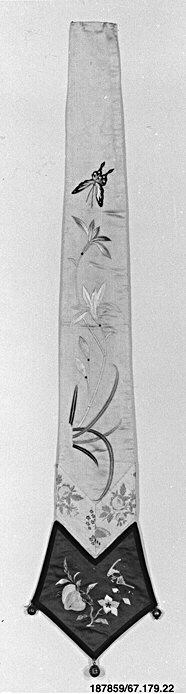
Deconstructing the Kinetic Ritual: From Folkloric Streamer to Avant-Garde Architecture
The traditional Chinese dancer's streamer, or cai dai, is not merely an accessory; it is a choreographic instrument, a physical manifestation of rhythm and air. For the SS26 collection, Zoey Fashion Laboratory engages in a profound deconstructive dialogue with this artifact, transposing its folkloric kineticism into a lexicon of futuristic silhouette and structural innovation. Our analysis moves beyond superficial appropriation, excavating the streamer's core principles—dynamic extension, sonic punctuation, and fluid geometry—to architect garments that interrogate the relationship between body, movement, and form in a speculative future.
Silk as Structural Substrate: From Fluid Appendage to Exoskeletal Framework
The inherent paradox of silk—its simultaneous strength and ethereality—forms the cornerstone of our material re-engineering. In its traditional use, silk flows as an ephemeral trace of the dancer's motion. Our SS26 proposition inverts this relationship. Through advanced bio-laminates and magnetic thread weaving, we transform silk from a passive follower into an active, shape-retaining architectural element. Imagine broad, cantilevered collars that appear to float, their forms "frozen" mid-sweep, constructed from silk hardened into lightweight, flexible membranes. Streamers evolve into articulated spine extensions or parabolic bustles, their trajectories not dictated by momentum alone but by integrated, flexible alloy armatures within silk casings. This creates a silhouette that is both rigidly defined and suggestively fluid, a futuristic exoskeleton celebrating controlled torsion rather than mere flow.
The Sonic Silhouette: Bronze Bells as Kinetic Nodes and Data Interfaces
The bronze bell, a traditional sonic counterpoint to visual flow, is re-contextualized from folk ornament to a critical component of interactive garment tech. No longer simply auditory, the bell becomes a kinetic node and potential data-transfer interface. We envision micro-engineered bell modules, fabricated from recycled aerospace bronze alloys, embedded at strategic junctures within the architectural silk. Their function is tripartite. Firstly, they provide a tangible, haptic weight that influences garment movement, creating a deliberate, slowed kinetics. Secondly, they house minimalist piezoelectric sensors, translating specific movements—a sharp turn, a slow arm lift—into unique digital soundscapes, wearable as a personal auditory aura. Thirdly, in a more speculative vein, these nodes could act as contact points for garment-to-garment or garment-environment communication, turning the wearer into a walking, sounding network within a smart cityscape.
Structural Innovation: The Pneumatic Streamer and Volumetric Displacement
The core avant-garde intervention lies in reimagining the streamer's very ontology. We propose the Pneumatic Streamer System. Utilizing micro-compressed air channels woven into the bio-laminated silk, specific "streamer" sections of a garment can inflate or deflate on command or in response to biometric feedback. A static, minimalist tunic could, with a gesture, deploy a voluminous, air-filled train that displaces space around the wearer. Conversely, an inflated silhouette could collapse into a sleek, second-skin layer. This introduces a fourth dimension—transformative volume over time—to the silhouette. Furthermore, we explore the concept of "negative streamers": laser-cut voids and strategic subtractive patterning in rigid silk panels that create the optical illusion of trailing absence, a ghost imprint of traditional movement frozen in a futuristic material.
SS26 Silhouette Manifesto: The Kinetic Cage and the Trailing Void
The resulting SS26 silhouette vocabulary is one of controlled dynamism and architectural presence. Key forms include:
The Kinetic Cage Gown: A structured, geometric bodice of laminated silk gives way to a lower body encased in a lightweight, articulated cage from which hardened silk streamers extend. These streamers do not flutter; they articulate like robotic tendons, their movement limited and precise, echoing the disciplined angles of robotic arms alongside the grace of dance.
The Monolithic Bell Tunic: A single, oversized volume, shaped from a single piece of molded silk, with hundreds of micro-bells embedded in its surface. Movement creates a cascading, granular soundscape, while the silhouette itself—a moving, sounding monolith—presents a formidable architectural presence.
The Trailing Void Cape: A cape constructed from a rigid silk lattice, its pattern derived from the mathematical paths of traditional streamer movements. The negative space is the primary feature, casting ever-changing shadow "streamers" onto the wearer's body and the ground beneath, a garment defined by the absence it projects.
Conclusion: Towards a Choreography of Form
This analysis posits a future where avant-garde couture is not about clothing a body, but about engineering a dynamic, interactive architectural field around it. By deconstructing the dancer's streamer, Zoey Fashion Laboratory for SS26 moves past nostalgia into a realm of speculative biomimicry and wearable tech integration. The collection will not feature literal streamers and bells, but rather their evolved principles: tensile strength, programmed kinetics, responsive sonics, and transformative volume. The final garment is a choreographic partner, a piece of silent music scored in silk, bronze, and air, inviting a new, deliberate, and profoundly futuristic mode of movement. It is a standalone study that redefines elegance as the precision of engineered motion, where every silhouette tells a story not just of form, but of potential energy and latent sound.