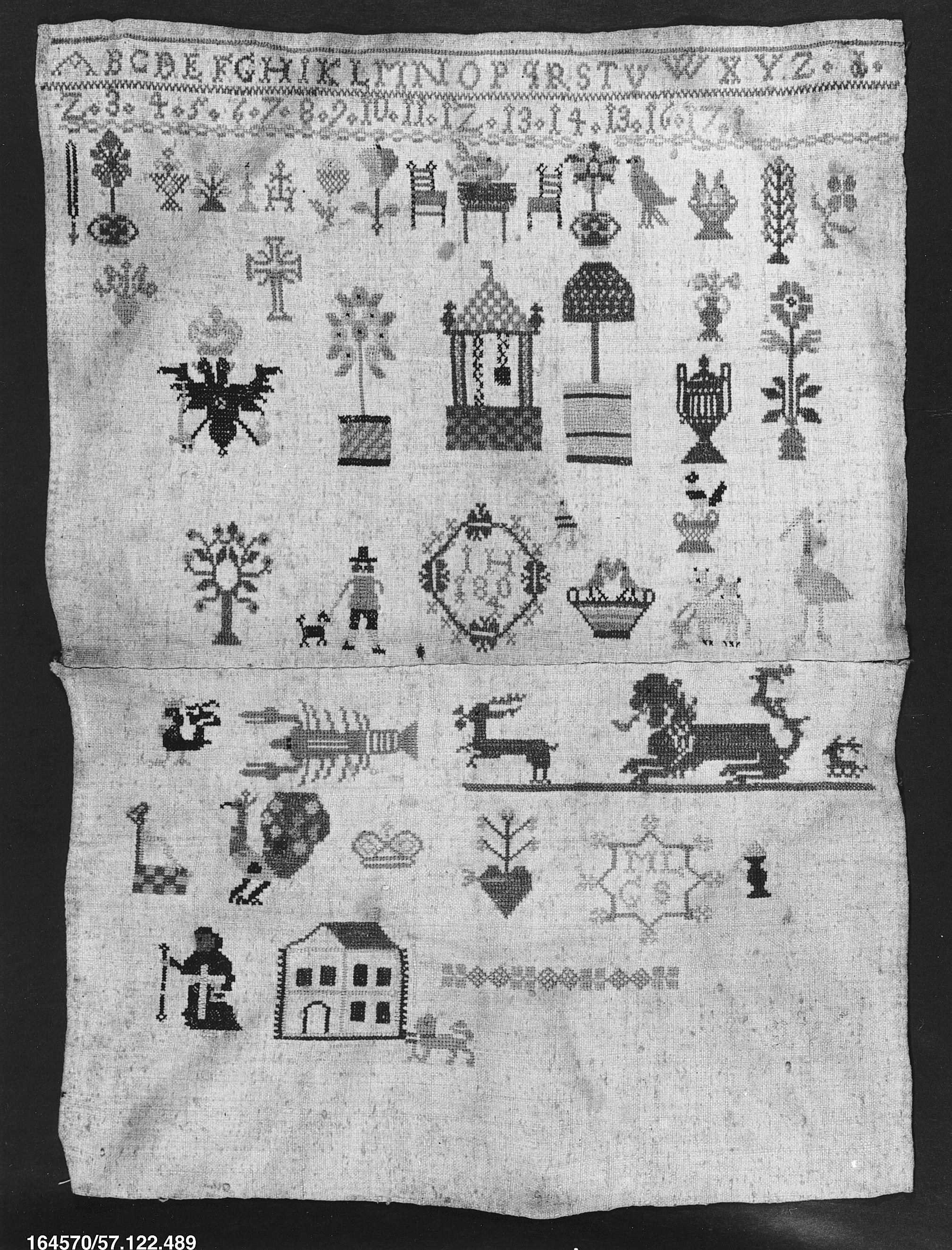
The Sampler as Architectural Codex: Deconstructing the Global Frontier for SS26
In the hallowed atelier of Zoey Fashion Laboratory, the concept of the sampler undergoes a radical transmutation. It is no longer a quaint relic of domestic craft, a mere test of stitches and threads. For the SS26 avant-garde study, the sampler emerges as a structural codex—a blueprint for a new form of garment architecture that interrogates the very boundaries of textile, silhouette, and cultural memory. Drawing from the Global Frontier—a liminal space where tradition meets hypermodernity—this analysis dissects the sampler's potential to redefine futuristic silhouettes through the dialectical tension of silk on linen.
The Material Dialectic: Silk on Linen as a Statement of Intent
The choice of silk on linen is not arbitrary; it is a calculated provocation. Linen, with its rigid, almost architectural grain, represents the structuralist past—a fiber of utility, of peasant authenticity, of the earth. Silk, conversely, is the fluid future—a material of opulence, of organic drape, of the body's most intimate movements. When these two are fused in the sampler, they create a tensile paradox. The linen provides a foundational grid, a Cartesian framework that anchors the composition. The silk, often applied as a topographical overlay or an interstitial membrane, introduces a luminous instability. This is not a seamless blend but a deliberate friction—a dialogue between the static and the kinetic, the rooted and the nomadic.
For SS26, this material dialectic manifests in garments that are self-contradictory yet cohesive. A jacket might feature a linen bodice cut with the precision of a Brutalist facade, while silk panels are inserted at the shoulders and hips, erupting into asymmetrical, wing-like volumes. The sampler becomes a cartographic legend—each stitch, each weave, a coordinate on a map of the Global Frontier. The silk's sheen catches light like a signal flare, while the linen's matte texture absorbs it, creating a chiaroscuro effect that mimics the stark landscapes of border zones and frontier outposts.
Futuristic Silhouettes: The Sampler as Exoskeletal Blueprint
The avant-garde silhouette for SS26 is not about draping the body; it is about re-envisioning the body as an architectural site. The sampler informs this by functioning as a modular exoskeleton. Each embroidered motif, each placed stitch, is a potential joint or hinge. The Global Frontier context—a place of constant movement, of crossing and re-crossing—demands garments that are transformative. A single sampler piece can be a deconstructed dress that, through a series of hidden loops and silk ties, morphs into a cocoon-like cape or a sculptural bustier.
Consider the silhouette of the "Nomadic Arch". The linen base is cut to follow the body's natural lines, but the silk is applied in geometric patches that rise from the waist, forming a cantilevered hip structure reminiscent of Zaha Hadid's fluid architecture. The sampler's repetitive patterns—often inspired by global textile traditions from the Silk Road to the Andes—are recontextualized as parametric data. They are not decorative; they are load-bearing. The stitches that bind the silk to the linen are tension points, creating a directional flow that pulls the fabric into sharp, angular folds or soft, billowing sails.
Another key silhouette is the "Fractured Grid". Here, the linen is laser-cut into a lattice, with silk threads woven through the gaps to form a living net. The body is both exposed and protected, visible through the interstitial spaces. This is a futuristic armor, not for war, but for the psychological frontiers of identity. The sampler becomes a map of the self—each silk strand a pathway, each linen knot a point of decision. The silhouette is volumetric yet transparent, challenging the viewer to see the garment as both a barrier and a window.
Structural Innovation: From Stitch to System
Structural innovation in this context goes beyond mere construction technique; it is a systemic rethinking of garment logic. The sampler, traditionally a test of skill, is elevated to a design methodology. The Global Frontier is a place of hybridity, where materials and techniques from disparate cultures collide. For SS26, the sampler incorporates micro-engineering at the stitch level. Silk threads are treated with a thermoplastic resin that allows them to be heat-set into permanent, three-dimensional shapes. Linen is pleated using ancient Japanese shibori techniques but scaled up to create origami-like folds that lock into place without stitching.
The key innovation is the reversible tension seam. This is a stitch that, when pulled from one end, contracts the fabric into a dense, sculptural knot; when released, it expands into a flat, flowing plane. The sampler becomes a dynamic system—the wearer can adjust the silhouette in real-time, transforming a fitted sheath into a voluminous, cloud-like structure. This is responsive architecture on the body, a direct answer to the fluidity of the frontier.
Contextualizing the Sampler: A Standalone Avant-Garde Study
As a standalone study, the sampler for SS26 is a manifesto in miniature. It rejects the notion that fashion must be either functional or sculptural. Instead, it proposes a third path: a functional sculpture that carries the memory of its making. The Global Frontier is not a geographical location but a conceptual state—a place where the past (linen) and the future (silk) coexist in productive tension. The sampler is the grammar of this new language, a set of rules that can be endlessly recombined.
Zoey Fashion Laboratory's interpretation of the sampler is a radical act of preservation and destruction. It preserves the craft of the hand, the intimacy of the stitch, while destroying the traditional hierarchy of fabric and form. The result is a futuristic silhouette that is both ancient and alien—a garment that speaks of the body's journey across the frontiers of time, space, and material possibility. For the discerning avant-garde collector, this is not clothing; it is a portable architecture of becoming.