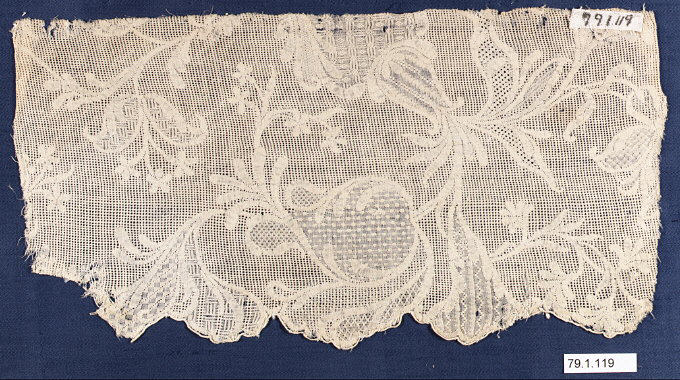
Fragment as Architecture: Deconstructing the Global Frontier for SS26
In the relentless pursuit of the new, Zoey Fashion Laboratory presents a definitive avant-garde study of the fragment—not as a vestige of decay, but as the foundational unit of a nascent sartorial language. For SS26, the fragment is reimagined as a structural axiom, a deliberate rupture that defines the silhouette through absence rather than presence. Drawing from the Global Frontier—a conceptual territory where cultural boundaries dissolve into hybridized expression—this collection interrogates the very notion of completion. The material of choice, drawnwork, emerges not as mere embellishment but as a tectonic process: threads are selectively extracted, creating voids that become the primary narrative. This is not a garment; it is a system of architectural voids, a study in negative space where the body becomes the absent center.
The Fragment as a Generative Principle
The fragment in this analysis is not a remnant of a whole; it is a self-contained universe of potential. In traditional couture, the fragment implies loss, a broken narrative. Here, we invert that logic. Each fragment is a micro-architecture—a discrete structural node that resists integration into a seamless whole. The Global Frontier provides the ideological scaffold: as global influences collide, they produce not synthesis but a mosaic of dissonant parts. A sleeve may exist as an independent, suspended arc; a bodice might terminate abruptly, its edges raw and unhemmed, inviting the viewer to complete the form mentally. This is a deliberate strategy to destabilize the viewer’s expectation of harmony. The fragment becomes a prosthetic for the imagination, forcing a re-engagement with the garment as an unfinished dialogue.
Materially, drawnwork facilitates this fragmentation at the molecular level. By pulling threads from a continuous textile, we create controlled lacunae—gaps that are not random but precisely calibrated. In SS26, these voids are not negative; they are positive spaces that define the garment’s volume. A jacket’s shoulder may be composed of a lattice of drawnwork, where the missing threads carve out a silhouette that is simultaneously rigid and ethereal. The fragment becomes a structural paradox: it is both the material and the space it refuses to occupy. This is the essence of deconstructive aesthetics—not to destroy, but to reveal the underlying grammar of form.
Futuristic Silhouettes: The Body as a Collision of Planes
The silhouettes for SS26 reject organic curves in favor of angular, fractured geometries. The body is not draped but encased in a series of intersecting planes that mimic the digital fragmentation of the Global Frontier. Shoulders are sharp, asymmetrical, and often detached from the torso, floating as independent structures. A typical ensemble might feature a fragmented corset—a series of rigid, drawnwork panels that do not connect, leaving the skin exposed in calculated intervals. This is not sensuality; it is a visual syntax of disconnection. The silhouette is built from the inside out: each fragment is a load-bearing element, and the garment’s integrity depends on the tension between these discrete parts.
Consider a prototype: a floor-length coat constructed from overlapping, trapezoidal panels of drawnwork linen. The panels are not sewn together but linked by floating threads that act as tensile cables. As the model moves, the panels shift, revealing glimpses of the body through the voids. The silhouette is not static; it is a kinetic architecture, constantly reconfiguring itself. This is structural innovation at its most radical: the garment does not conform to the body; it creates a new body, one composed of fragments that negotiate their own spatial relationships. The fragment thus becomes a unit of dynamic equilibrium, where stability is achieved not through continuity but through strategic rupture.
Drawnwork: The Material Logic of Absence
Drawnwork is the material protagonist of this study. Historically a technique of delicate embroidery, it is here weaponized as a deconstructive tool. The process begins with a base textile—a high-twist silk or a rigid cotton—from which threads are systematically removed. What remains is a grid of tension and release, a fabric that is as much hole as fiber. For SS26, we push this technique to its extreme: entire sections of a garment may consist of nothing but the residual warp and weft threads, creating a skeletal transparency that challenges the boundary between clothing and void.
The Global Frontier informs the pattern of drawnwork: we borrow motifs from global textile traditions—Japanese sashiko, Indian kantha, Andean backstrap weaving—but fragment them, extracting threads to create hybridized geometries. A single sleeve might feature a drawnwork pattern that begins as a Celtic knot, dissolves into a grid, and ends as a series of vertical slashes. This is not cultural appropriation; it is cultural abstraction, where the fragment becomes a universal signifier of dislocation. The materiality of drawnwork also introduces a tactile dialectic: the surface is both rough and delicate, opaque and transparent, solid and ephemeral. This duality is essential to the collection’s intellectual rigor.
Structural Innovation: The Garment as a System of Voids
The final frontier is the garment’s internal structure. Traditional couture relies on seams, darts, and linings to create shape. Here, we replace these with tensile networks of drawnwork. A bodice is not sewn; it is woven in situ around the mannequin using a single continuous thread, leaving intentional gaps that form the fragmentary silhouette. This is a return to the origins of dressmaking—the loom—but twisted into a futuristic language. The fragment is the cell of this new cellular structure, repeating and iterating without ever forming a whole.
Consider the spine of the collection: a gown whose back is entirely absent, replaced by a cascade of drawnwork threads that anchor the front panels. The absence is not a flaw; it is the primary structural feature. The garment is held together by the tension of the threads, a metaphor for the Global Frontier itself—a network of connections that exist only through gaps. The innovation lies in the redefinition of the seam: no longer a point of union, but a point of departure. Each seam is a drawnwork line, a series of missing threads that create a negative-space join. This is a radical departure from the history of tailoring, and it positions Zoey Fashion Laboratory at the forefront of conceptual fashion for SS26.
In conclusion, this avant-garde study of the fragment, executed through drawnwork on the Global Frontier, proposes a new ontology for the garment. The fragment is not a broken part; it is a sovereign entity that defines the whole through its refusal to integrate. The body becomes a site of architectural negotiation, and the silhouette a dynamic field of tension and release. For SS26, Zoey Fashion Laboratory does not clothe the body; it fragments it, revealing the beauty of the incomplete, the power of the void, and the future of structural innovation.