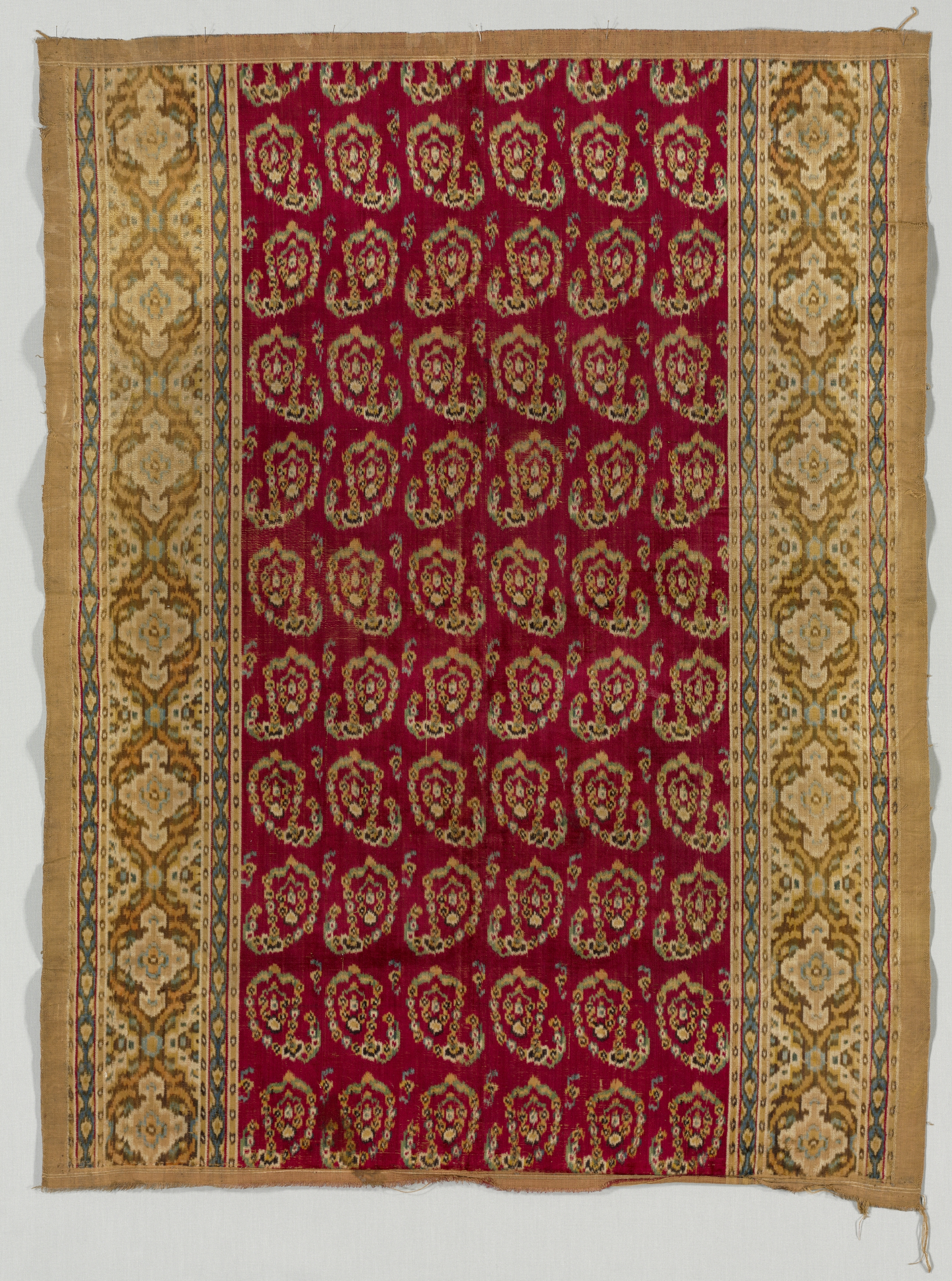
Deconstructing the Kashan Velvet: An Avant-Garde Perspective from Zoey Fashion Lab
As the Chief Fabric Deconstructionist at Zoey Fashion Lab, my role is to dissect historical textiles not merely as artifacts, but as living, breathing sources of design DNA. The subject of this analysis—a 19th-century velvet panel from Kashan, Iran—represents a pinnacle of classical textile artistry. However, within the folds of this luxurious pile, we detect a dormant genetic code, a New DNA Strand waiting to be spliced, mutated, and re-expressed through an avant-garde lens. This report will deconstruct the technical, aesthetic, and conceptual elements of the Kashan Velvet, proposing a radical re-imagining that honors its heritage while propelling it into the future of fashion.
Technical Architecture: The Velvet Pile as a Structural System
Technically, the Kashan Velvet is a masterpiece of complex weaving. It is a cut-pile velvet, meaning the loops of supplementary warp threads have been severed to create a dense, plush surface. The base structure typically employs a silk warp and weft, creating a strong, lustrous ground, while the pile is often made of silk or a silk-cotton blend. The depth of the pile, the density of the knots (often exceeding 100 per square inch), and the use of metallic threads (silver or gold wrapped around a silk core) for highlights create a fabric of extraordinary tactility and visual depth.
From a deconstructionist standpoint, the velvet is not a simple surface; it is a three-dimensional terrain. The pile acts as a micro-architecture, creating shadows and highlights that shift with light and movement. The "New DNA Strand" we identify here is the inherent tension between the flat ground weave and the raised pile. In avant-garde design, this dichotomy can be exploited. We can imagine a process of selective pile removal using laser or chemical etching, creating a topographic map on the fabric’s surface. Areas of dense, untouched pile could represent "mountains" of tradition, while completely sheared sections reveal the raw, structural skeleton of the weave—the "valleys" of deconstruction. This technique would transform a historically flat decorative panel into a dynamic, sculptural textile, perfect for a garment that is as much an architectural statement as it is clothing.
Aesthetic Deconstruction: From Floral Motif to Genetic Code
Visually, the Kashan Velvet is renowned for its intricate floral and arabesque patterns, often featuring a central medallion (or toranj) surrounded by scrolling vines, stylized leaves, and palmettes. The color palette is typically rich and jewel-toned: deep ruby reds, sapphire blues, emerald greens, and gold highlights against a dark, often black or deep blue, ground. This aesthetic is rooted in the Persian garden (pairidaeza), a symbol of paradise.
However, our avant-garde analysis reframes these motifs. The floral patterns are not merely decorative; they are a visual language, a code of cultural identity, status, and cosmology. The "New DNA Strand" here is the concept of digital mutation. We would extract a single, iconic motif—say, the central palmette—and digitize its silhouette. Then, using generative design software, we would subject this silhouette to a series of algorithmic distortions: stretching, twisting, fragmenting, and repeating it in non-repeating, chaotic patterns. The result would be a fabric that retains the memory of the original pattern but expresses it as a glitch, a digital echo of a handcrafted past.
This could be realized through digital jacquard weaving or advanced printing techniques. Imagine a coat where the back panel features the original, pristine Kashan medallion, while the front panels display a fragmented, pixelated version of the same motif, as if the pattern is breaking apart into data. The color palette would also be subverted: the deep reds might be replaced with neon fuchsias, the gold with reflective silver, and the black ground with a translucent, iridescent organza. This creates a garment that is simultaneously a tribute and a critique, a celebration of heritage and a leap into a hypermodern, digital future.
Conceptual Framework: The Velvet as a Medium for Temporal Collage
Conceptually, the 19th-century Kashan Velvet is a vessel of time. It carries the weight of a specific historical moment, a craft tradition, and a cultural narrative. For the avant-garde, this is a powerful tool. The "New DNA Strand" we propose is temporal collage—the deliberate juxtaposition of historical authenticity with radical intervention. The velvet is not to be destroyed but to be recontextualized.
Consider a garment constructed from a single, irreplaceable antique panel. Instead of cutting it into a traditional pattern, we would treat it as a found object, a relic. The panel could be the central, unaltered core of a garment—perhaps the back of a jacket or the front of a floor-length gown—while the rest of the garment is built from stark, industrial materials like clear PVC, carbon fiber, or raw-edged neoprene. The velvet is framed, almost like a painting, within a futuristic, utilitarian shell. The seams would be exposed, the stitching deliberately crude, as if the historical fragment has been violently grafted onto a modern body.
This approach creates a powerful dialogue. The softness of the velvet against the hardness of the PVC, the intricate pattern against the blankness of the industrial material, the handcrafted against the machine-made. The wearer becomes a living museum, a walking archive of a lost world, but one that is actively engaging with the present. The garment is not a costume; it is a conceptual statement about the fragility of heritage, the violence of modernization, and the possibility of synthesis.
Avant-Garde Application: The "Kashan Mutation" Collection
For Zoey Fashion Lab, the Kashan Velvet is not a material to be used; it is a catalyst for a collection. We propose a capsule line titled "Kashan Mutation." The collection would explore three distinct, avant-garde expressions of the velvet's DNA:
1. The Sheared Topography: A series of garments—corsets, bodysuits, and asymmetrical skirts—where the velvet pile is laser-etched to create topographical patterns. The original floral motifs are translated into contour lines, with high-pile "hills" and sheared "valleys." The garment is then paired with transparent, architectural panels of resin, allowing the viewer to see the body beneath, further deconstructing the traditional modesty of the velvet.
2. The Digital Glitch: A long, dramatic coat or a deconstructed trench dress. The back panel is a pristine, antique Kashan velvet fragment (sourced ethically from a textile archive). The front and sleeves are digitally printed on a high-tech, stretch mesh with a glitched, pixelated version of the same pattern. The seams are raw and unfinished, and the coat is fastened with industrial-grade magnetic closures instead of buttons.
3. The Grafted Relic: A floor-length gown where the bodice is a single, uncut Kashan panel, framed by a stark, minimalist structure of black neoprene and clear silicone straps. The skirt is a cascade of sheer, iridescent organza, onto which a few, isolated velvet motifs have been appliquéd as if floating away from the main panel. The effect is haunting, as if the historical fabric is dissolving into the future.
Conclusion: The Future of Heritage
The 19th-century Kashan Velvet is not a dead artifact. It is a repository of profound technical, aesthetic, and conceptual intelligence. At Zoey Fashion Lab, our deconstruction is not an act of destruction but of translation. By identifying the "New DNA Strand" within this historic textile—the tension between pile and ground, the code of the floral motif, the weight of time—we can splice it into the genome of avant-garde fashion. The result is not a reproduction but a mutation, a new species of garment that carries the memory of the past while embodying the radical possibilities of the future. This is the essence of our work: to honor the craft of history by ensuring it continues to evolve, to challenge, and to inspire.