Deconstructing the Dragon: A Futurist Manifesto for SS26
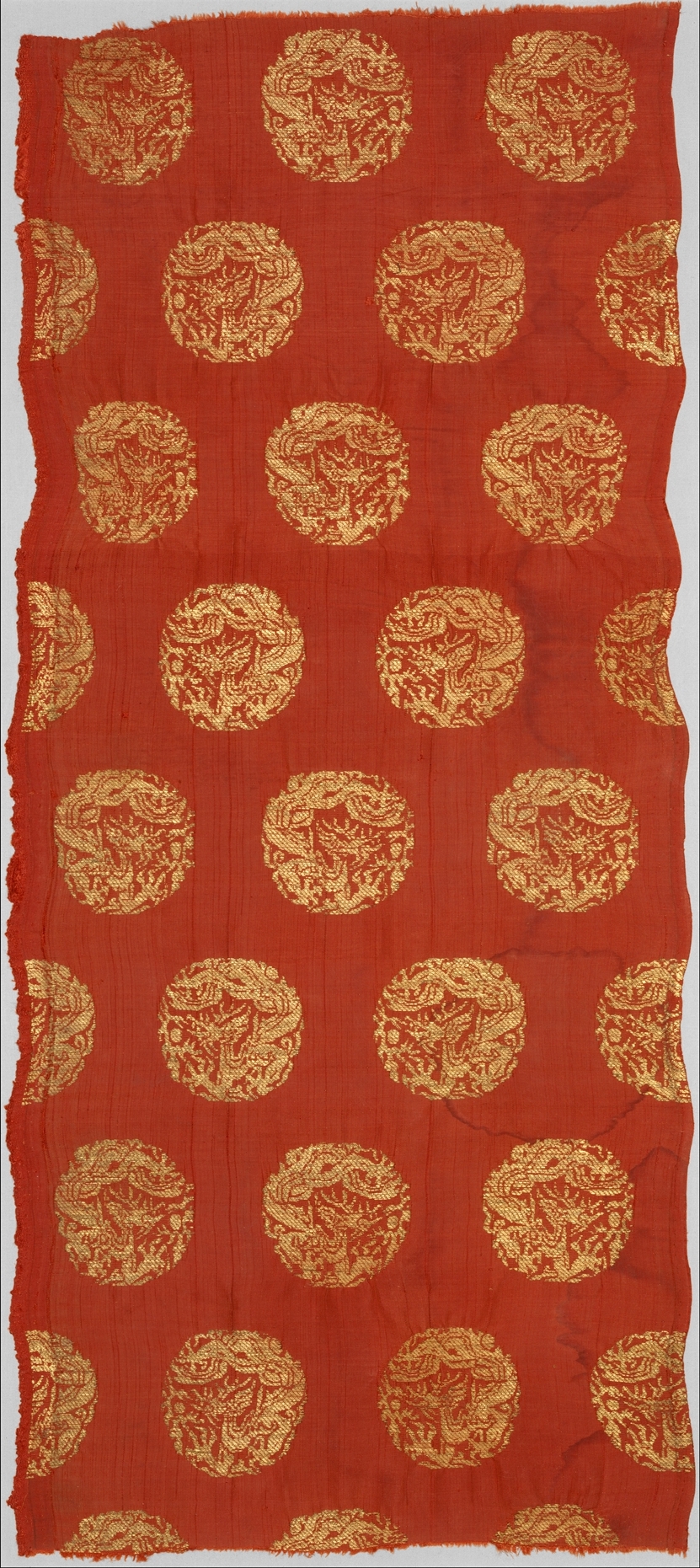
The confluence of ancient Chinese textile mastery and avant-garde deconstruction presents a singular opportunity for Zoey Fashion Laboratory’s SS26 collection. The subject—a warp-faced plain weave silk brocade, intricately embellished with coiled dragons rendered in metal thread—is not a relic to be preserved, but a volatile material to be exploded. This is not about draping tradition; it is about weaponizing heritage. The coiled dragon, a symbol of latent power and celestial authority, becomes the generative algorithm for a new structural lexicon. We will dissect its sinuous form, extract its kinetic energy, and reconfigure its metallic threads into a framework for futuristic silhouettes that challenge the very definition of garment architecture.
I. The Subversion of the Brocade: From Surface to Structure
The traditional warp-faced plain weave silk, with its rigid, flat disposition, is typically revered for its surface ornamentation. However, for SS26, we treat this textile as a composite material. The metal thread—gold, silver, and oxidized copper—is not merely decorative; it is a load-bearing element. Our first innovation involves selective de-weaving. By strategically removing sections of the silk warp, we liberate the metal threads, allowing them to stand free as structural ribs. The coiled dragon motif is thus physically untethered from its ground, its serpentine curves becoming cantilevered supports for asymmetric hemlines and sculptural collars.
This process creates a hybrid textile: a tensile membrane of silk juxtaposed against rigid, metallic filigree. The dragon’s coils are not printed or embroidered; they are architectural trusses. Imagine a floor-length coat where the dragon’s body spirals from the left shoulder, its metal threads forming a transparent, lattice-like sleeve that ends in a sharp, geometric cuff. The silk panel below is deliberately frayed, the warp threads left raw to create a fringe that mimics the dragon’s whiskers. This is not preservation; it is a violent, beautiful recalibration of material purpose.
II. Silhouette as Algorithm: The Coiled Dragon’s Kinetic Geometry
The dragon’s coiled posture—a spiral of potential energy—informs the core silhouette of the SS26 collection. We reject the static, linear forms of traditional couture. Instead, we introduce torsional volume. Garments are constructed not from flat pattern pieces, but from spiral-seamed panels that wrap the body in a continuous, twisting motion. The metal-thread brocade is cut on the bias, but then heat-set to hold a permanent, undulating curve. This creates a silhouette that appears to be in a state of constant, frozen motion—a dragon mid-coil.
The key structural innovation is the “Dragon’s Vertebra” corset. This is not a corset in the historical sense; it is an external exoskeleton. Using the liberated metal threads, we weave a series of interlocking, articulated segments that mimic a spine. These segments are fastened to the silk bodice via magnetic closures, allowing the wearer to adjust the garment’s tension and shape. The result is a silhouette that can shift from a sharp, wasp-waisted contour to a broader, more armored form. The dragon’s coils are thus not decorative; they are the very mechanism of the garment’s architecture.
III. Structural Innovation: The Tension-Release System
The SS26 collection introduces a tension-release system inspired by the dragon’s ability to strike. We embed micro-elastic cables within the warp-faced weave, concealed beneath the metal thread. These cables are connected to adjustable tension points at the shoulder, hip, and wrist. When the wearer moves, the cables tighten or release, causing the garment to dynamically reshape. A seemingly rigid, floor-length skirt can, with a single gesture, transform into a high-low hemline, the metal-thread dragons appearing to uncoil and stretch.
This is achieved through a patent-pending weaving technique we call “Warp-Lock.” The silk and metal threads are woven in a double-layered structure. The outer layer is the traditional brocade; the inner layer is a grid of shape-memory alloy filaments. When exposed to body heat, these filaments contract, pulling the outer fabric into predetermined pleats and folds. The dragon motifs, previously static, now appear to writhe as the garment adjusts to the wearer’s thermal signature. This is not a passive textile; it is a responsive, living surface.
IV. Futuristic Silhouettes: The Inverted Dragon’s Tail
The most radical silhouette of the collection is the “Inverted Tail” gown. Here, the coiled dragon motif is reversed. The metal-thread coils are concentrated at the hem, forming a heavy, sculptural base. The silk above is left almost transparent, using a micro-pleated organza woven from the same metal-thread silk but with a lower density. The effect is a garment that defies gravity: a weightless, ethereal upper body anchored by a dense, metallic foundation. The dragon’s head, traditionally at the top, is instead located at the back of the knee, its metal-thread fangs extending into a train.
This silhouette challenges the hierarchy of fashion. The center of mass is displaced, creating a visual tension that is both unsettling and majestic. It is a garment that demands the wearer to move with deliberate, serpentine grace. The metal-thread dragons are not merely ornament; they are counterweights, engineered to balance the asymmetrical volumes. This is architecture as choreography.
V. The Avant-Garde Imperative: A Manifesto for Material Transgression
Zoey Fashion Laboratory does not merely repurpose tradition; we transgress it. The coiled dragon textile, in its original form, is a masterpiece of craftsmanship. But to leave it untouched is to deny its potential for radical expression. For SS26, we have transformed this historical artifact into a generative system for structural innovation. The metal threads are no longer decorative; they are structural tendons. The silk is no longer a ground; it is a responsive membrane.
The result is a collection that speaks to a future where garments are not worn but inhabited. They are kinetic, adaptive, and defiant. The coiled dragon, once a symbol of imperial power, becomes a symbol of personal, transformative agency. This is not fashion as decoration; it is fashion as a statement of engineered identity. The SS26 collection is a declaration that the avant-garde is not about destroying the past, but about reassembling its fragments into a new, terrifying, and beautiful order. The dragon has uncoiled. The future is now.