Technical Deconstruction: The Armored Genome
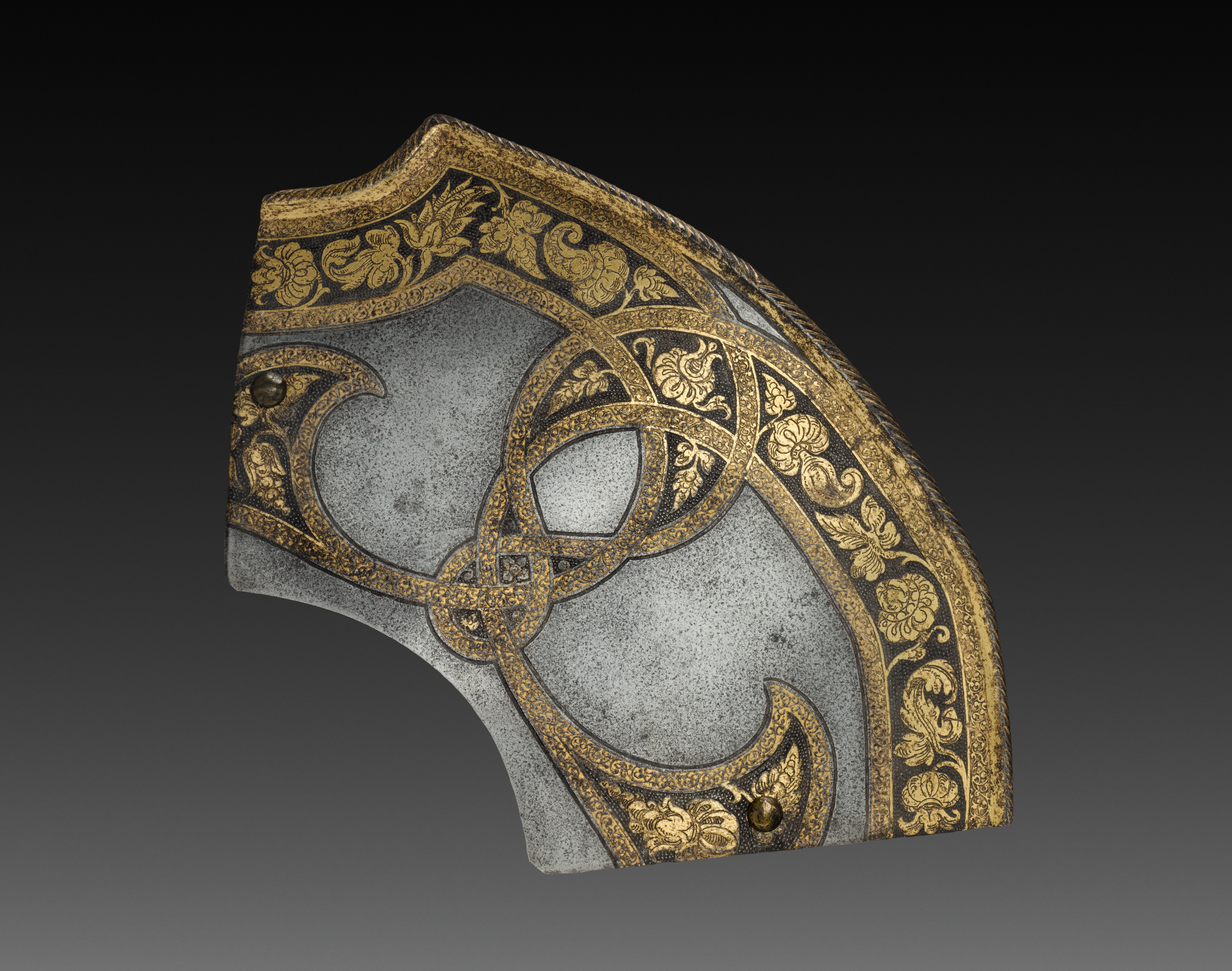
The object in question, a 16th-century Augsburg saddle pommel plate, is not merely a component of equestrian gear. It is a dense, metallic manuscript of power, artistry, and technical virtuosity. For Zoey Fashion Lab, its value lies not in its historical context alone, but in its intrinsic material DNA—a triple-helix of blued, etched, and gilded steel. This is our reference "New DNA Strand," a foundational code for avant-garde construction.
First, the substrate: steel. This is the essence of resilience, of structural integrity. In fashion terms, this is our base cloth—not a passive canvas, but an assertive, tensile foundation. Think engineered technical fabrics, molded leathers, or structured felts that hold memory and form. The steel provides the "bone structure" of a garment, the internal architecture that defies drape in favor of defined, almost architectural silhouette.
Upon this, the bluing. This is not a pigment but a controlled oxidation, a transformation of the surface through heat and chemistry into a deep, resonant midnight blue or near-black. It is a color born of process, not application—a perfect metaphor for sustainable, transformative dyeing techniques. For our purposes, this represents a foundational, deep-toned layer that is rich and somber, absorbing light. It could translate as garment-dyed heavy silks, over-dyed wools, or chemically altered denims where the color is integral to the material's very identity.
The Etched Narrative: Fracturing the Surface
The etching is the pivotal disruptive element. Acid is used to selectively "draw" by eating away the blued surface, revealing the bright, raw steel beneath. This is the genesis of pattern, of negative space, of a narrative carved in light and shadow. The "Flechtband" (interlace) pattern referenced is a complex, rhythmic braid—an endless, looping knot. In an avant-garde context, this is not mere ornament; it is a directive for surface manipulation.
We interpret etching as any process that creates contrast through subtraction or revelation: laser-cutting that burns precise, intricate filigree into leather; devoré techniques that dissolve cellulose fibers to reveal translucent patterns on velvet; precision distressing that isn't random but algorithmically planned to expose underlying layers; or even strategic seams and slashes that function as negative drawing on the garment's form. The etched line is sharp, intentional, and creates a dialogue between the seen and the unseen, the surface and the substrate.
The Gilded Flash: Strategic Opulence
Finally, the gilding. This is not blanket coverage, but a strategic application of precious material into the etched channels. The cold, fiery gold sits *within* the recesses, highlighting the pattern, making it legible and luxurious. It is opulence as information, wealth as emphasis. This is a critical lesson for avant-garde design: luxury should be precise, intelligent, and contrast-driven.
Translated, gilding becomes any high-contrast, textural inlay. This could be: metallic foil pressed into heat-bonded seams; liquid gold or silver chainmaille insets within a matte fabric matrix; polished resin fills over embossed patterns; or even the sudden, shocking use of a luminous, high-gloss satin piped into the seams of a matte, blued-texture jacket. The gilding is the "flash" in the genome—the unexpected, precious detail that makes the underlying structure sing.
Avant-Garde Synthesis: The Zoey Fashion Lab Manifesto
Synthesizing this DNA strand leads us to a distinct avant-garde ethos. It is not romantic or soft; it is armored, intelligent, and layered in process. A garment born from this analysis would exhibit the following characteristics:
1. Structural Chassis: The garment begins with a form-defining base—a corseted bodice, a rigid shoulder line, a sculpted skirt form. This is our "steel." It is built for posture and presence.
2. Deep-Field Color: The primary palette is one of profound, processed depths: iron blue, gunmetal grey, oxidized black, blood rust. Colors that feel achieved rather than applied.
3. Fractured Surface Narrative: Across this deep field, a precise, rhythmic pattern is revealed. Not printed, but extracted. Imagine a jacket where the sleeves appear to be unraveled into a complex lace, but the "unraveling" is actually laser-cut in a precise, interlocking "Flechtband" pattern, revealing a contrasting underlayer of raw, unfinished textile (the "raw steel").
4. Precious Insets: Within those cut channels or along specific seam lines, a third material is inlaid—a stroke of gilded leather, a vein of mirrored piping, a thread of palladium chainmaille. It catches the light only in movement, making the pattern dynamic and alive.
The Final Silhouette: A Modern Garniture
The original object was part of a "garniture"—a matching set for man and horse, declaring unified power. Our contemporary garniture is a capsule collection where each piece shares this DNA strand. A tailored coat with etched sleeves, a dress with a gilded spinal channel, trousers with strategic, pattern-based perforations. Together, they form a visual language of resilience, intricate craft, and strategic brilliance.
This pommel plate, therefore, is far more than an artifact. It is a blueprint for a fashion that is armored yet ornate, technical yet artistic, severe yet luminous. It teaches us to build from a foundation of strength, to draw by subtracting, and to highlight with precision. For Zoey Fashion Lab, this is the new DNA: a triple-helix of Structure, Subtraction, and Strategic Flash. The result is not a costume of the past, but the intelligent, formidable uniform for a nuanced future.