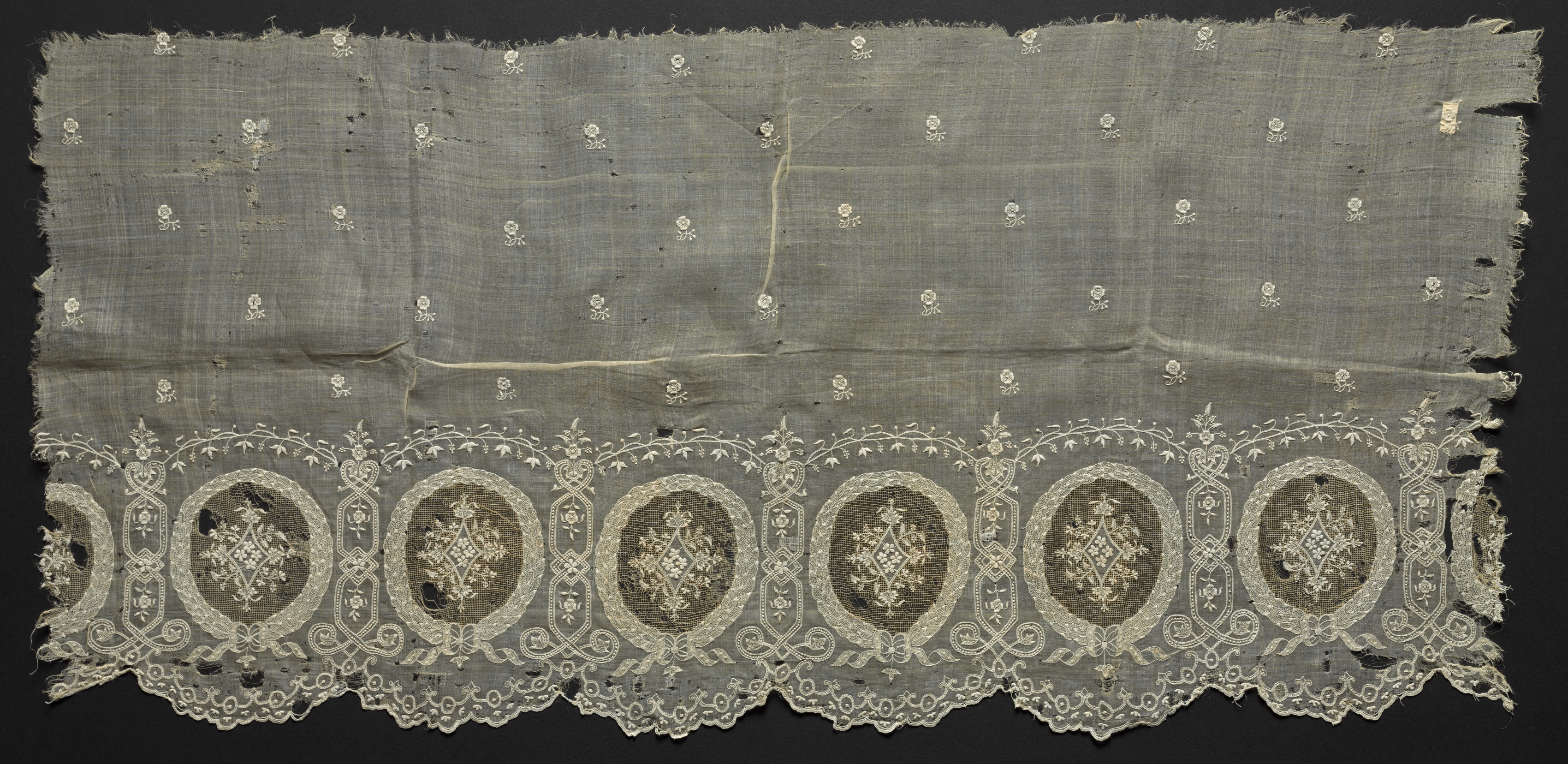
Deconstructing the Piña Textile: An Avant-Garde Analysis for Zoey Fashion Lab
At Zoey Fashion Lab, the act of deconstruction is not merely a technical process; it is a philosophical excavation. We dismantle textiles to uncover the narratives woven into their very fibers. Our latest subject, an embroidered piña textile from the Philippines, presents a compelling case study in material paradox. Piña, a cloth woven from the fibers of the pineapple leaf, is a quintessential symbol of Philippine heritage, prized for its gossamer lightness and translucent quality. When paired with ecru thread embroidery, it embodies a tactile memory of colonial elegance and indigenous resilience. However, our analysis, framed by the concept of Archive Resonance, seeks to rupture this historical narrative, pushing the textile beyond its traditional context into the realm of the avant-garde. We are not preserving a relic; we are interrogating a ghost, a whisper of a past that is both fragile and fiercely resistant. The reference to the 16th and 17th centuries—a period of intense cultural collision between Asia, Europe, and the Americas—is not a nostalgic anchor but a catalyst for radical re-imagining.
Material History: The Ghost in the Fiber
Piña is a textile born of labor and luxury. The process of extracting fibers from pineapple leaves, hand-knotting them, and weaving them on traditional looms is a testament to pre-colonial and colonial craft. The cloth itself is a paradox: it is strong yet diaphanous, cool yet opulent. The addition of ecru thread embroidery, typically in floral or geometric patterns (known as calado or sombrado), elevates the fabric to a status symbol, worn by the elite during the Spanish colonial era. For Zoey Fashion Lab, this history is not a pedestal but a pressure point. The ecru thread, a natural, undyed color, echoes the fiber’s origin, creating a monochromatic dialogue that is both subtle and profound. In our deconstruction, we identify this as a “ghost fiber”—a material that carries the weight of colonial subjugation, indigenous ingenuity, and the trans-Pacific trade of the Manila Galleons. The 16th-17th century reference in our Archive Resonance framework highlights this era as a crucible of hybridity, where Asian, European, and American aesthetics collided. The piña cloth, with its pineapple leaf fiber (a plant native to South America, introduced to the Philippines), is a literal embodiment of this global entanglement.
Technical Deconstruction: Unraveling the Avant-Garde
Our analysis moves beyond preservation to active disruption. The avant-garde lens demands that we see the piña textile not as a finished object, but as a set of potentialities. The technical properties we identify are:
1. The Tension of Transparency: Piña’s sheer quality creates a visual tension between visibility and concealment. The embroidery, while decorative, also functions as a structural intervention, stiffening the fabric and creating micro-architectures. In an avant-garde context, this transparency can be weaponized. We envision the textile as a screen, a membrane that filters light and shadow, challenging the viewer’s gaze. The ecru thread embroidery, when viewed from a distance, becomes a pattern of voids and solids, a digital-like pixelation before the digital age. This can be re-imagined as a form of negative space sculpture on the body, where the absence of fabric becomes as significant as its presence.
2. The Fragility as a Design Parameter: Traditional piña is notoriously delicate, requiring careful handling. In our deconstruction, we reframe this fragility not as a limitation, but as a radical design parameter. We propose intentional “wear” and “decay” as aesthetic strategies. By selectively distressing the embroidery or creating controlled tears in the piña, we can evoke a sense of archaeological ruin—a garment that tells a story of time, memory, and loss. This aligns with the Archive Resonance concept, where the textile becomes a living archive, its damage speaking louder than its pristine state. The ecru thread, when pulled or frayed, can be re-stitched in chaotic, non-linear patterns, creating a visual noise that disrupts the original harmonious design.
3. The Embroidery as Code: The traditional floral and geometric motifs of piña embroidery are not merely decorative; they are a form of visual language, often carrying symbolic meanings of fertility, status, or spirituality. In our avant-garde analysis, we treat these motifs as a cryptographic system. We propose deconstructing the embroidery by isolating individual stitches and re-arranging them into abstract, non-representational patterns. This act of “decoding” and “re-coding” can generate new forms that speak to contemporary themes of data, identity, and hybridity. For instance, a traditional sombrado (shadow embroidery) technique, where the thread is laid in parallel lines, can be exaggerated into a series of raised, almost sculptural ridges, transforming the fabric into a topographical map of a forgotten territory.
Avant-Garde Applications: From Archive to Action
How does this technical deconstruction translate into a tangible design direction for Zoey Fashion Lab? We propose three avant-garde applications:
1. The Deconstructed Camisa: The traditional camisa (a blouse made of piña) is a classic silhouette. Our avant-garde version would be a deconstructed, asymmetrical shell. The piña cloth is cut into fragmented panels, joined by exposed, contrasting stitching in a darker thread (perhaps black or metallic) to highlight the construction. The ecru embroidery is selectively removed from some panels and reapplied as appliqué on others, creating a visual dissonance. The transparency of the piña is layered over a second skin of nude or black mesh, creating a play of opacity and exposure. This garment is not meant to be worn passively; it is a statement of the body as a contested site of history.
2. The Embroidered Armor: By reinforcing the piña with a stiffening agent (such as a water-soluble stabilizer that is later partially removed), we can create sculptural, armor-like forms. The ecru thread embroidery becomes the structural grid, forming geometric patterns that mimic chainmail or architectural lattices. This “armor” is not for protection but for provocation—a commentary on the fragility of colonial power structures. The garment would be a wearable sculpture, its form dictated by the tension between the delicate fiber and the rigid embroidery. This directly challenges the traditional association of piña with feminine delicacy, re-casting it as a material of strength and defiance.
3. The Digital-Phantom Piña: Using the Archive Resonance framework, we can translate the piña textile into a digital artifact. High-resolution scans of the embroidered patterns are manipulated using generative design software, creating algorithmic distortions of the original motifs. These digital patterns are then printed onto a modern, sustainable fabric (such as Tencel or organic cotton) using a reactive dye that mimics the ecru color. The resulting textile is a “phantom” of the original—a ghost of a ghost. This garment is a meditation on the loss of craft in the digital age, while simultaneously celebrating the potential for new forms of creation. The physical garment would be cut from this printed fabric, but with deliberate raw edges and unfinished seams, echoing the deconstruction of the original piña.
Conclusion: Resonance as Rupture
Our analysis of the embroidered piña textile is not an act of preservation, but an act of rupture. By deconstructing its material, technical, and historical layers, we reveal the tensions that make it a powerful tool for avant-garde expression. The ecru thread embroidery, once a symbol of colonial refinement, becomes a code to be broken, a pattern to be distorted, a structure to be weaponized. The piña fiber, once a testament to indigenous labor, becomes a ghost that haunts the present, demanding to be re-interrogated. For Zoey Fashion Lab, this is the essence of Archive Resonance: not to echo the past, but to make it vibrate with new, unsettling frequencies. The result is a garment that is not a costume of history, but a catalyst for a new narrative—one that embraces fragility as strength, transparency as depth, and deconstruction as a radical act of creation.