Deconstructing the Uraeus: An Avant-Garde Analysis for Zoey Fashion Lab
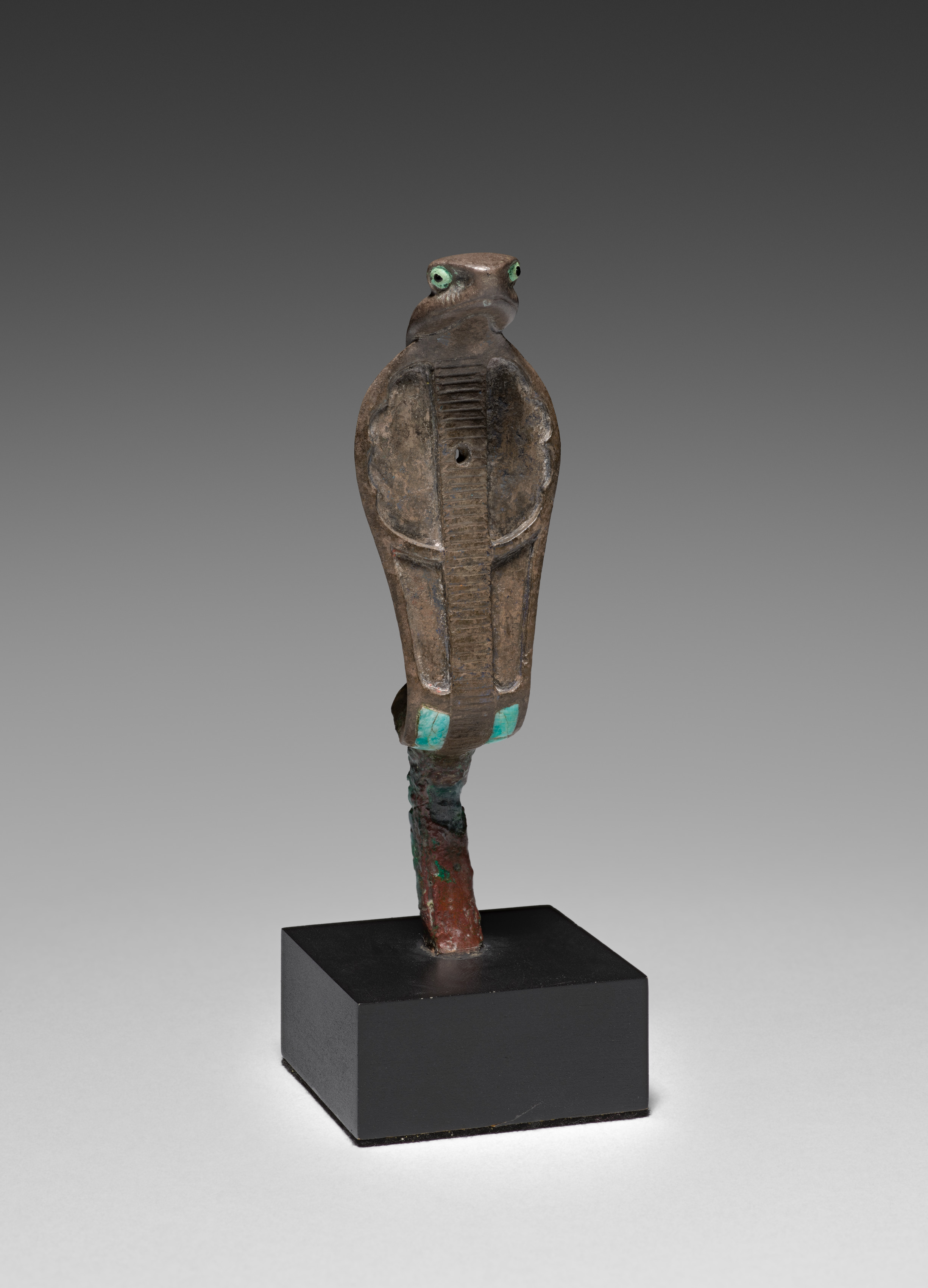
The Uraeus, the rearing cobra, is not merely an artifact; it is a symbol of absolute authority, divine protection, and the cyclical nature of life and death. For Zoey Fashion Lab, this object from Egypt’s New Kingdom (Dynasty 19, 1540–1069 BCE) presents a profound opportunity to deconstruct the very essence of power and translate it into a wearable, avant-garde narrative. This analysis will dissect the Uraeus through the lens of materiality, symbolism, and the specific resonance of the reference text, “Mirror with Split-Lea…,” to propose a collection that is both historically resonant and radically contemporary.
Material Alchemy: The Silver-Copper Alloy and Its Inlays
The technical composition of the Uraeus—a silver-copper alloy with inlays of copper, feldspar, turquoise, obsidian, and gilding—is a masterclass in controlled contrast. The base metal, a silver-copper blend, is not a pure, reflective surface; it is a muted, slightly warm silver, suggesting the tarnished moon of an ancient sky. This is the foundation of our deconstruction. For Zoey Fashion Lab, we will not replicate this alloy. Instead, we will translate its essence into fabric and form.
Consider a base fabric of oxidized silver lamé with a subtle copper weave, creating a fabric that shifts in tone from cool grey to warm bronze under different light. This replicates the alloy’s inherent instability and its dialogue with time. The inlays—the vibrant blue-green of turquoise, the deep, almost black blue of feldspar, the fiery red of copper, and the dense black of obsidian—become strategic, jolting accents. Turquoise and feldspar can be rendered as laser-cut, iridescent organza appliqués, their edges raw and frayed to mimic the organic nature of the stone. The obsidian is the most critical: a dense, matte black liquid latex or powder-coated neoprene that absorbs light, creating a visual void. Gilding, the final touch, is not gold leaf but a metallic embroidery thread that catches light in sharp, angular stitches, like hieroglyphs carved into the fabric.
Structural Symbolism: The Rearing Cobra as a Garment
The Uraeus is not a static object; it is a dynamic, poised strike. The cobra’s hood is expanded, its body tensed. In fashion, this translates to a silhouette that is both restrictive and explosive. The hood becomes a dramatic collar or a sculptural shoulder piece, constructed from a rigid, heat-molded thermoplastic that mimics the snake’s scale pattern. This piece is not sewn; it is latched or pinned onto the garment, suggesting a removable, ritualistic element. The body of the cobra, the rearing vertical axis, becomes a central seam or a structural spine that runs from the nape of the neck down the back, perhaps even extending into a train that unfurls like the snake’s body. This spine is not delicate; it is a bold, three-dimensional ridge created by folding and pleating the silver-copper alloy fabric, with the inlay materials forming a mosaic along its length.
The “rearing” action is key. The garment must suggest imminent motion. This can be achieved through asymmetrical draping—one shoulder bared, the other encased in the cobra hood. The hemline should be uneven, one side grazing the floor, the other sharply cut above the knee, mimicking the snake’s coiled potential. The entire piece is a second skin, but a skin that has been resurrected, not merely worn.
Archive Resonance: The Split-Lea Mirror and the Narrative of Duality
The provided reference, “Archive Resonance: 一面是光洁银镜上以黄金镶嵌的纷繁棕叶纹,另一面是冰冷石棺板上以浮雕诉说的生命叙事——《Mirror with Split-Lea…,” offers a critical conceptual framework. This describes a mirror with two distinct faces: one, a polished silver surface adorned with intricate gold palm-leaf patterns (the world of the living, of reflection, of vanity); the other, a cold stone sarcophagus lid with a relief narrating the story of life (the world of the dead, of permanence, of memory). This duality is the core of the avant-garde interpretation.
For Zoey Fashion Lab, the Uraeus garment becomes a living mirror. The front of the garment is the “silver mirror” face. It is constructed from the reflective silver-copper lamé, but its surface is not smooth. It is pleated, gathered, and shattered into a mosaic of small, irregular facets, like a broken mirror. The “gold palm-leaf patterns” are not literal leaves but deconstructed, geometric abstractions of the palm frond, rendered in gold thread and applied as a chaotic, almost violent embroidery. This side is about surface, perception, and the illusion of wholeness.
The back of the garment is the “sarcophagus lid.” It is the antithesis of reflection. This side is constructed from the matte black obsidian-inspired neoprene, with the inlay materials (turquoise, feldspar, copper) used not as appliqués but as embedded, fossilized fragments. The “life narrative” is not a literal story but a series of abstract, tactile reliefs—ridges, bumps, and hollows that the wearer and viewer can feel. This side is about depth, memory, and the unspoken. The garment, when worn, is a constant dialogue between these two faces: the public, reflective self and the private, funerary self. The wearer is both the living subject of the mirror and the eternal subject of the sarcophagus.
Avant-Garde Execution: Form, Texture, and Performance
The final garment is not a dress; it is a wearable sculpture that demands a specific performance. The primary silhouette is a sheath or a column dress, but it is deconstructed at the shoulders and back. The cobra hood is a separate piece, a rigid, hinged collar that can be raised to frame the face or lowered to rest on the shoulders. When raised, it creates a halo of power and danger. The spine of the cobra, running down the back, is a series of graduated, overlapping scales made from the thermoplastic, each scale tipped with a single obsidian or turquoise bead. This spine is not static; it is articulated, allowing for a subtle, sinuous movement as the wearer walks.
The texture is a battle of extremes. The front is slick, shiny, and fragmented; the back is matte, dense, and tactile. The seams are not hidden; they are exposed, raw, and stitched with heavy, contrasting thread, like the sutures of a mummy or the joins of an ancient artifact. The hem is a deliberate, unfinished edge, frayed and weighted with small, metallic beads that clink like ancient coins. The entire piece is a paradox: it is both a weapon (the cobra’s strike) and a shield (the sarcophagus’s protection). It is a garment that deconstructs the very idea of adornment, turning it into a meditation on mortality, power, and the eternal human desire to be both seen and remembered.
In conclusion, the Uraeus for Zoey Fashion Lab is not a costume; it is a philosophical statement. It is a garment that forces the wearer and the viewer to confront the duality of existence—the polished surface and the buried truth, the golden palm leaf and the stone relief. It is power as a second skin, resurrected from the sands of time and reimagined for the future.