Deconstructing the Feminine: A Study of Fragment of Woman's Trousering
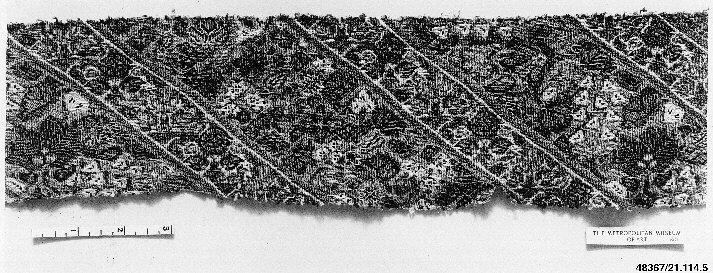
In the relentless pursuit of fashion’s next frontier, Zoey Fashion Laboratory dissects the very essence of garment architecture. The Fragment of Woman's Trousering, sourced from the Global Frontier, is not a relic but a radical proposition for SS26. It is a standalone study in deconstructive aesthetics, where the traditional bifurcated garment is stripped to its core, then reimagined as a sculptural entity. This analysis examines how a single panel of silk-on-linen embroidery becomes a manifesto for futuristic silhouettes and structural innovation.
The Material Dialectic: Silk on Linen
The choice of silk on linen is a deliberate tension between luxury and utility. Linen, with its organic, almost architectural rigidity, provides the foundation—a canvas that resists and holds shape. Silk, conversely, introduces fluidity and iridescence, catching light like a digital artifact. This dialectic is central to the fragment’s avant-garde value. The embroidery, executed with precision, creates a topographic map of texture: raised threads form linear grids, interrupted by asymmetrical motifs that mimic erosion or digital glitches. The materiality itself becomes a narrative of globalized production, where handcraft meets algorithmic design. For SS26, this hybridity signals a move away from homogeneous fabrics toward responsive, multi-sensory surfaces that demand interaction.
Futuristic Silhouettes: The Fragment as Whole
The fragment is not a missing piece of a trouser; it is a complete silhouette in its own right. By isolating a single panel—perhaps the left thigh, crotch seam, or waistband—the designer invites a redefinition of the body’s relationship to clothing. The shape is asymmetric, angular, and deliberately incomplete, suggesting a garment that exists in perpetual motion. The trousering’s original structure is subverted: the waistband is elongated into a harness-like strap, while the leg opening flares into a geometric wing. This is not about covering the body but about scaffolding it—a futuristic exoskeleton that challenges the very concept of “woman’s” attire. The silhouette references biomechanics and cybernetics, where fabric becomes a second skin that amplifies movement rather than restricts it.
Structural Innovation: Deconstruction as Construction
The fragment’s true innovation lies in its deconstructive methodology. Traditional tailoring relies on seams, darts, and closures to create volume. Here, the embroidery itself acts as a structural element: the silk threads are stitched in tension, creating self-supporting pleats and cantilevered edges. The linen base is cut with mathematical precision, with raw edges left unfinished to expose the weave’s integrity. This is not a garment that falls; it stands. The fragment’s architecture is akin to origami or tensile architecture, where every stitch is a load-bearing line. For SS26, this signals a paradigm shift: garments are no longer draped but engineered. The fragment’s ability to hold its form without internal boning or heavy interfacing is a breakthrough in sustainable construction—less material, more intelligence.
Contextualizing the Fragment: A Standalone Avant-Garde Study
Why a fragment? In the context of Zoey Fashion Laboratory, the fragment is a deliberate rejection of the whole. It challenges the viewer to complete the narrative, to imagine the missing pieces. This mirrors contemporary culture’s fragmented identities and digital existence—where we are never fully present but always in pieces. The Global Frontier origin underscores this: the fragment could be from a nomadic garment, a ceremonial robe, or a military uniform, but its origin is deliberately obscured. It is placeless and timeless, a cipher for globalized fashion’s dislocation from tradition. The embroidery’s motifs—abstracted flora and geometric nodes—suggest a hybrid of Eastern and Western influences, yet they remain unreadable. This ambiguity is the ultimate avant-garde statement: the fragment does not explain; it provokes.
SS26 Implications: The Future of Trousering
For SS26, the Fragment of Woman’s Trousering forecasts a season of radical minimalism and architectural flamboyance. The trouser as we know it—two legs, a waistband, a fly—is obsolete. Instead, we see modular components: a single leg piece that attaches to a corset; a waistband that becomes a necklace; a crotch panel that hangs as a pendant. The fragment’s embroidery technique, when scaled, suggests 3D-printed textiles that can be programmed to change shape. The silk-on-linen hybrid could evolve into smart fabrics that respond to temperature or movement. The gender implications are profound: the “woman’s” label is a historical artifact; the fragment is post-gender, designed for any body that seeks to inhabit its form.
Conclusion: The Fragment as Manifesto
Zoey Fashion Laboratory’s analysis of the Fragment of Woman’s Trousering is not merely a critique but a blueprint for the future. By deconstructing a single piece of fabric, we reveal the latent potential of all clothing: to be both shelter and sculpture, functional and fantastical. The silk-on-linen embroidery is a testament to craft, but the silhouette is a testament to imagination. This fragment stands alone, yet it contains multitudes—a microcosm of SS26’s avant-garde ethos. In a world of fast fashion and algorithmic sameness, the fragment demands that we pause, consider, and reconstruct. It is not a garment; it is a provocation. And it is exactly what the future of fashion requires.