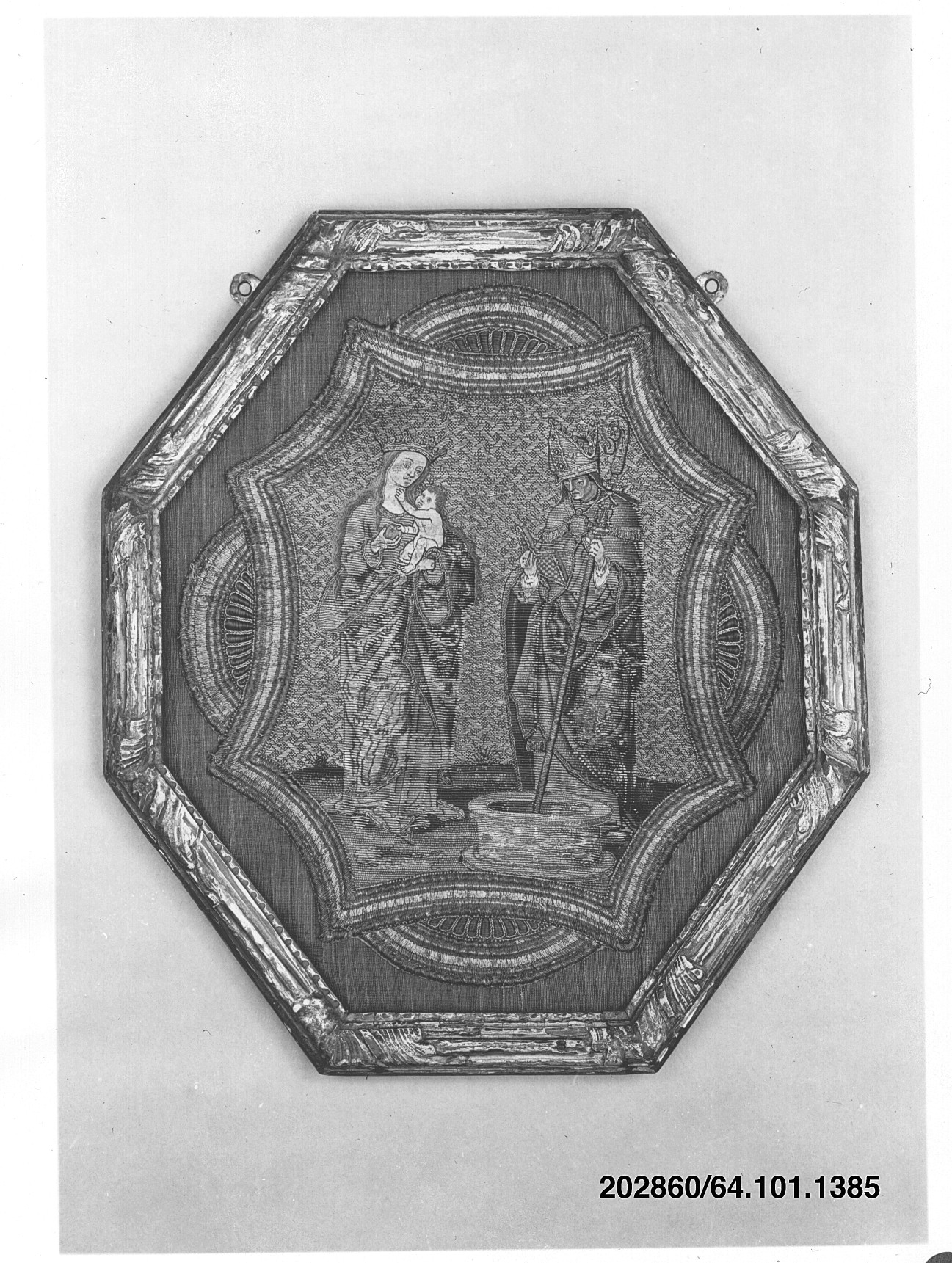
Deconstructing the Sacred: The Orphrey as a Blueprint for SS26 Structural Innovation
The ecclesiastical orphrey, a band of elaborate embroidery traditionally adorning liturgical vestments, represents not merely decoration but a coded architecture of devotion and hierarchy. For Zoey Fashion Laboratory’s SS26 inquiry, this fragment—a global frontier artifact of silk and metal thread on canvas—is not a relic but a radical progenitor. Our analysis transcends appliqué as embellishment, reconceptualizing it as a structural and philosophical core for a collection that interrogates the very frameworks of the body and garment. The orphrey’s intrinsic duality—its rigid ceremonial purpose versus its fluid, metallic materiality—provides the perfect dialectic for a season defined by futuristic silhouettes born from historical deconstruction.
From Liturgical Band to Exoskeletal Armature: A Material Metamorphosis
The specified materials—silk, metal thread on canvas—are a trinity of tension. Canvas, a substrate of labor and art, becomes our foundational skin. In SS26, this transforms from a hidden support to a primary, textured epidermis, treated with biopolymer coatings for a translucent, fossil-like quality. The silk and metal thread, traditionally woven into dense symbolic imagery, are liberated. We propose a process of electro-form deposition, where silk threads are plated with non-corrosive, lightweight alloys, creating hybrid filaments that are at once supple and rigid. These filaments are not embroidered but are employed in 3D printing arrays and hand-woven lattice structures, evolving the orphrey's two-dimensional glory into a three-dimensional exoskeleton. The "appliqué" is thus no longer applied; it is integral, a load-bearing element emerging from the garment’s very matrix, tracing biomechanical points of tension and release across the body’s topography.
Silhouette as Sacred Space: Architectural Volumes and Negative Liturgy
The SS26 silhouette, inspired by the orphrey’s context, redefines the relationship between garment and void. Traditional couture often sculpts the positive space; we architect the negative. Imagine a “Reverse Chasuble” silhouette: where the historic vestment forms a canopy over the body, our construction uses cantilevered metal-thread lattices to define an empty, geometric space around the torso, while the body itself is clad in minimal, fluid silk-canvas. The garment becomes the frame for a sacred, personal void. This principle extends to kinetic cage structures derived from orphrey motifs—geometric patterns unfold and reconfigure with movement, creating a dynamic, wearable architecture that alters its silhouette in real-time. The silhouette is not a static shape but a performative event, a frontier of personal space in constant flux.
The Frontier Body: Biomimetic Integration and Haptic Response
The "Global Frontier" origin speaks not of a place, but of a state of being—the body as an uncharted territory. Our structural innovation pushes towards biomimetic integration. The metal-thread networks, inspired by the orphrey’s intricate paths, function as conductive circuits embedded within the silk-canvas ground. These circuits, responding to biometric feedback like galvanic skin response or subtle muscle movement, can trigger micro-adjustments in the garment’s tension or emit low-level luminescence. This creates a haptic dialogue between garment and wearer, a cybernetic communion where the couture is not merely worn but is responsive. A sleeve might stiffen into a ceremonial cuff at a moment of elevated pulse, or a neckline lattice might gently constrict in a gesture of autonomous embrace. The frontier is internal, and the orphrey-derived structure becomes its intelligent, aesthetic map.
Conclusion: A New Canon of Construction
Zoey Fashion Laboratory’s SS26, germinated from the orphrey appliqué, proposes a definitive shift in avant-garde methodology. We move beyond deconstruction as a mere act of tearing apart, towards a re-sacralization of structure. By transubstantiating the materials and intent of a sacred artifact, we forge a new canon where history is the raw feedstock for futurity. The resulting silhouettes—architectural, responsive, and profoundly intelligent—do not clothe the body in a traditional sense. Instead, they construct a negotiable space around it, a personal frontier defined by hybrid materiality and kinetic potential. This collection stands as a standalone study in making the implicit explicit: transforming the decorative band into a biomechanical armature, and the vestment’s symbolism into a wholly personal, technologically-inflected liturgy for the self. The garment is no longer an appliqué to life; it is its foundational, evolving orphrey.