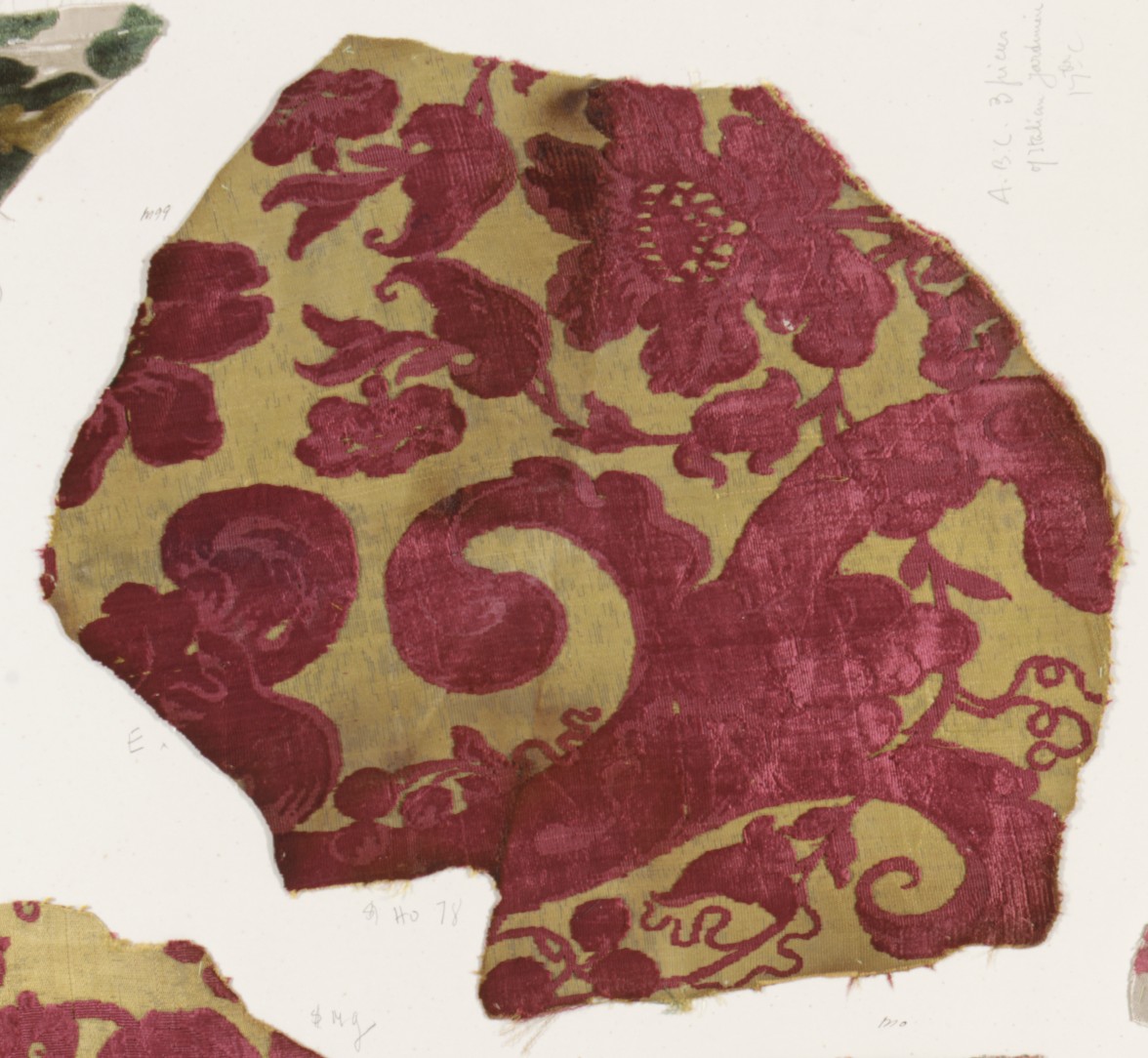
The Architecture of Absence: Deconstructing the Fragment for SS26
The avant-garde couture landscape for Spring/Summer 2026 is not a terrain of seamless wholes. It is a cartography of calculated rupture, where the fragment emerges not as a sign of decay, but as a deliberate act of structural liberation. At Zoey Fashion Laboratory, we interrogate the garment as an incomplete monument—a proposition that demands the wearer and viewer to complete its narrative. This analysis dissects the fragment as a core design philosophy, executed through the tension between raw silk and metallic thread, to forge silhouettes that inhabit the future without nostalgia.
Deconstructive Dialectics: The Fragment as a Positive Void
The fragment in SS26 is not a remnant; it is a primary generative unit. Traditional haute couture operates on principles of continuity—seams that vanish, drapes that flow uninterrupted. Our approach inverts this: the garment is conceived as a field of intentional gaps. Each silk panel is terminated before its logical conclusion, leaving a negative space that becomes the design’s focal point. These voids are not absences but structural apertures, through which the body and environment interact.
Consider the asymmetrical torso cage: a construction of bias-cut silk strips that begin at the clavicle, traverse the ribcage, and abruptly halt mid-hip. The missing fabric is not a mistake; it is a sculptural declaration. The eye is forced to trace the absence, to mentally complete the form. This creates a dynamic tension between the material present and the space it refuses to occupy. The metal thread, woven into the silk’s warp, acts as a structural anchor—a fine, rigid line that prevents the fragment from collapsing into mere tatters. It holds the void open, turning the gap into a negative silhouette.
Material Dialectics: Silk’s Fluidity vs. Metal’s Rigor
The choice of materials is not arbitrary; it is a philosophical argument rendered in fiber. Raw silk, with its natural slubs and uneven luster, embodies organic imperfection. It drapes with a liquid, almost sentient quality, suggesting movement even in stillness. In contrast, the metal thread—fine, cold, and unyielding—introduces a cybernetic counterpoint. This is not the soft gold of classical embroidery; it is a tensile structure, akin to the cables of a suspension bridge.
When these two materials intersect, they create a hybrid fabric that is neither fully organic nor fully industrial. The metal thread is woven into the silk at irregular intervals, creating a grid of resistance. Where the silk would naturally collapse, the metal thread holds the line. The result is a garment that stands apart from the body, creating a second skin that is part drape, part architecture. This is the essence of the futuristic silhouette: not a second skin that clings, but a floating exoskeleton that defines its own volume.
Silhouette Innovations: The Fragment as a System of Tension
The SS26 collection redefines the silhouette through non-contiguous volumes. Traditional silhouettes rely on continuous lines—A-line, hourglass, column. Our fragments generate discontinuous profiles. A jacket, for example, may exist as a left shoulder piece, a right hip panel, and a back yoke—with the chest and abdomen left entirely exposed. The metal thread connects these fragments via invisible tension lines—fine, almost imperceptible threads that run from shoulder to hip, pulling the fragments into a dynamic equilibrium.
This creates a silhouette that changes with every movement. When the wearer walks, the fragments shift independently, opening and closing the voids. The garment becomes a kinetic sculpture, where the negative space is as expressive as the positive. The futuristic quality emerges from this non-linear geometry: the body is no longer a passive mannequin but an active participant in the garment’s form.
Structural Innovation: The Fragment as a Load-Bearing Element
Structural innovation in this context means engineering the fragment to bear weight. In conventional couture, seams and linings distribute stress. Here, the metal thread performs that role. Each fragment is reinforced at its edges with a micro-stitched metal filament, creating a rigid border that prevents fraying and allows the silk to maintain its shape under tension. The fragments are then connected not by continuous fabric but by articulated metal joints—tiny, custom-milled connectors that allow for rotation and flexion.
This modular construction permits a garment to be worn in multiple configurations. A skirt of seven silk panels can be rearranged into a cape, a bodice, or a series of floating sashes. The metal thread acts as a universal joint, allowing the fragments to lock into different positions. This is not a garment for a static mannequin; it is a wearable system for a dynamic human form.
The Global Frontier: Fragment as a Cultural Syntax
The origin "Global Frontier" is not a geographical location but a conceptual space—the edge of known design paradigms. The fragment speaks to a contemporary condition: the world is no longer experienced as a coherent whole, but as a collage of information, cultures, and identities. Our garments reflect this by refusing to offer a complete narrative. The silk’s origin—sourced from mulberry farms in the Yangtze Delta—and the metal thread’s origin—precision-drawn from recycled aerospace alloys—are themselves fragments of a global supply chain. The garment becomes a palimpsest of global processes, each thread a trace of a larger system.
The futuristic silhouette is thus not a prediction of what we will wear, but a critique of what we have become: beings composed of fragments—digital, physical, cultural. The garment’s voids are spaces for projection, where the wearer inserts their own identity. This is the ultimate avant-garde gesture: the designer does not dictate the final form; they provide the structural syntax for the wearer to complete the sentence.
Conclusion: The Fragment as a Manifesto
For SS26, the fragment is not a stylistic quirk; it is a manifesto for a new couture. It rejects the tyranny of the complete garment, the comfort of the familiar silhouette. It demands a new way of seeing—one that values absence as much as presence, tension as much as flow. The combination of silk and metal thread is not a marriage of opposites but a dialectical synthesis: the organic becomes structural, the fluid becomes rigid, the fragment becomes whole through its own incompleteness.
Zoey Fashion Laboratory’s avant-garde analysis positions the fragment as the definitive architectural unit of future couture. It is a challenge to the industry: stop stitching the world together. Instead, learn to design the gaps. For in those gaps lies the freedom to imagine a future that has not yet been sewn shut.