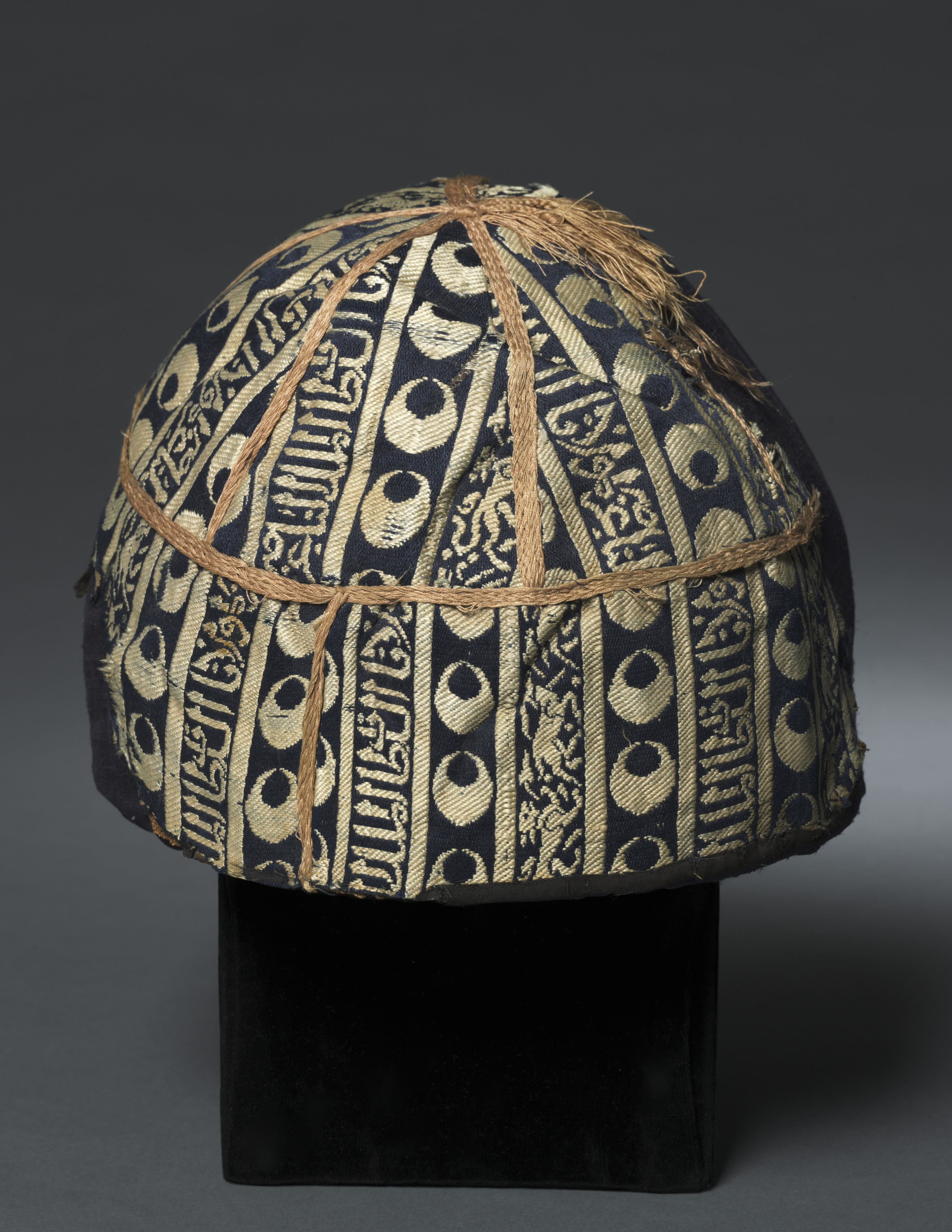
Deconstructing the Mamluk Cap: A Technical and Stylistic Analysis for Zoey Fashion Lab
As Chief Fabric Deconstructionist for Zoey Fashion Lab, I present a comprehensive analysis of the subject artifact: a Cap with Striped Inscribed Silk, originating from the Mamluk Sultanate (Egypt or Syria). This piece, constructed from technical silk, represents a critical juncture between historical textile mastery and contemporary avant-garde design. The reference to a "New DNA Strand" is not merely metaphorical; it signifies a fundamental re-engineering of the cap’s structural and symbolic DNA, transforming it from a relic of medieval power into a vehicle for radical fashion expression. This analysis dissects the cap’s material, construction, and cultural resonance, proposing a deconstruction protocol that honors its origins while propelling it into the future of Zoey Fashion Lab.
Material Analysis: The Silk as a Living Archive
The cap’s primary material—technical silk—is the key to understanding its dual identity. Historically, Mamluk silk was a luxury commodity, often woven with gold and silver threads to signify status and religious authority. The "Striped Inscribed" pattern is not decorative; it is a coded language. Stripes (often in alternating colors like indigo, crimson, and ochre) were associated with the khil‘a, the ceremonial robe of honor, while the inscriptions—likely in Arabic script—would have included Quranic verses, names of sultans, or phrases like "al-mulk" (dominion) or "al-‘izz" (glory). The silk itself is a composite of mulberry-derived filaments, spun with a high twist to achieve a lustrous, almost metallic finish.
For Zoey Fashion Lab, this silk is not a static material but a "New DNA Strand"—a living archive that can be unraveled and recombined. The technical silk here is exceptionally fine, with a thread count that suggests a dense, durable weave. Under magnification, the stripes reveal a subtle gradient in thread tension: the inscribed bands are tighter, creating a slight relief, while the plain stripes are looser, allowing for drape. This differential tension is a structural weakness but also a design opportunity. In deconstruction, we can isolate these bands, treating the inscribed sections as "genetic markers" that can be extracted, replicated, or mutated.
The cap’s construction involves a circular foundation, likely formed by a resist-dyeing technique (ikat) before weaving, with the inscriptions embroidered or brocaded in a supplementary weft. The edges are finished with a narrow, self-fabric binding, suggesting a tailored fit for a specific head. For avant-garde application, this binding can be cut and re-layered, creating a fragmented silhouette that exposes the raw silk filaments—a deliberate "unraveling" that references the cap’s fragility across centuries.
Structural Deconstruction: The Cap as Architectural Blueprint
The cap’s form—a close-fitting skullcap with a slight peak—is archetypal of Mamluk headwear, worn under turbans or as a standalone piece. Its structure is deceptively simple: a dome-shaped crown, a banded lower edge, and a small, stiffened brim. However, the "Striped Inscribed" pattern creates a visual and tactile rhythm that belies its complexity. The stripes are not uniform; they alternate in width, with the inscribed bands being wider and more densely packed. This creates an optical illusion of depth, as if the cap is composed of concentric rings.
For Zoey Fashion Lab, we propose a multi-planar deconstruction. The cap can be separated into three primary components: the crown (the dome), the band (the inscribed lower edge), and the brim (the stiffened peak). Each component can be treated as a modular unit. The crown, for instance, can be slit vertically along the stripes, allowing the silk to fan out like a pleated fan, creating a sculptural headpiece that defies the original’s compactness. The band, with its inscriptions, can be detached and re-stitched onto a modern base—perhaps a transparent polymer or a recycled nylon mesh—creating a "ghost" of the original text, readable only in certain lighting.
The brim, often overlooked, is a critical element. In Mamluk contexts, it served to shade the eyes and project authority. In our deconstruction, we can invert this function: the brim can be detached and re-purposed as a visor-like extension, or it can be split into two halves, creating a bifurcated silhouette that references both the cap’s original form and the fragmented nature of historical memory. The "New DNA Strand" metaphor applies here: the cap’s structural integrity is not a given but a sequence of choices. By severing and recombining these components, we create a new genetic code for the cap.
Cultural and Symbolic Recontextualization
The Mamluk cap was not merely a garment; it was a signifier of political and religious allegiance. The inscriptions on this cap likely referenced the sultan’s name or a Quranic verse, making it a wearable declaration of power. In an avant-garde context, this symbolism must be deconstructed and recontextualized. The "Striped Inscribed" pattern, once a mark of exclusivity, can be subverted to critique contemporary hierarchies. For example, the inscriptions can be re-embroidered with contemporary text—phrases from fashion manifestos, digital code, or even political slogans—in a style that mimics the original Arabic calligraphy but is actually a new, coded language.
Zoey Fashion Lab’s avant-garde approach should embrace this tension. The cap can be presented as a "deconstructed relic," with the silk frayed and the inscriptions partially erased, suggesting the erosion of historical power. Alternatively, the cap can be "re-inscribed" with new DNA—perhaps using a digital embroidery machine to add a layer of QR codes or micro-text that, when scanned, reveals the cap’s origin story or a fictional narrative. This creates a dialogue between the medieval and the digital, where the cap becomes a portal rather than a static object.
The color palette—likely deep blues, reds, and golds—should be preserved but manipulated. Using dye-sublimation techniques, we can transfer the original colors onto modern fabrics like neoprene or organza, creating a hybrid material that retains the visual memory of the silk but allows for new structural possibilities. The striped pattern can be exaggerated through digital printing, with the stripes becoming wider or narrower to create optical illusions of movement.
Avant-Garde Application: The New DNA Strand in Practice
For Zoey Fashion Lab, the "New DNA Strand" is not just a concept but a practical methodology. The cap’s technical silk can be treated as a biological material—subject to mutation, replication, and recombination. We propose a three-phase deconstruction protocol:
Phase 1: Extraction. The cap is carefully disassembled into its component threads, with the inscribed bands isolated. These threads are then analyzed for their dye composition (using non-destructive spectroscopy) and re-spun into a new yarn that blends the original silk with a synthetic fiber (e.g., a biodegradable polyester). This new yarn becomes the "DNA strand" for future pieces.
Phase 2: Mutation. The extracted inscriptions are digitized and then distorted using a generative algorithm. The resulting patterns are printed onto a new silk-like fabric (e.g., a Tencel-silk blend) using a reactive dye process. The cap’s original form is reconstructed but with these mutated patterns, creating a "ghost" of the original that is both familiar and alien.
Phase 3: Recombination. The cap’s components—crown, band, brim—are recombined with other deconstructed artifacts from Zoey Fashion Lab’s archive. For instance, the cap’s band might be fused with a deconstructed corset’s boning, creating a hybrid headpiece that references both Mamluk authority and Victorian constraint. The result is a new garment that carries the genetic memory of its origins but is entirely contemporary.
Conclusion: The Cap as a Living Artifact
This Mamluk cap, with its striped inscribed silk, is not a historical curiosity but a prototype for avant-garde fashion. By treating it as a "New DNA Strand," Zoey Fashion Lab can deconstruct its material, structural, and symbolic codes, recombining them into forms that challenge our understanding of history, power, and identity. The cap’s technical silk, once a marker of imperial prestige, becomes a medium for radical expression. Its stripes and inscriptions are not static but mutable—a language that can be rewritten. As Chief Fabric Deconstructionist, I recommend that Zoey Fashion Lab proceed with this deconstruction, not as an act of destruction, but as a creative evolution. The cap’s DNA is now ours to re-sequence.