The Lace Frontier: Deconstructing the Bobbin Lace Armature for SS26
In the relentless pursuit of fashion’s next frontier, the avant-garde often finds its most potent voice not in the clamor of new technology, but in the radical recontextualization of ancient craft. For the SS26 season, Zoey Fashion Laboratory presents a singular piece that defies categorization: a structural armor constructed entirely from blackened bobbin lace. This is not a nostalgic nod to Victorian gentility; it is a violent, poetic renegotiation of textile potential. The piece, born from the “Global Frontier” origin—a conceptual space where digital precision meets artisanal chaos—serves as a standalone manifesto for a new kind of architectural wearability. It asks a singular, provocative question: can the most fragile of handcrafts become the most formidable of silhouettes?
The Material Paradox: Bobbin Lace as Structural Armature
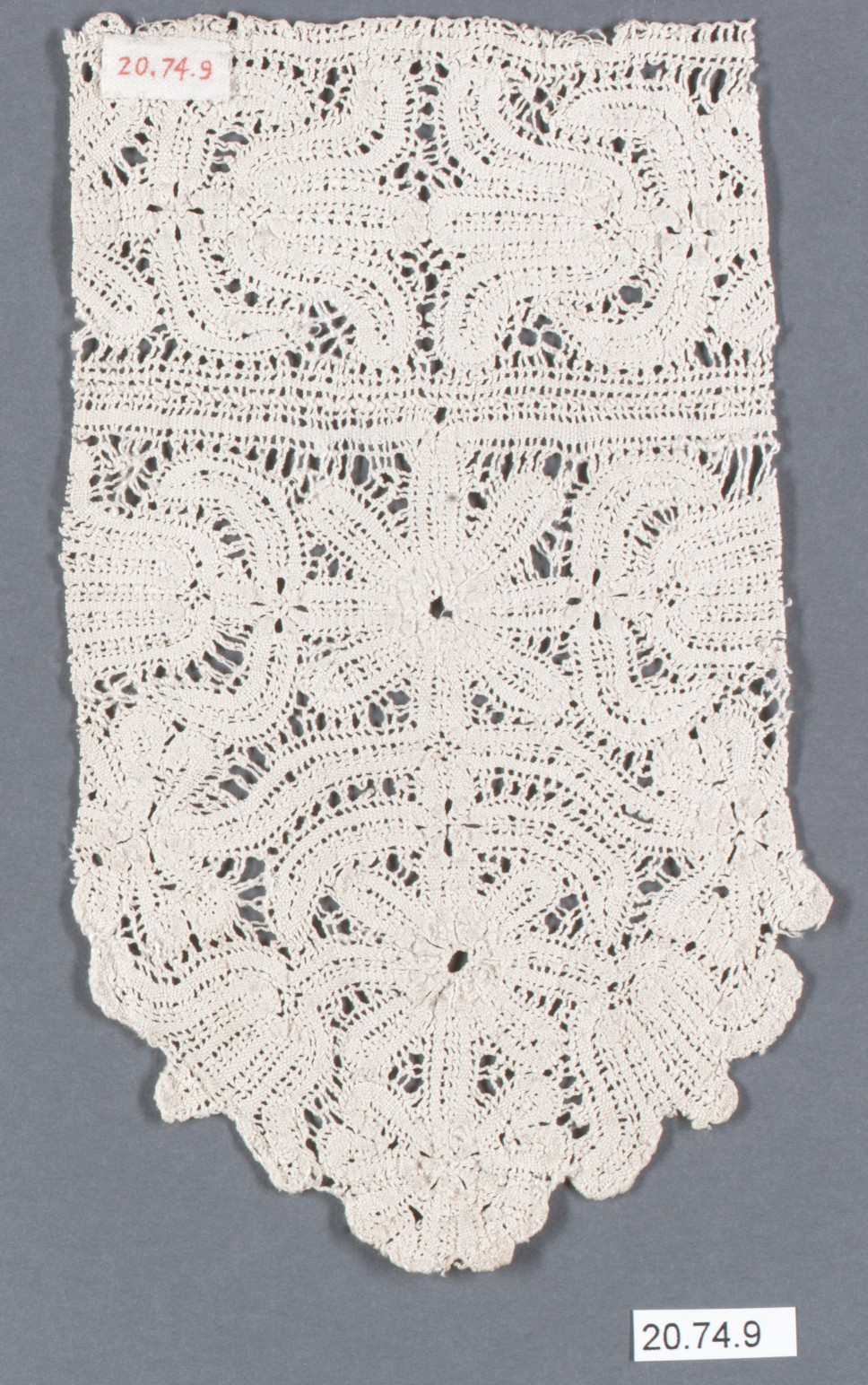
Bobbin lace, by its very nature, is a study in controlled fragility. Its construction—a laborious, manual interweaving of threads around pins on a pillow—implies delicacy, transparency, and a certain historical femininity. Yet, in this analysis, the material is weaponized. The lace is not a surface decoration; it is the entire load-bearing structure. The key innovation lies in the treatment: the natural linen or silk threads are impregnated with a rigid, matte-black resin, a process that transforms the gossamer web into a lightweight, almost carbon-fiber-like composite. This is a deliberate subversion of the material’s core identity. The structural innovation is not in the weave itself, but in the post-production hardening that locks the openwork into a permanent, sculptural form.
The result is a piece that reads as both organic and industrial. The intricate floral and geometric motifs of the lace—typically associated with softness—become sharp, precise, and almost threatening. The negative space, the “holes” of the lace, are no longer voids but active architectural elements, allowing for a radical reduction in mass while maintaining structural integrity. This is a direct challenge to conventional couture’s reliance on heavy boning or padding. Here, the garment’s strength is derived from its absence, a literal embodiment of the avant-garde principle that strength can emerge from emptiness. The material, once a symbol of passive ornament, is reborn as an active, defensive carapace.
Futuristic Silhouettes: The Architecture of the Unstable
The silhouette is the true protagonist of this SS26 study. It rejects the clean, minimalist lines of modernism in favor of a fractured, deconstructive geometry. The piece is not a dress, a jacket, or a top; it is a wearable armature that hovers around the body, creating a new, alien topography. The primary form is a series of interconnected, asymmetrical panels that flare outward from the shoulders and hips, mimicking the aerodynamic curves of a stealth aircraft or the chitinous plates of an exoskeleton. The lace’s rigid yet flexible nature allows for a dynamic silhouette that changes with every movement, a living sculpture that is never the same from one moment to the next.
Key to this silhouette is the concept of “negative volume.” The hardened lace panels are not fitted to the body but are suspended from a minimal internal harness, creating a significant gap between the wearer’s skin and the garment’s exterior. This void is a deliberate design element, a space of tension and breath. It suggests a future where clothing is no longer a second skin but an independent, autonomous structure. The silhouette is futuristic not because of its sleekness, but because of its discontinuity. It is a landscape of peaks and valleys, of sharp points and sudden voids. The hemline is jagged, echoing the lace’s own geometric patterns, while the neckline rises in a stiff, asymmetrical collar that frames the face like a high-tech ruff. This is a silhouette of the post-human, where the body is both the core and the periphery.
Structural Innovation: The Global Frontier of Craft and Code
The origin of this piece—the “Global Frontier”—is not a geographical location but a conceptual space where the analog and digital converge. The lace pattern itself is not a traditional folk design but a computational algorithm, generated from a code that mimics the growth patterns of coral and fungal networks. This digital blueprint was then translated into a physical lace-making process, executed by a master artisan in a remote studio. The structural innovation lies in this translation: the algorithm was designed to create specific stress points and load-bearing pathways within the lace, anticipating the resin-hardening stage. The artisan was not simply following a pattern; they were executing a structural engineering plan in thread.
Furthermore, the piece employs a technique of “graduated density.” At the shoulders and elbows—points of high movement and stress—the lace weave is tighter, with smaller holes and more thread crossings. At the hem and the trailing panels, the weave opens up, becoming more porous and ethereal. This creates a gradient of rigidity, allowing the garment to articulate like a natural exoskeleton. The internal harness, made from a single, continuous carbon-fiber ribbon, is invisible yet essential. It distributes the weight of the hardened lace across the torso, preventing the piece from collapsing under its own sculptural ambition. This is a masterclass in biomimetic engineering applied to couture, where the garment learns from the structural logic of bones, shells, and webs.
Context and Conclusion: A Standalone Avant-Garde Manifesto
This piece is not intended for the red carpet or the runway’s commercial cycle. It is a standalone study, a provocation for the SS26 season that challenges the very definition of garment construction. In an era obsessed with digital skins and smart textiles, this bobbin lace armature offers a counter-narrative: one that insists on the primacy of hand, of time, and of material paradox. It is a slow, deliberate object in a fast world. The blackened lace, with its interplay of light and shadow, becomes a metaphor for the fashion industry’s own duality—the tension between tradition and rupture, between the delicate and the durable.
For Zoey Fashion Laboratory, this piece is a definitive statement. It proves that the future of couture is not in the rejection of the past, but in its violent, intelligent reinvention. The bobbin lace is no longer a relic; it is a blueprint for a new kind of armor. The silhouette is no longer a shape; it is a space. The material is no longer a surface; it is a structure. This is the Global Frontier of fashion: a place where the most ancient of hands meet the most advanced of minds, and where fragility becomes the ultimate form of strength. The piece stands alone, a dark, intricate jewel in the landscape of SS26, demanding not admiration, but analysis.