Deconstructing the Nuptial Armature: A Zoey Fashion Laboratory SS26 Analysis
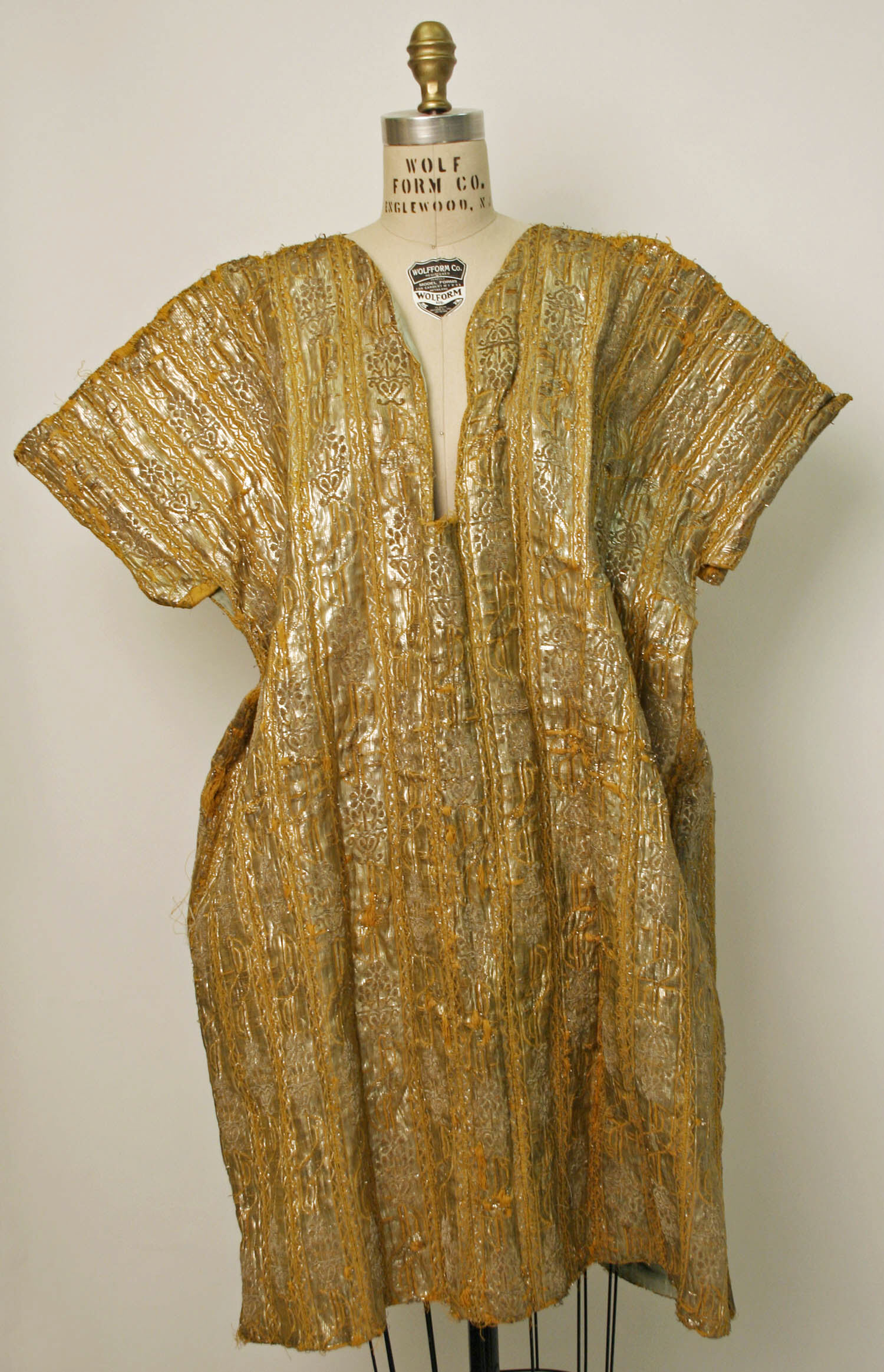
The wedding tunic, a garment historically bound by tradition, sentiment, and the weight of cultural expectation, finds itself violently reimagined within the Zoey Fashion Laboratory SS26 collection. This is not a garment for the passive bride; it is a manifesto of structural autonomy. The ensemble, sourced from a "Global Frontier" that eschews geographic specificity in favor of conceptual universality, presents a radical departure from the romanticized silhouette. Here, the tunic is no longer a soft, flowing envelope but a rigid, architectural chassis—a wearable exoskeleton that redefines the nuptial form as a site of power, tension, and futuristic elegance.
Material Dialectics: Cotton, Velvet, and Metallic Thread
The material palette itself is a study in controlled contradiction. The cotton base is not the diaphanous, gossamer-thin muslin of conventional bridal wear. Instead, it is a densely woven, almost industrial-grade canvas, its surface matte and unforgiving. This cotton forms the foundational "second skin," a neutral ground that absorbs and diffuses light rather than reflecting it. It is the substrate upon which the garment's narrative is inscribed.
In stark opposition, the velvet appears not as a plush, tactile indulgence but as a strategic, high-contrast intervention. It is deployed in sharp, asymmetrical panels that slice across the torso, their deep, light-absorbing pile creating a visual void. This velvet is not soft; it is a weaponized shadow, a negative space that carves the silhouette into planes of depth. The velvet’s opulence is subverted by its placement—along seams that seem to sever the body, or as a collar that rises like a defensive carapace around the neck.
The third element, the metal-wrapped thread, is the true agent of structural disruption. This is not delicate embroidery; it is a rigid, conductive filament that is woven into the fabric in a pattern of tensile lines. These threads function as architectural tendons, pulling the cotton and velvet into unnatural, angular pleats and folds. They create a system of internal tension, a visible grid of force that makes the garment appear to be in a state of perpetual, controlled collapse. The metal thread catches light in sharp, intermittent bursts, creating a visual static that disrupts the eye’s attempt to find a continuous form. The garment is thus a dynamic system of material forces, not a static object.
Futuristic Silhouettes: The Armored Tunic and the Asymmetric Train
The SS26 silhouette abandons the hourglass entirely. The tunic itself is a high-necked, long-sleeved shell that sits away from the body, creating a negative space between fabric and skin. The shoulders are exaggerated, not through padding, but through the rigid, cantilevered extension of the velvet panels. The effect is one of a protective casing, a carapace that suggests the wearer is both protected and weaponized. The waist is not cinched; it is articulated. A series of horizontal, metal-thread-reinforced seams create a ribbed, segmented structure that allows for limited, robotic movement.
The most radical innovation is the treatment of the train. It is not a trailing, romantic sweep of fabric. Instead, it is a detached, asymmetrical appendage that originates from a single point at the left hip, anchored by a dense cluster of metal thread. This train is a rigid, sculpted slab of velvet and cotton, its surface broken by a single, diagonal fold that creates a sharp, knife-edge profile. It does not flow behind the wearer; it drags, like a fallen architectural element, a piece of a ruined structure tethered to the body. This asymmetry is not decorative; it is a statement of imbalance, a deliberate rejection of harmony in favor of a tense, unresolved equilibrium.
Structural Innovation: The Exoskeletal Seam and the Tension System
The true breakthrough of this ensemble lies in its invisible architecture. The garment is built around a series of exoskeletal seams—external, raised ridges of metal thread that function as both ornament and structural support. These seams do not simply join fabric; they create a visible system of load-bearing lines. They are the garment’s skeleton, exposed and celebrated. This is a deliberate inversion of traditional couture, where structure is hidden and the surface is seamless. Here, the structure is the surface.
Further innovation is found in the integrated tension system. Thin, metal-wrapped cords run from the tunic’s interior, emerging through small, reinforced eyelets at the shoulders and hips. These cords can be tightened or loosened, allowing the wearer to adjust the garment’s silhouette in real-time. Pull one cord, and the neckline rises into a protective hood. Tighten another, and the entire left side of the tunic collapses into a series of deep, controlled pleats. This is a garment that is not static but performative, a kinetic sculpture that responds to the wearer’s agency. The bride is no longer a passive mannequin; she is the operator of her own structural destiny.
Conclusion: The Nuptial Form as a Frontier of Resistance
This wedding tunic and ensemble is not a celebration of tradition but a deconstruction of its very premise. It is a garment for a bride who does not wish to be adorned, but to be armored. The Global Frontier context is not a geographical location but a conceptual space—a liminal zone between the past and the future, between softness and rigidity, between the romantic and the industrial. The cotton, velvet, and metal thread are not just materials; they are the components of a new visual language, one that speaks of tension, asymmetry, and structural autonomy. For SS26, Zoey Fashion Laboratory has not simply designed a wedding dress; it has engineered a new form of bodily sovereignty. The ensemble stands as a definitive avant-garde statement: the future of nuptial couture is not about becoming a bride, but about becoming a structure.