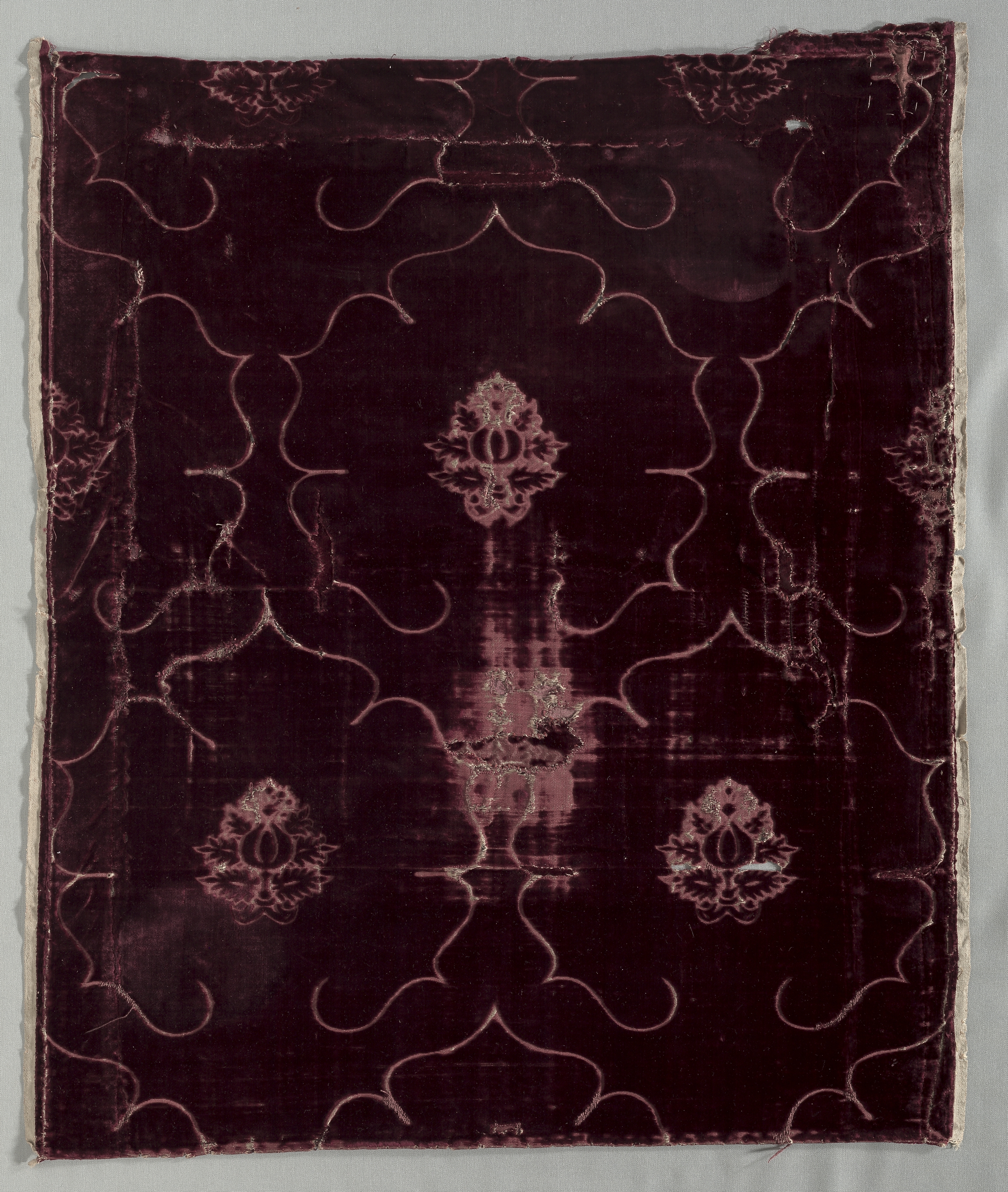
Velvet Fragment Analysis: A 15th-Century Italian Silk as a New DNA Strand for Avant-Garde Deconstruction
Introduction: The Fragment as a Blueprint
At Zoey Fashion Lab, we approach historical textiles not as relics, but as living blueprints. The velvet fragment under analysis—a cut and voided silk from 15th-century Italy—represents a pivotal moment in the evolution of luxury fabric. Its technical sophistication, material integrity, and aesthetic symbolism offer a profound New DNA Strand for avant-garde design. This fragment is not merely a piece of cloth; it is a genetic code of texture, structure, and subversion, ready to be re-sequenced for contemporary fashion expression.
Technical Mastery: Cut and Voided Velvet
The fragment’s construction is a testament to Renaissance engineering. Cut velvet involves weaving a pile warp that is later sheared, creating a dense, lustrous surface that absorbs and reflects light with dramatic depth. The voided technique selectively omits pile in certain areas, leaving a flat silk ground that contrasts sharply with the raised velvet. This interplay of high and low, light and shadow, creates a rhythmic pattern—often geometric or floral—that moves across the fabric like a topographical map of opulence.
For the avant-garde designer, this duality is a foundational principle. The fragment teaches us that luxury is not monolithic; it is a dialogue between extremes. The voided areas become negative space, suggesting absence and presence simultaneously. In a modern context, this can be translated into laser-cut silk or heat-bonded synthetics that mimic the velvet’s raised pile while leaving intentional gaps, revealing skin or underlayers. The 15th-century weaver’s precision in controlling pile height and density is a lesson in micromanipulation of texture—a skill that informs our current exploration of 3D-printed textiles and adaptive surfaces.
Material DNA: Silk as a Conductor of Light and Movement
The silk used in this fragment is not a passive substrate. Its natural protein fibers have a unique refractive index, scattering light in a way that creates a shimmering, almost liquid quality. When combined with the velvet pile, the silk ground acts as a mirror, amplifying the richness of the dyed pile. The fragment retains its original crimson hue, likely derived from kermes or madder, demonstrating the stability and depth of historical dyes.
For Zoey Fashion Lab, this material behavior is a New DNA Strand for avant-garde textiles. We can extract the principle of light modulation—using silk as a base for responsive surfaces that change appearance under different lighting conditions. Imagine a garment where the velvet pile is replaced by micro-optical fibers that pulse with LED light, while the voided areas are woven with conductive threads that sense touch. The fragment’s silk ground becomes a prototype for smart textiles that are both luxurious and interactive. Moreover, the historical dyeing process—using natural mordants to fix color—inspires our exploration of bio-engineered dyes from algae or bacteria, creating a palette that is both ancient and futuristic.
Avant-Garde Interpretation: Deconstructing the Fragment’s Structure
The velvet fragment’s cut and voided architecture is inherently deconstructive. It suggests a fabric that is both complete and incomplete, whole and fragmented. This aligns perfectly with avant-garde fashion’s fascination with unfinished edges, exposed seams, and layered transparency. We can reinterpret the voided areas as intentional tears or gaps, while the cut pile becomes a series of raised, sculptural elements that protrude from the garment’s surface.
Consider a coat where the velvet pile is applied in irregular patches, mimicking the fragment’s original pattern but with a chaotic, organic flow. The voided silk ground is left raw, with frayed edges that catch the light. This is not a reproduction of the 15th-century design but a genetic mutation—a new species of fabric born from the original DNA. The avant-garde aesthetic thrives on tension: between history and futurism, between luxury and decay. The fragment’s voided areas become portals to the body beneath, while the cut pile acts as armor, protecting and revealing simultaneously.
Pattern and Rhythm: From Renaissance Geometry to Algorithmic Chaos
The 15th-century velvet often featured pomegranate, thistle, or palmette motifs arranged in symmetrical repeats. These patterns were mathematically precise, reflecting the Renaissance belief in divine proportion. For the avant-garde designer, this geometry is a starting point for algorithmic distortion. Using generative design software, we can take the fragment’s original motif and apply random noise, scaling, and rotation, creating a pattern that is both familiar and alien.
The result is a fabric that retains the historical silhouette but is rendered in a chaotic, digital aesthetic. The voided areas might be programmed to appear only under UV light, or the cut pile could be replaced by heat-sensitive fibers that change texture with body heat. The fragment’s rhythmic repetition becomes a code that can be rewritten for each garment, ensuring that no two pieces are identical. This approach honors the fragment’s craftsmanship while pushing it into the realm of wearable art.
Color and Symbolism: Crimson as a Statement of Power and Vulnerability
The fragment’s deep crimson color is not accidental. In 15th-century Italy, red velvet was associated with nobility, the Church, and the blood of Christ. It was a color of power, passion, and sacrifice. For Zoey Fashion Lab, this symbolism is ripe for subversion. In an avant-garde context, crimson can represent both strength and fragility—the raw intensity of a wound or the boldness of a political statement.
We can dye the velvet pile with a gradient that shifts from blood red to black, suggesting decay or transition. The voided silk ground might be left white, creating a stark contrast that evokes purity versus corruption. Alternatively, the crimson could be applied only to the cut pile, while the voided areas are treated with a reflective coating that turns silver under light, creating a dual identity: one moment regal, the next futuristic. The fragment’s color becomes a narrative tool, telling a story of transformation and contradiction.
Conclusion: The Fragment as a Living Code
This 15th-century Italian velvet fragment is far more than a historical artifact. It is a New DNA Strand that encodes principles of texture, structure, light, and symbolism. For Zoey Fashion Lab, it serves as a foundation for avant-garde deconstruction—where cut and voided become metaphors for presence and absence, where silk and velvet are reimagined as smart materials, and where crimson is both a memory of power and a call for reinvention.
By analyzing this fragment, we unlock a language of tactile subversion. The avant-garde designer does not copy the past but mutates it, creating garments that challenge perception, engage the senses, and question the boundaries of luxury. This velvet fragment is not a dead relic; it is a living code, waiting to be rewritten for the future of fashion.