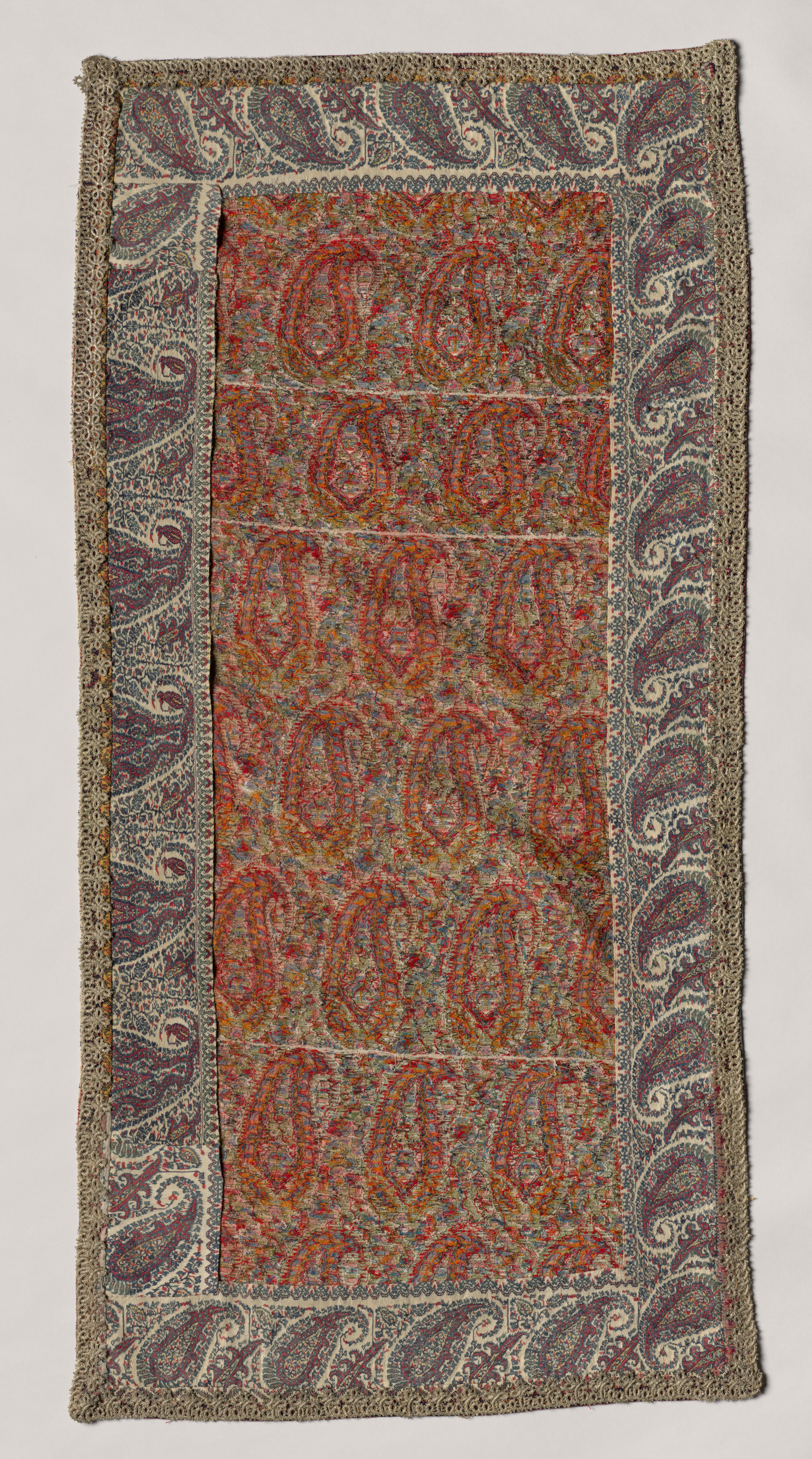
Deconstructing the Avant-Garde: The Silk Tapestry Lining from Isfahan
At Zoey Fashion Lab, the role of the Chief Fabric Deconstructionist is to dissect not only the physical threads of a textile but also its historical, cultural, and functional DNA. The subject of this analysis—a lining crafted from a silk textile depicting goatherds in a landscape, originating from Isfahan, Iran, and executed in a double-locked twill tapestry technique—presents a profound paradox. This piece, ostensibly a traditional Persian narrative fabric, is reimagined as a lining for an avant-garde garment. Through the lens of our “New DNA Strand” framework, we must interrogate how this material’s intrinsic properties, technical construction, and iconographic weight are repurposed to serve a radical, forward-facing aesthetic. This is not merely a lining; it is a subversive dialogue between heritage and futurism.
Technical Tapestry: The Double-Locked Twill Structure
The foundation of this analysis lies in the fabric’s construction. The twill tapestry weave is a sophisticated technique where weft threads are interlaced with warp threads in a diagonal pattern, creating a dense, durable, and visually rich surface. In the context of Persian textiles, particularly from the Safavid-era workshops of Isfahan, this method was employed to achieve high-resolution imagery with nuanced shading. The double-locked aspect is critical: it refers to a weft-joining technique where the colored wefts are interlocked at the boundaries of each color area, preventing gaps or slits. This results in a seamless, almost painterly transition between the goatherds, the landscape, and the sky. For a lining, this structural integrity is invaluable. Unlike a simple plain weave, the twill structure provides inherent drape and flexibility, allowing the fabric to conform to the complex curves of an avant-garde silhouette—whether a sculptural shoulder, a bias-cut panel, or an asymmetrical hem. The double-lock ensures that the narrative scene remains intact even under the stress of wear, preventing the image from distorting or fraying at the seams. This technical robustness is the first strand of our new DNA: functional resilience married to pictorial precision.
Iconographic Subversion: The Goatherd in the Avant-Garde Context
The imagery of goatherds in a landscape is deeply rooted in Persian pastoral and courtly traditions, often symbolizing harmony with nature, nomadic life, or the idealized countryside as a retreat from urban complexity. In its original context, this silk textile would have been a luxury item—perhaps a panel for a robe, a cushion cover, or a wall hanging—displaying wealth and cultural refinement. However, when deployed as a lining in an avant-garde garment, this iconography undergoes a radical reinterpretation. The goatherd, once a figure of rustic tranquility, becomes a disruptive agent within the garment’s narrative. The lining is the hidden interior, a secret world revealed only when the garment is in motion, unbuttoned, or turned inside out. This inversion of visibility is quintessentially avant-garde: the mundane or the traditional is made subversive by its concealment. The goatherds are no longer passive subjects; they are witnesses to the wearer’s kinetic performance. The landscape, with its rolling hills and skies, becomes a backdrop for the wearer’s own body as it moves through urban or theatrical spaces. This is the second strand of the new DNA: iconographic displacement, where historical imagery is repurposed as a private, almost rebellious statement against the overt, minimalist codes of contemporary fashion.
Material Paradox: Silk as Both Heritage and Futurism
Silk, as a fiber, is inherently paradoxical. It is simultaneously ancient and ultra-modern. In the context of this lining, its properties are exploited for avant-garde functionality. Silk’s natural luster and smoothness make it an ideal lining material, reducing friction against the outer garment and the wearer’s skin. Yet, the twill tapestry weave adds a tactile complexity—a slight ribbing and a firmness that belies the delicate nature of the fiber. For an avant-garde designer, this material offers a counterpoint to synthetic or industrial fabrics. The silk lining becomes a sensorial anchor to a pre-industrial past, while the garment’s structure—perhaps sharp, angular, or deconstructed—pushes toward a future of non-traditional forms. The “New DNA Strand” here is the integration of organic luxury with structural subversion. The silk does not merely serve as a passive background; it actively participates in the garment’s performance. When the wearer moves, the silk’s weight and sheen create a play of light and shadow, revealing the goatherds in fleeting glimpses. This dynamic visibility is a deliberate design choice, turning the lining into a moving canvas that challenges the static nature of traditional textile display.
Avant-Garde Application: The Lining as a Narrative Engine
In the Zoey Fashion Lab’s avant-garde framework, the lining is not an afterthought but a primary narrative engine. This Isfahan silk tapestry, with its double-locked twill, is particularly suited for garments that explore inversion, concealment, and revelation. Consider a coat with exaggerated, sculptural sleeves. The outer shell might be a stark, monochrome wool or a deconstructed technical fabric, while the interior lining—this silk tapestry—becomes a burst of historical color and detail. The goatherds and landscape are thus framed as a secret interiority, a private world that the wearer carries. This aligns with avant-garde principles of challenging the viewer’s expectations: the garment’s exterior may suggest minimalism, but its interior reveals a dense, narrative richness. Furthermore, the double-locked structure allows for precise cutting and piecing. The designer could isolate specific elements—a single goatherd, a tree, a cloud—and reposition them as patches or inserts within the lining, creating a fragmented, cubist effect that mirrors the deconstruction of time and place. The landscape becomes a collaged memory, a DNA strand spliced from a historical genome into a contemporary body.
Conclusion: The New DNA Strand of Avant-Garde Textile Practice
This lining from Isfahan is far more than a functional layer. It is a textile artifact reanimated through avant-garde methodology. The double-locked twill tapestry provides the technical durability for high-performance wear, while the silk offers a luxurious, mobile canvas. The goatherds in the landscape, once symbols of pastoral harmony, are now agents of subversion, hidden yet potent. For Zoey Fashion Lab, this fabric represents a new strand of design DNA—one that weaves together technical mastery, iconographic disruption, and material paradox. The result is a garment that does not simply clothe the body but frames it within a dialogue between centuries, between the artisan’s loom and the designer’s cutting table. This is the essence of the avant-garde: not the rejection of the past, but its radical recontextualization into a future where every thread tells a story of transformation.