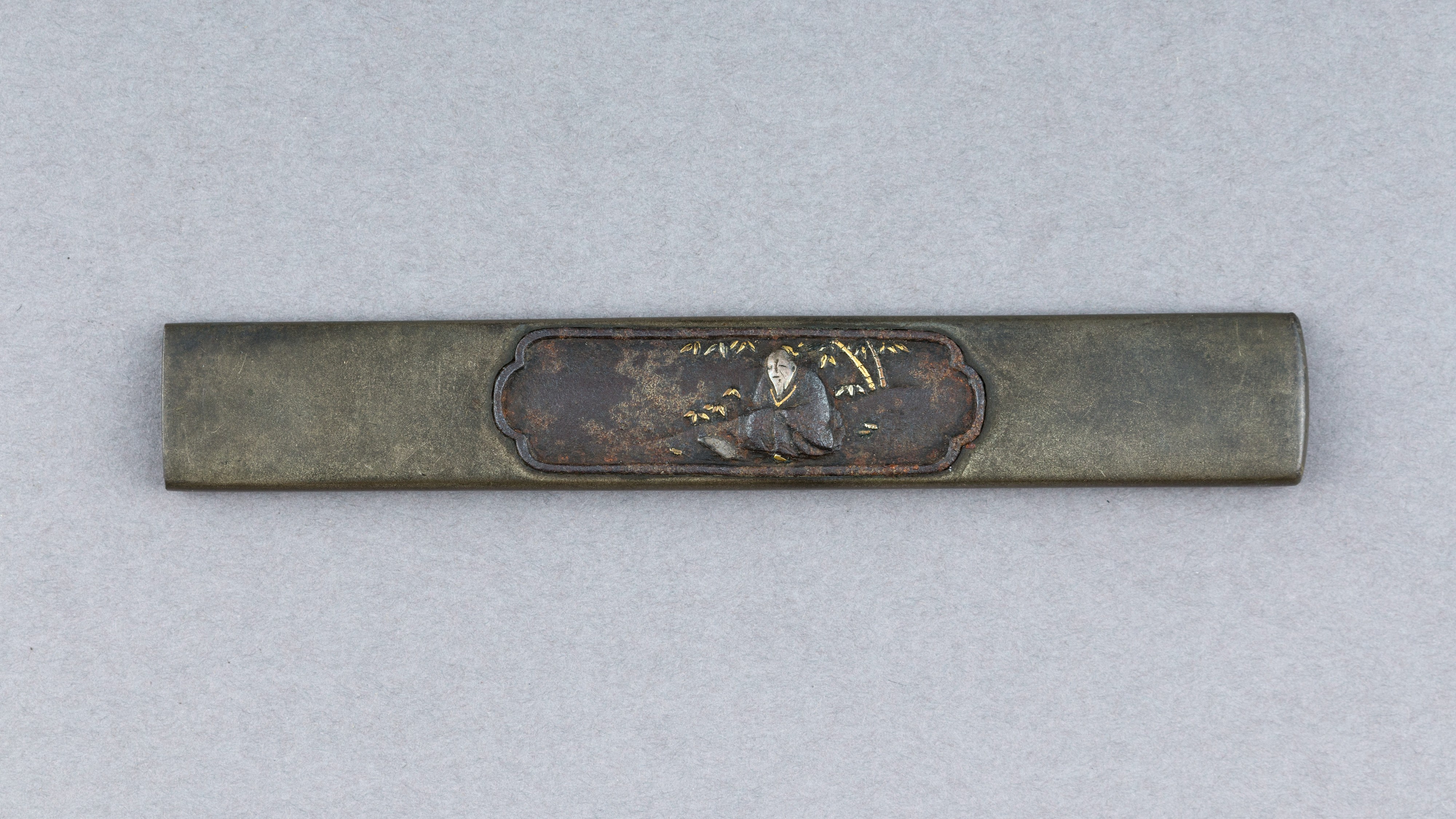
The Kozuka Deconstructed: Forging the SS26 Avant-Garde Silhouette
The Kozuka, a seemingly modest Japanese knife handle, transcends its functional origins to become a profound catalyst for structural innovation in Zoey Fashion Laboratory’s SS26 collection. This handheld implement, traditionally crafted from a copper-silver alloy (shibuichi) with accents of gold, silver, and iron, embodies a paradox of restraint and power. For the avant-garde curator, it is not a weapon but a blueprint—a study in asymmetric tension, material alchemy, and the silent architecture of the human form. The SS26 season demands a departure from the ephemeral; the Kozuka offers a permanent, tactile vocabulary for futuristic silhouettes that challenge the very notion of garment as second skin.
The Material Lexicon: Shibuichi as a Chromatic Foundation
The core material, shibuichi, a patinated alloy of copper and silver, provides a muted, almost lunar palette—a grey-green that shifts with light and oxidation. For SS26, this is translated into a new fabric technology: a liquid-metal jersey that mimics the alloy’s depth. The fabric is engineered with a micro-embossed pattern derived from the Kozuka’s hand-hammered texture, creating a surface that catches ambient light in unpredictable ways. This is not mere color; it is a chromatic narrative of age and resilience. The gold and silver inlays on the original handle become laser-fused metallic filaments woven into the garment’s seams, tracing the path of the blade’s absent edge. The iron, a structural backbone, inspires a carbon-fiber exoskeleton integrated into the shoulder and hip panels—a nod to the handle’s rigid core that allows the wearer to move with calculated, robotic grace.
Asymmetric Tension: The Blade’s Ghost in the Garment
The Kozuka’s defining feature is its asymmetry—the handle is not a perfect cylinder but a tapered, organic form designed for a single hand. This principle of asymmetric balance dictates the SS26 silhouette. The collection’s centerpiece, the “Kozuka Gown,” features a single, sculpted sleeve that extends from the left shoulder to the mid-thigh, its volume inspired by the handle’s grip. The right side is deliberately bare, revealing a structural corset of polished shibuichi-toned resin that mimics the handle’s metal collar. The hemline is not straight; it follows the Kozuka’s curved edge, creating a dynamic, blade-like train that trails behind the wearer. This is not a dress but a wearable architecture of conflict—the garment’s tension between covered and exposed echoes the handle’s role as a concealed instrument.
Structural Innovation: The Kozuka Joint and Modular Panels
Traditional Japanese metalworking techniques, such as mokume-gane (wood-grain metal), inspire a new method of garment construction: the “Kozuka Joint.” This involves interlocking panels of contrasting materials—shibuichi-inspired neoprene and gold-lamé organza—connected by magnetic clasps that mimic the handle’s menuki (decorative grips). These panels are modular, allowing the wearer to reconfigure the garment’s silhouette from a structured jacket to a flowing cape. The iron core of the original handle is reinterpreted as a flexible titanium spine running down the back of a jumpsuit, providing posture-altering support that forces the wearer into a forward-leaning, blade-ready stance. This is not comfort; it is kinetic sculpture.
Futuristic Silhouettes: The In-Between Space
The SS26 collection rejects the binary of fitted versus voluminous. Instead, it explores the “in-between space”—the void where the knife blade would sit. This is realized through negative-space cutouts that trace the outline of a Kozuka across the torso, framed by laser-cut shibuichi-colored leather. The resulting silhouette is a ghost of a weapon, a suggestion of violence transformed into elegance. For the “Handle Cape,” the fabric is gathered at the nape of the neck, mimicking the Kozuka’s kashira (pommel), and then flares outward in a fan of asymmetrical pleats that recall the handle’s textured grip. The cape’s hem is weighted with miniature gold and silver discs, echoing the inlays, causing it to sway with a deliberate, metallic rhythm.
Color and Patina: The Alchemy of Time
Color in this collection is not applied but developed. The shibuichi base is treated with a chemical patination process that yields a spectrum from deep charcoal to verdigris. Garments are dyed using a photographic oxidation technique—exposed to UV light and reactive gases to create gradient patterns that mimic the Kozuka’s aged surface. The gold accents are not bright but antiqued, appearing as faded imperial threads woven into the fabric’s warp. The silver is oxidized to a matte, almost gunmetal finish, lending a post-apocalyptic luxury to the collection. The overall palette is nocturnal, industrial, and deeply tactile—a direct translation of the handle’s patina into a wearable landscape.
Conclusion: The Kozuka as a Blueprint for Future Wearability
The Kozuka is not a relic; it is a prophetic tool for the SS26 avant-garde. Its study reveals that true structural innovation lies not in complexity but in the poetry of restraint—the single curve, the deliberate asymmetry, the patina of time. Zoey Fashion Laboratory’s interpretation of this handle is a declaration: fashion is no longer about covering the body but sculpting the space around it. The Kozuka collection is a manifesto of metallic minimalism, where every seam is a menuki, every panel a kashira, and every silhouette a blade drawn in fabric. It is a future where the hand that once held a knife now wears its memory as armor. This is not mere design; it is alchemy in motion.