The Sampler as Structural Manuscript: Deconstructing the Global Frontier for SS26
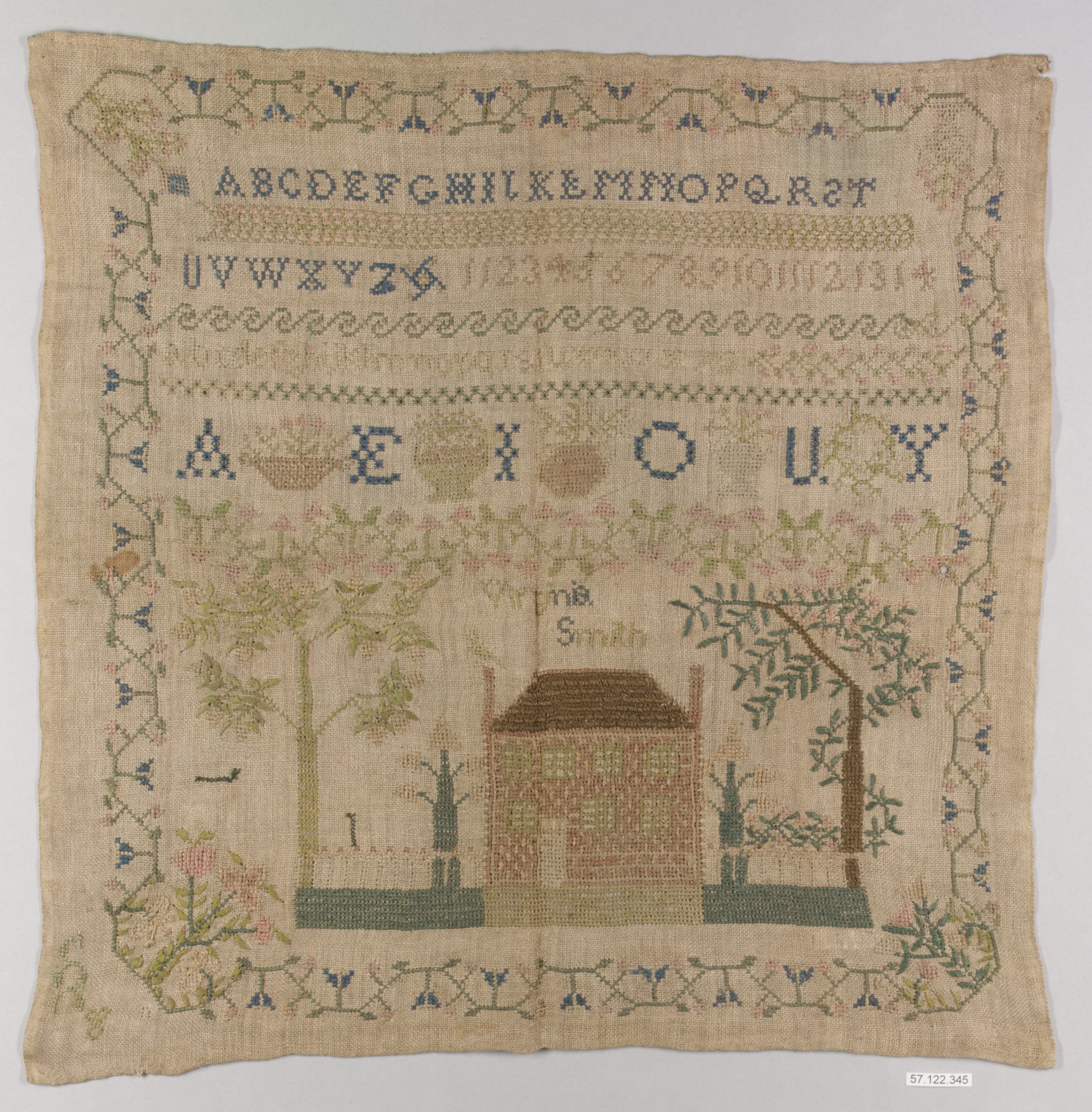
In the rarefied domain of avant-garde couture, the Sampler has long been dismissed as a mere preparatory artifact—a humble test of thread tension and chromatic harmony. Yet within the conceptual framework of Zoey Fashion Laboratory’s SS26 collection, the Sampler transcends its utilitarian origins to become a living architectural blueprint. This standalone study, sourced from the Global Frontier—a liminal space where cultural boundaries dissolve into hybridized expression—redefines the garment as a cybernetic organism, one that breathes through the tension between organic silk and industrial linen canvas.
The material dialogue here is not accidental. Silk, with its diaphanous liquidity, represents the ephemeral future—a shimmering, almost digital fluidity that evokes data streams and bioluminescent membranes. Linen canvas, conversely, is the tectonic past—a rigid, woven earth that recalls cartographic grids and the tactile memory of hand-loomed textiles. Their juxtaposition on a single sampler surface is a structural oxymoron: the silk is embroidered into the linen, not layered upon it, creating a bas-relief topography that shifts under ambient light. This is not decoration; it is material coding—a prelude to garments that will fold, expand, and contract like living tissue.
Futuristic Silhouettes: The Geometry of Deconstruction
The Sampler’s influence on SS26 silhouettes is radical yet precise. Traditional tailoring—with its emphasis on symmetry and static form—is abandoned in favor of asymmetric modularity. The sampler’s grid-like embroidery patterns, when scaled to full garment proportions, dictate a fractal construction: each panel is a self-contained unit that can be detached, rotated, or reconfigured. The result is a silhouette that appears to be in perpetual motion, as if the garment is mid-transformation.
Consider the deconstructed cocoon coat: the left shoulder is built from unbleached linen canvas, rigid and sculptural, while the right side cascades in raw-edged silk organza, pinned with oxidized silver threads that mimic the sampler’s stitchwork. The hem is asymmetrical, dipping below the knee on one side and cropping above the waist on the other—a direct translation of the sampler’s irregular border. This is not chaos; it is controlled entropy, where the garment’s volume is dictated by the weight of the materials rather than predetermined patterns. The silhouette breathes, shifts, and redefines the wearer’s spatial relationship with the environment.
Furthering this futuristic vision, the Sampler inspires the exoskeletal bustier. Here, the linen canvas is laser-cut into a lattice of hexagonal cells, each filled with a silk-threaded embroidery that resembles neural networks. The bustier does not hug the body; it floats above it, suspended by carbon-fiber filaments that mimic the tension of a loom. The silhouette is simultaneously armor and vulnerability—a protective shell that reveals the skin beneath through negative space. This is the post-human silhouette: a hybrid of machine and flesh, where the garment becomes an extension of the wearer’s own biological architecture.
Structural Innovation: From Sampler to System
The true innovation of the Sampler lies not in its aesthetic but in its structural logic. Traditional haute couture relies on rigid internal frameworks—boning, canvas interlinings, and horsehair braid—to achieve shape. The Sampler, however, proposes a dynamic tension system. The embroidered stitches are not merely decorative; they function as micro-tension cables, pulling the linen canvas into subtle curves and folds. When scaled to garment form, this principle allows for self-supporting volumes without the need for internal structure.
For SS26, this manifests as the kinetic skirt: a seven-panel construction where each panel is a separate sampler, embroidered with varying densities of silk thread. The densest embroidery creates a rigid, bell-like shape at the back, while the loosest stitches allow the front to drape in soft, waterfall pleats. As the wearer moves, the skirt reconfigures itself—the tension shifts, the pleats deepen, and the silhouette transforms from a narrow column to a wide A-line. This is wearable engineering, where the garment’s form is not fixed but responsive to kinetic energy.
The Sampler also introduces the concept of reversible materiality. On one side, the linen canvas is exposed, raw and unadorned, bearing the mark of the loom. On the reverse, the silk embroidery creates a lustrous, almost holographic surface. For SS26, this duality inspires the transformable jacket: a single garment that can be worn with the canvas exterior for a brutalist, deconstructed look, or reversed to reveal a shimmering, almost futuristic sheen. The seams are not concealed but celebrated—exposed with hand-stitched silk threads that echo the sampler’s border. This is narrative construction, where the garment tells the story of its own making.
The Global Frontier: A Synthesis of Cultural Cartography
The Sampler’s origin on the Global Frontier is not a geographical claim but a conceptual one. It draws from the visual vocabulary of nomadic textiles—Mongolian felt appliqué, Moroccan silk embroidery, and Japanese sashiko stitching—yet refuses to be pinned to any single tradition. Instead, the Sampler de-territorializes these techniques, merging them into a new, borderless language. The silk threads are dyed with indigo and madder root, but the patterns are algorithmic—generated by a custom AI that interprets traditional motifs as data points. The linen canvas is handwoven in Belgium, but the embroidery is executed by robotic arms programmed with artisan precision.
This synthesis is not mere appropriation; it is critical hybridity. The Sampler acknowledges the labor and lineage of global textile traditions while propelling them into a future where craft and technology are inseparable. The result is a garment that feels simultaneously ancient and alien—a chrono-cultural artifact from a time that has not yet arrived.
Conclusion: The Sampler as Manifesto
For Zoey Fashion Laboratory, the Sampler is not a preliminary sketch but a manifesto in thread. It declares that the future of couture lies not in passive decoration but in active structural intelligence. The silk-on-linen canvas is a dialectic—soft versus hard, luminous versus matte, fluid versus rigid—that resolves into a third state: the cyborg textile. As we preview SS26, the Sampler stands as a testament to the power of constraint: within its small, embroidered grid lies the blueprint for garments that are not worn but inhabited, not designed but evolved. This is the new frontier—where the sampler becomes the system, and the system becomes the self.