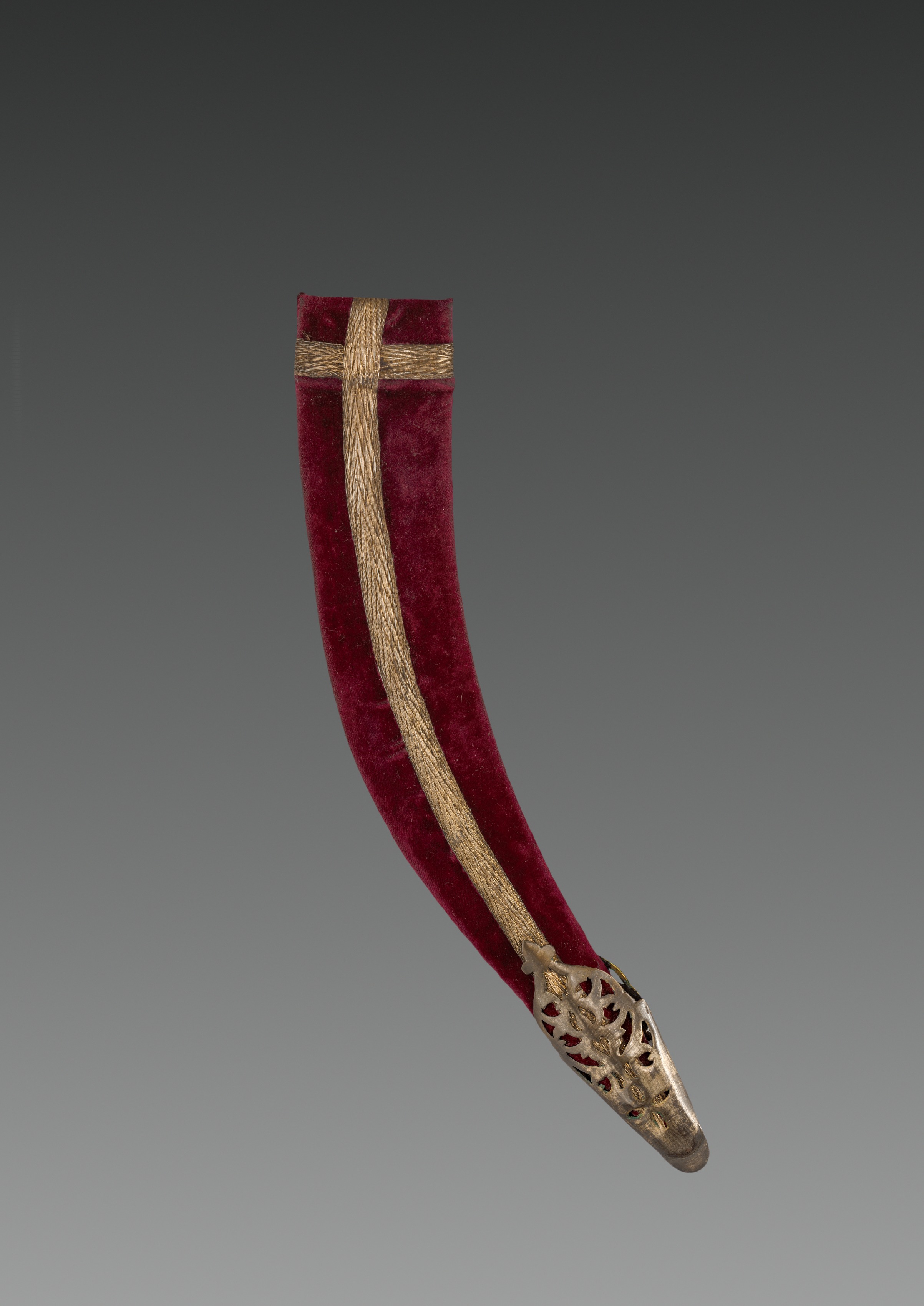
Deconstructing the Dagger: A Red Velvet Case Study in Avant-Garde Fabrication
At Zoey Fashion Lab, our core methodology revolves around the systematic deconstruction of objects—not merely as physical entities, but as narratives of material, culture, and potential. The subject of this analysis, a Dagger (red velvet case) originating from India, presents a particularly rich and complex challenge. This is not a weapon in the traditional sense; it is a sculptural artifact, a repository of textile history, and a blueprint for a new aesthetic language. Its technical composition—a wood sheath covered in velvet with metallic thread—positions it as a perfect candidate for what we term a "New DNA Strand" in avant-garde fashion. This report will dissect the dagger's materiality, cultural resonance, and structural logic to extract design principles for our upcoming collection.
Material Analysis: The Velvet Sheath as a Second Skin
The primary focus of our deconstruction is the red velvet case. Velvet, a fabric of deep pile and luxurious sheen, is inherently a material of contradiction. It is soft yet structurally demanding, opaque yet light-absorbing. In the context of a weapon, this softness creates a profound tension. The velvet does not protect the blade; it adorns it. This is a critical point for our avant-garde interpretation. We see the velvet not as a covering, but as a second skin—a textile membrane that both conceals and reveals the object's true nature.
The color red is not arbitrary. In Indian iconography, red is the color of shakti (divine feminine energy), of marriage, and of sacrifice. It is also the color of the rajas guna—passion, activity, and dynamism. When applied to a dagger, red velvet transforms the object from a tool of aggression into a symbol of ritualistic power. The metallic thread woven into the velvet is equally significant. It introduces a linear, architectural quality to the plush surface. This thread is not merely decorative; it is a structural grid that disciplines the velvet's inherent softness. It suggests a network, a circuit board of energy running through the fabric. For our design, this metallic thread will be translated into conductive yarn or laser-cut metallic appliqués that create a similar interplay of soft base and rigid line.
Structural Logic: The Wood Core and the Sheath's Architecture
Beneath the velvet lies the wood sheath. This is the armature, the skeleton of the object. Wood provides a natural, organic counterpoint to the velvet's manufactured luxury. The sheath's shape is a direct response to the blade it houses, creating a negative space that is as important as the positive form. In our deconstruction, we recognize the sheath as a form-fitting mold. It is a garment for the blade. This concept is directly transferable to fashion: the body is the blade, and the garment is the sheath.
The process of covering wood with velvet is a masterclass in tension and drape. The velvet must be pulled taut to avoid wrinkles, yet it must also conform to the wood's curves. This is a lesson in pattern-making and engineering. The metallic thread, often embroidered in intricate patterns (such as paisley or floral motifs), adds a third layer of complexity. It creates a relief surface that disrupts the velvet's uniform pile. For our avant-garde collection, we will explore this by constructing garments with internal, rigid structures (using materials like molded resin or 3D-printed bioplastics) that are then covered in plush textiles. The metallic thread will be reinterpreted as embroidered circuits or beaded latticework, creating a tactile landscape that invites touch while maintaining a protective distance.
Cultural Resonance: The Dagger as a Transcultural Object
This dagger, while Indian in origin, is not a singular cultural artifact. It is a hybrid. The red velvet and metallic thread speak to Mughal and Rajput traditions of opulent weaponry, where the scabbard was often more valuable than the blade. Yet, the form—a straight, double-edged dagger—is a universal archetype. It exists in the collective unconscious as a symbol of power, danger, and precision. For Zoey Fashion Lab, this transcultural quality is a goldmine. It allows us to extract design elements without being bound by strict historical authenticity. We are not recreating a Mughal dagger; we are using its DNA to create something new.
The concept of a "New DNA Strand" is central here. In biological terms, a DNA strand is a sequence of instructions. Our deconstruction identifies the key instructions from this dagger: the soft/hard dichotomy, the grid of metallic thread on a plush base, and the ritualistic color of red. These are the genes we will splice into our fashion vocabulary. The result will be garments that are simultaneously protective and vulnerable, architectural and fluid, ancient and futuristic.
Avant-Garde Application: From Object to Garment
How do we translate this analysis into wearable art? The dagger's essence is about concealment and revelation. The sheath hides the blade, yet its shape hints at the danger within. In fashion, this translates to garments that obscure the body's form while exaggerating its silhouette. We propose a series of pieces where the primary structure is a sheath-like corset or a cocoon coat made from a stiff base (like horsehair canvas or molded neoprene) and then covered in a plush, red velvet. The metallic thread will be applied in asymmetrical patterns that mimic the dagger's decorative motifs but are scaled to the human form.
The neckline of such a garment could be a direct reference to the dagger's hilt—a point of transition between the sheath and the exposed blade. We might use metal hardware (like brass or gunmetal) to create a "hilt" at the collarbone, from which the velvet drapes. The sleeves could be designed as separate sheaths, attached to the main body but articulated to move independently. This creates a visual tension, as if the garment is a collection of protective layers that can be shed or reconfigured.
Conclusion: The Dagger as a Design Manifesto
In conclusion, the Dagger (red velvet case) from India is far more than a weapon or a decorative object. It is a manifesto in material form. It teaches us that luxury can coexist with danger, that softness can be structured, and that tradition is a living language, not a dead artifact. For Zoey Fashion Lab, this object provides a robust New DNA Strand for our avant-garde collection. We will extract its principles of sheathing, tension, and ritualistic color to create garments that are both armor and adornment. The velvet will not just cover the body; it will become a second skin, a protective sheath that reveals the power within. The metallic thread will not just decorate; it will structure, discipline, and energize. This is the essence of our deconstruction: to find the future hidden in the past, and to wear it boldly.