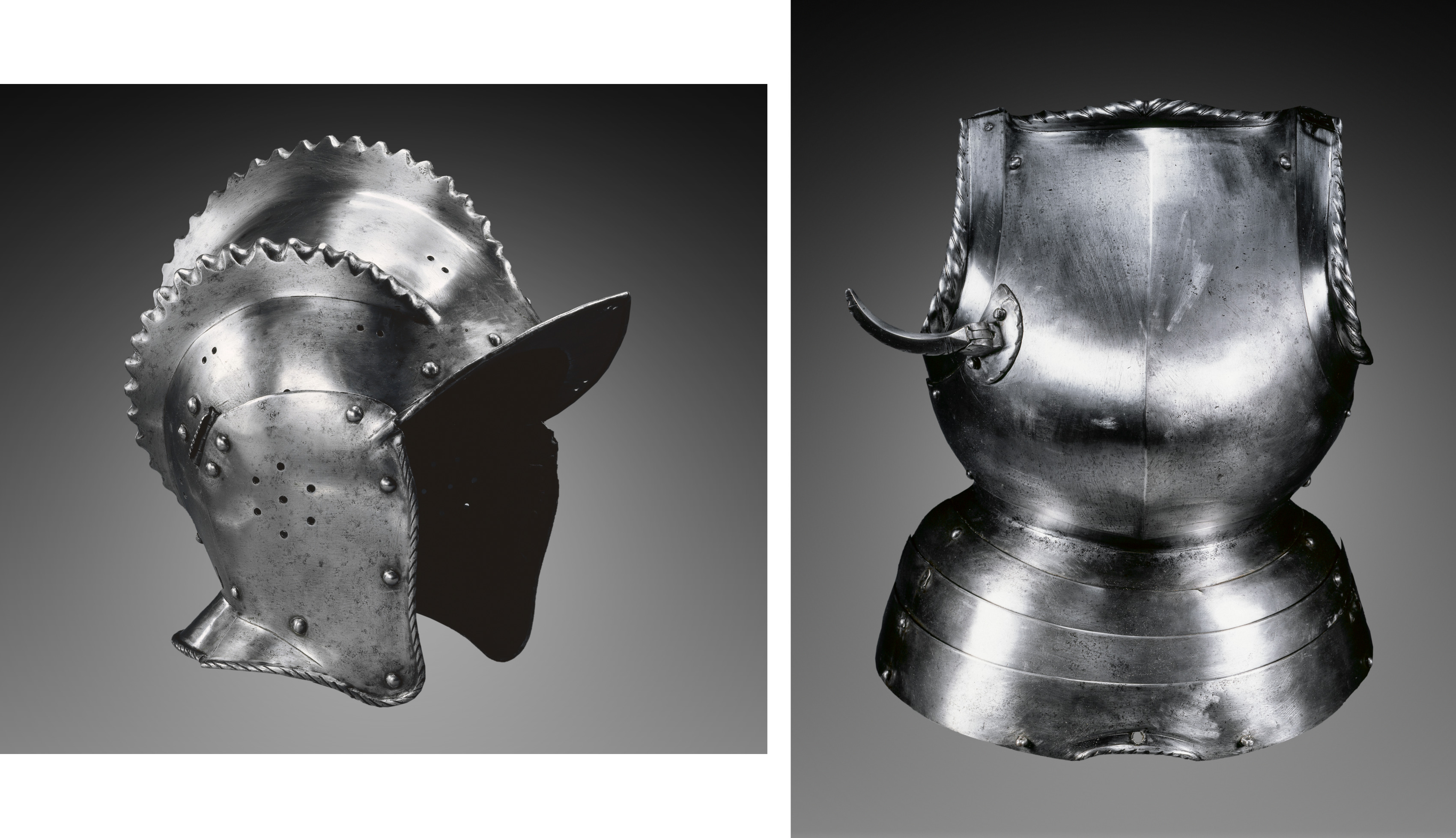
Deconstructing the Armor: A Zoey Fashion Lab Analysis of German Steel and Leather
At Zoey Fashion Lab, our role as Chief Fabric Deconstructionist is to dissect historical and technical artifacts, extracting their core DNA to inform avant-garde design. This analysis focuses on a set of elements from a German suit of armor, a structure traditionally defined by rigidity, protection, and martial purpose. By applying our signature deconstruction methodology—informed by the organic, mutable structure of a New DNA Strand—we reveal how steel, leather bands, and the interplay of these materials can be reimagined as the foundation for a radical, avant-garde collection. This is not a replication of the past, but a genetic mutation of it.
Material DNA: Steel and Leather in Dialogue
The German armor presents a tripartite material system: steel, leather bands, and a hybrid of steel and leather. In its original context, steel provided impenetrable defense, while leather served as a flexible, shock-absorbing connector and lining. Our deconstruction identifies these materials as distinct genetic sequences within a larger organism.
Steel is the rigid, structural gene. It represents strength, permanence, and the external shell. In the armor, it is hammered, polished, and articulated. For avant-garde fashion, steel is not merely a metal; it is a statement of architecture. We see it as a potential exoskeleton, a cage, or a sculptural frame that can be worn as a second skin. Its weight and coldness must be counterbalanced, not hidden. The leather bands are the connective tissue, the flexible joints that allow movement within the armor. They are the dynamic, organic gene—soft, pliable, and capable of wear and tear. This leather is not decorative; it is functional, binding the steel plates together and absorbing kinetic energy. Finally, the steel and leather hybrid—such as a steel-plated leather gauntlet or a leather-lined steel gorget—represents a fusion, a symbiotic relationship where the materials enhance each other. The leather softens the steel’s brutality; the steel gives the leather structure and permanence.
The New DNA Strand: From Rigid Armor to Fluid Garment
The New DNA Strand is our core design metaphor. In biology, DNA is a double helix that encodes information, mutates, and replicates. For this analysis, we treat the armor’s elements as a broken helix that we can re-spiral, re-sequence, and hybridize. The traditional armor’s logic—a closed, static system of protection—is replaced by an open, evolving system of expression.
Imagine a garment where steel plates are not fixed but strung along leather bands like beads on a DNA strand. The bands become the backbone, the steel plates the nucleotides. This creates a flexible, armor-like structure that can drape, twist, and cascade. The plates can be small, scale-like, or large, shield-like, depending on the desired genetic expression. The leather bands can be dyed, braided, or left raw to emphasize their organic origin. This approach allows the garment to move with the body, rather than constraining it, echoing the armor’s original need for articulation but in a purely aesthetic, avant-garde context.
Another possibility is the deconstruction of the steel plate itself. Instead of a solid, polished surface, we can fracture it—cutting, etching, or perforating patterns that resemble cellular structures or neural networks. These perforations can be laced with leather strips, creating a textile-metal hybrid that breathes, shifts, and reveals the skin beneath. This is not a suit of armor; it is a living, breathing exoskeleton that references the original’s strength while subverting its impenetrability.
Avant-Garde Applications: Silhouette, Texture, and Movement
In an avant-garde collection, these deconstructed armor elements can be applied in several radical ways:
1. The Exoskeletal Silhouette: A jacket or bodice constructed from overlapping steel plates, each connected by leather hinges. The silhouette would be exaggerated, angular, and robotic, yet the leather joints allow for a surprising range of motion. The weight of the steel creates a deliberate, grounded presence—a slow, deliberate walk that commands attention. The leather bands could be left long, trailing like whip-like tails, or gathered into a corset-like structure that cinches the waist.
2. The Armored Sheath: A dress that mimics the form of a cuirass (chest armor) but is made from a combination of hammered steel scales and leather panels. The scales are not fixed; they are riveted to leather strips, allowing them to shift and overlap as the wearer moves, creating a shimmering, scaly texture. The leather panels could be laser-cut with patterns inspired by Gothic tracery or organic veins, blending the historical with the futuristic.
3. The Leather-Laced Steel Cage: A skirt or cape constructed from a grid of steel rods, connected by thick leather straps. This is a direct reference to the armor’s structural logic but inverted—the steel becomes a cage, the leather becomes the binding. The garment can be worn open, like a cape, or closed, like a cage skirt. The transparency of the steel grid allows the body to be both protected and exposed, a commentary on vulnerability and strength.
4. The Hybrid Gauntlet: A glove or sleeve that extends from the hand to the elbow, combining steel plates on the back of the hand and forearm with leather on the palm and inner arm. This mimics the historical gauntlet but is exaggerated in scale. The steel can be polished to a mirror finish, creating a reflective surface that distorts the environment, while the leather is distressed and darkened, evoking a sense of age and use. This piece can be a standalone accessory or part of a larger ensemble.
Technical Considerations and Craft
Translating these concepts into wearable art requires advanced craftsmanship. The steel must be lightweight yet durable. We recommend using stainless steel or titanium for its corrosion resistance and ability to be formed into intricate shapes. The leather bands should be full-grain, vegetable-tanned leather, which will develop a patina over time, adding to the garment’s narrative. The attachment points—rivets, buckles, and lacing—must be both functional and aesthetic, serving as visible joints that emphasize the construction.
The deconstruction process itself can be a design feature. For example, exposing the raw edges of the steel plates, leaving the leather straps unstitched, or allowing the rivets to protrude as decorative elements. This raw, unfinished quality aligns with the avant-garde ethos of revealing the process and challenging traditional notions of perfection.
Conclusion: A New Genetic Code for Fashion
The German armor’s elements—steel, leather bands, and their hybrid—are not relics of a violent past but a rich genetic code for avant-garde design. By applying the New DNA Strand metaphor, we have deconstructed the armor’s rigid logic and re-sequenced it into a flexible, expressive system. The result is fashion that is both historical and futuristic, protective and revealing, heavy and fluid. This is not about wearing armor; it is about wearing a living history, a mutation of form and function that challenges the wearer and observer to reconsider the boundaries of body, material, and identity. At Zoey Fashion Lab, we do not simply deconstruct; we re-engineer the very fabric of possibility.