Deconstructing the Weft: The Carpet as a Blueprint for SS26 Avant-Garde Silhouette
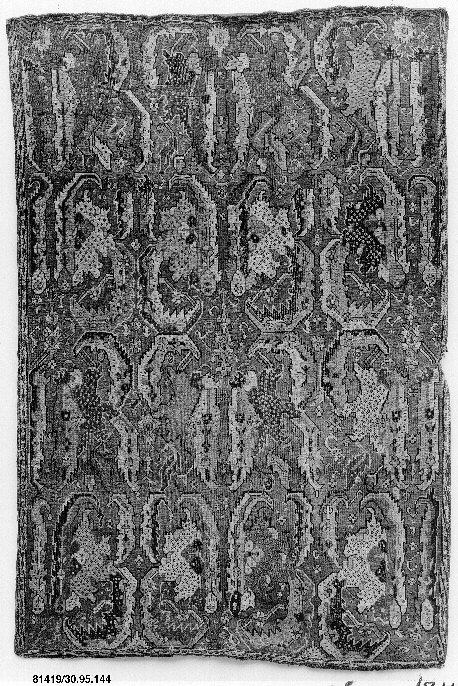
In the relentless pursuit of the next frontier in garment architecture, Zoey Fashion Laboratory turns its gaze to an artifact of profound, albeit unconventional, inspiration: the carpet with a geometricized saz-leaf design. This is not a mere textile analysis; it is a deconstructionist manifesto for the SS26 season. The carpet, with its origins rooted in the Global Frontier—a liminal space where Eastern ornamental traditions collide with Western industrial minimalism—offers a radical lexicon for futuristic silhouettes. Its materiality, a dense, symmetrically knotted pile of wool, becomes a metaphor for structural innovation. We are not interested in draping; we are interested in architectural weaving. The carpet ceases to be a floor covering. It becomes a wearable, volumetric system—a second skin of spatial defiance.
Geometricized Saz-Leaf: A Fractal Logic for Garment Construction
The saz-leaf, traditionally a sinuous, organic motif in Persian and Ottoman art, undergoes a radical transformation in this carpet. It is geometricized—its curves are broken into sharp, angular facets, its flowing stems reimagined as rigid, interlocking polygons. For SS26, this is not a pattern to be printed; it is a structural algorithm. The leaf’s geometry dictates the cut of the garment. We envision a modular exoskeleton where each leaf lobe becomes a separate, articulated panel. The warp and weft of the carpet’s construction translate into a woven lattice of carbon-fiber-infused wool, creating a shell that is both flexible and unforgiving. The symmetry of the knotting—a precise, mirrored repetition—informs a binary silhouette: the left and right sides of the garment become exact, yet inverted, reflections of each other, challenging the conventional asymmetry of deconstruction. This is not about chaos; it is about controlled fragmentation.
Wool as Armor: Materiality and the Future of Volume
Wool, in its traditional form, is soft, pliable, and grounded. In this carpet, it is dense, knotted, and monolithic. The symmetrically knotted pile creates a surface that is simultaneously tactile and impenetrable. For SS26, we exploit this paradox. The wool is not draped; it is compressed and molded into rigid, architectural forms. The pile becomes a textural armor, with each knot acting as a micro-structural node. The garment’s silhouette is not a line; it is a volume of resistance. We propose a cantilevered shoulder that extends outward like a saz-leaf’s tip, supported by an internal framework of recycled polymer ribs. The waist is not cinched; it is framed by a horizontal band of knotted wool that mimics the carpet’s border, creating a visual and structural break between torso and skirt. The result is a frozen dynamism—a garment that appears to be in mid-motion, arrested by the geometry of its own construction.
Symmetry as Subversion: Reimagining the Knotted Pile
The carpet’s symmetrical knotting is its most radical feature. In traditional couture, symmetry is often associated with classicism and restraint. Here, it becomes a tool for futuristic subversion. The knotted pile is not a flat surface; it is a three-dimensional topography. Each knot creates a small, elevated node, and when repeated in precise, mirrored rows, it forms a grid of tactile resistance. For SS26, we translate this into a woven corset that is not laced but knotted into place. The garment’s structure is self-supporting, eliminating the need for internal boning. The knots themselves become the fastenings—a living closure that adapts to the wearer’s movement. The symmetry is not static; it is a dialectical tension between the left and right halves of the body. The garment becomes a wearable mandala, a geometric meditation on the balance between chaos and order.
Structural Innovation: The Carpet as a Wearable Architecture
The carpet’s warp and wep are the load-bearing beams of this new garment architecture. We propose a woven exoskeleton where the warp runs vertically along the spine, providing structural integrity, while the weft wraps horizontally around the torso, creating a compressive shell. The knotted pile is not just a surface; it is a functional membrane that can be manipulated to create pockets, folds, and voids. The saz-leaf motifs are not decorative; they are structural cutouts that allow the garment to breathe and flex. The carpet’s border becomes a perimeter frame, defining the garment’s edge and preventing fraying. This is not a dress; it is a portable environment. The wearer becomes a living sculpture, moving through space as a piece of architectural history reimagined for the future.
The Global Frontier: A Synthesis of Tradition and Technology
The carpet’s origin on the Global Frontier—a conceptual space where Eastern and Western design philosophies converge—is crucial. This is not cultural appropriation; it is cultural synthesis. The geometricized saz-leaf represents a hybrid aesthetic, where organic forms are disciplined by industrial logic. For SS26, we apply this synthesis to material innovation. The wool is blended with biodegradable polymers and recycled carbon fiber, creating a composite that is both traditional and futuristic. The knotting technique is automated using robotic looms, but the design is guided by algorithmic patterns derived from the original carpet’s geometry. The result is a garment that is handcrafted in spirit but machine-perfected in execution. It is a tribute to the artisans of the past, but it belongs to the avant-garde of tomorrow.
Conclusion: The Carpet as a Manifesto for SS26
The carpet with a geometricized saz-leaf design is not a source of inspiration; it is a blueprint for rebellion. It challenges the softness of traditional couture, the flatness of printed textiles, and the passivity of draped silhouettes. For SS26, Zoey Fashion Laboratory proposes a new paradigm: garments that are woven, not sewn; knotted, not fastened; and volumetric, not fitted. The wool becomes armor, the saz-leaf becomes a structural algorithm, and the symmetry becomes a tool for subversion. This is not fashion; it is wearable architecture. It is a statement that the future of couture lies not in the fabric’s drape, but in its ability to stand alone. The carpet is no longer on the floor. It is on the body, and it is demanding to be seen.