Introduction: The Velvet Fragment as a Proto-Avant-Garde Artifact
At Zoey Fashion Lab, the role of the Chief Fabric Deconstructionist is to interrogate historical textiles not merely as artifacts of past craftsmanship, but as living, mutable DNA strands that can be re-spliced into contemporary avant-garde expression. The subject of this analysis—a velvet fragment originating from 18th-century Italy—presents a unique paradox. On one hand, it embodies the pinnacle of aristocratic luxury, a fabric of deep pile, rich dye, and meticulous weave. On the other, its very condition as a fragment, severed from its original garment, offers a gateway to radical reinterpretation. This report deconstructs the velvet fragment's technical, historical, and aesthetic DNA, proposing a framework for its transformation into a new, avant-garde design language for Zoey Fashion Lab.
Technical Deconstruction: The Velvet's Inherent Architecture
Weave and Pile Structure
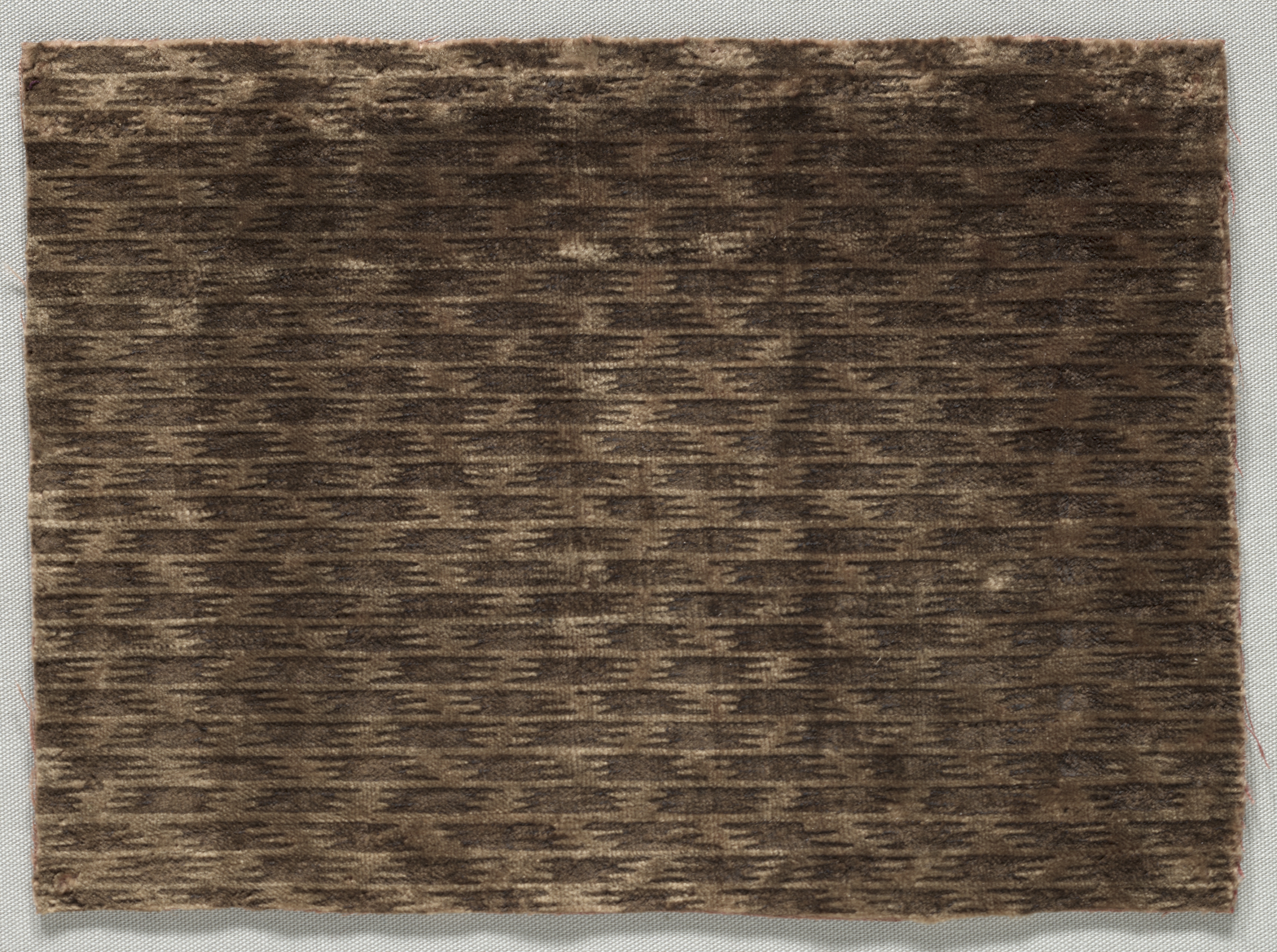
The fragment is constructed using a classic voided velvet technique, a method that creates a contrast between cut pile and flat ground weave. The ground is a tightly woven silk taffeta, while the pile—raised loops of silk that have been cut to create a dense, plush surface—forms the decorative pattern. This technique, perfected in 18th-century Italian workshops, allowed for intricate, almost painterly designs. The pile height is approximately 1.5 millimeters, a standard for the period, but its density—estimated at over 1,000 loops per square inch—creates a tactile depth that modern machine-made velvets rarely achieve. The structural integrity of the fragment is compromised, with areas of pile loss and ground-weave distortion, yet this very imperfection reveals the underlying warp and weft architecture, offering a raw, anatomical view of the textile's construction.
Color and Dye Analysis
The dominant color is a deep crimson lake, derived from the cochineal insect, a dye source that was highly prized and expensive in 18th-century Europe. The color has faded unevenly, creating a mottled effect that shifts from near-black in the pile to a softer, rusted hue in the exposed ground weave. This natural patina is not a flaw but a record of time, light, and chemical interaction. For an avant-garde application, this uneven coloration can be interpreted as a chromatic gradient—a deliberate, organic transition that challenges the flat, uniform color palettes of contemporary fashion. The fragment also retains traces of a metallic gold thread in its border, now tarnished to a dull bronze, adding a secondary textural and reflective layer.
Condition and Material Memory
The fragment measures approximately 12 by 18 inches, with frayed edges, small tears, and a general softening of the fabric's hand. These are not merely signs of decay; they are material memories of the garment's life—the friction of a sleeve against a chair, the pull of a hand, the weight of a candlelit room. In deconstructing this fragment, we must treat these imperfections as design elements. The frayed edges can be preserved as raw, unfinished borders, reminiscent of deconstructed couture. The tears can be stabilized and highlighted with transparent polymer stitching, creating a "fossilized" map of the fabric's history. The softened hand, a result of centuries of handling, can be replicated in modern blends by using a lower-twist silk filament, mimicking the tactile quality of aged velvet.
Historical Context: The 18th-Century Italian Velvet as a Cultural DNA Strand
Symbolism and Social Function
In 18th-century Italy, velvet was a fabric of power, worn by the aristocracy and clergy to signify wealth, status, and religious devotion. The deep crimson color, in particular, was associated with the blood of Christ and the robes of cardinals, imbuing the fabric with a sacred, almost liturgical weight. However, the fragment's current state—detached from its original garment, its owner, and its context—transforms it from a symbol of static hierarchy into a symbol of transience and decay. This duality is fertile ground for avant-garde design, which often seeks to subvert traditional power structures. By using this fragment, Zoey Fashion Lab can create a garment that simultaneously references and critiques historical opulence, presenting luxury as something fractured, vulnerable, and ephemeral.
Craftsmanship vs. Industrial Reproduction
The fragment was handwoven on a drawloom, a process that required a master weaver and an assistant to manipulate the pattern harness. Each color change, each pile cut, was a deliberate, labor-intensive act. This stands in stark contrast to modern velvet production, which is largely automated and uniform. For an avant-garde collection, this historical craftsmanship can be honored through deliberate imperfection. Rather than attempting to replicate the fragment's original perfection, we can use its irregularities—the slight misalignment of the pattern, the variation in pile density—as a template for a new, hand-finished textile. This approach aligns with the avant-garde's rejection of industrial perfection in favor of the handmade, the flawed, and the unique.
Avant-Garde Reinterpretation: The New DNA Strand
Deconstruction as Design Method
The reference to a "New DNA Strand" is critical. We are not restoring the fragment; we are re-sequencing it. The first step is to digitally scan the fragment at high resolution, capturing its pile density, color variations, and surface topography. This digital twin becomes the base code for a new textile. Using a 3D weaving or knitting process, we can create a fabric that mimics the fragment's structure but with deliberate mutations: the pile height can be exaggerated in some areas and absent in others, creating a topographical surface; the crimson can be paired with neon undertones or metallic threads to create a clash of historical and futuristic aesthetics; the frayed edges can be replicated as intentional, laser-cut fringing.
Garment Application: The Deconstructed Gown
The proposed garment is a deconstructed ball gown, a silhouette that references the formal wear of the 18th century but is radically altered. The bodice will be constructed from the original fragment, stabilized with a sheer, high-tensile mesh that allows the velvet to float away from the body, creating a sense of detachment. The skirt will be made from the new, mutated velvet, with sections of the fabric left unsewn, hanging in strips that mimic the fragment's frayed edges. The overall effect is one of a garment that is simultaneously ancient and futuristic, a relic that has been spliced with a new, unknown genetic code. The color palette will be monochromatic but layered: the original crimson at the bodice, transitioning to a deep, almost black burgundy in the skirt, with subtle, iridescent highlights that catch the light like the fragment's tarnished gold thread.
Philosophical Implications: The Fragment as a Statement
Finally, the use of this velvet fragment in an avant-garde context is a philosophical statement. It challenges the fashion industry's obsession with newness and perfection, instead embracing the beauty of decay and the value of historical memory. In a world of fast fashion and disposable textiles, a fragment that has survived 300 years is a testament to the enduring power of craft. By deconstructing and re-sequencing it, Zoey Fashion Lab is not destroying history but activating it, allowing it to speak in a new, disruptive language. This is the essence of the avant-garde: to take the familiar, the precious, and the sacred, and to render it strange, challenging, and alive.
Conclusion: A Blueprint for Future Deconstruction
The 18th-century Italian velvet fragment is not a dead artifact; it is a living DNA strand that contains the code for a new fashion paradigm. Through technical deconstruction, historical contextualization, and avant-garde reinterpretation, Zoey Fashion Lab can transform this fragment into a garment that is both a homage to the past and a radical break from it. The process outlined here—digital scanning, material mutation, and deliberate imperfection—serves as a blueprint for future deconstruction projects. In treating historical textiles as genetic material rather than static objects, we unlock the potential for a fashion that is deeply rooted in history yet fiercely contemporary. The velvet fragment, in its frayed and faded state, is not an end but a beginning.