Deconstructing the Sampler: A Silhouette Manifesto for SS26
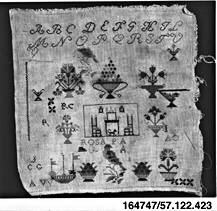
The Sampler, as conceived within the Zoey Fashion Laboratory, is not a mere textile swatch or a nostalgic reference to domestic craft. It is a global frontier artifact—a cartographic fragment of a future where garment construction is synonymous with sculptural inquiry. For SS26, this standalone study redefines the avant-garde lexicon by treating silk and cotton on canvas not as opposing forces, but as a dialectical materiality that yields unprecedented structural innovation. The Sampler becomes a living blueprint: a deconstructive map where every stitch, every raw edge, and every tension point is a deliberate act of architectural rebellion.
Material Alchemy: Silk, Cotton, and the Canvas Matrix
The choice of silk and cotton on canvas is a calculated provocation. Silk, with its iridescent fluidity and inherent luxury, is typically reserved for draping and softness. Cotton, conversely, offers breathability and a grounded tactility. When fused onto a canvas substrate—a material historically associated with painting, not fashion—they create a hybrid tensile strength. This is not a print or a weave; it is a composite skin. The canvas acts as an armature, allowing the silk to billow while the cotton anchors it with a raw, unpolished honesty. The result is a futuristic silhouette that oscillates between weight and weightlessness, between the painterly and the engineered. The Sampler’s surface becomes a textual palimpsest: overlapping layers of sheerness and opacity, where light catches the silk’s luster while the cotton’s matte finish grounds the form in a post-industrial realism.
Structural Innovation: The Deconstructive Silhouette
The Sampler’s silhouette is a deconstructive manifesto. It rejects the traditional bodice, skirt, or jacket in favor of a modular, asymmetrical architecture. The canvas base is cut into geometric panels—trapezoids, irregular hexagons, and acute triangles—that are stitched with visible, raw seams. These seams are not hidden; they are structural exoskeletons, reminiscent of exposed steel beams in a deconstructivist building. The silk is then applied in tension-driven drapes: some sections are left to cascade freely, while others are tightly bound to the canvas with cotton threads, creating negative spaces that reveal the wearer’s form in fragments. This is a futuristic silhouette that prioritizes dynamic movement over static form. The garment does not simply enclose the body; it articulates it, creating a visual dialogue between the rigid canvas and the fluid silk.
Global Frontier: The Sampler as Cartographic Code
The Global Frontier origin is not a geographical location but a conceptual territory. The Sampler embodies a nomadic, cross-cultural aesthetic that borrows from African mudcloth’s structural grid, Japanese boro’s mending philosophy, and European couture’s precision. The canvas’s raw edges evoke the unfinished maps of a world in constant flux. Each panel is a territorial fragment: the silk’s sheen suggests digital data flows, while the cotton’s texture recalls organic earth. The Sampler’s construction is a global hybridity—a rejection of singular heritage in favor of a syncretic future. This is not a costume; it is a worn cartography, where every seam is a border, every drape a river, and every tension point a mountain range. The wearer becomes a living atlas, navigating a world of deconstructed norms.
Avant-Garde Context: The Standalone Study
As a standalone avant-garde study, the Sampler operates outside the constraints of commercial viability. It is a laboratory specimen—a controlled experiment in material and form. The lack of a full collection context forces the observer to confront the garment as a pure idea. The Sampler is not meant to be worn in a conventional sense; it is a sculptural intervention on the body. Its futuristic silhouette is deliberately unwearable in the mass-market sense, yet it offers a provocative template for future design. The canvas’s rigidity means the garment stands away from the body, creating a second skin that is more architectural than anatomical. This is a deconstructive act: the Sampler dismantles the familiar hierarchy of fashion—fit, comfort, and function—in favor of conceptual rigor.
Structural Innovation: Tension, Release, and the Unfinished Edge
The Sampler’s structural innovation lies in its tension and release system. The canvas panels are stitched with a negative-seam technique, where the seam allowance is left exposed and frayed. These frayed edges are not flaws; they are intentional fractures that reveal the garment’s construction process. The silk is applied in asymmetric tension points: some sections are gathered with cotton threads into cocoon-like volumes, while others are stretched flat across the canvas to create diaphanous planes. This creates a visual rhythm of compression and expansion, echoing the body’s own movements. The Sampler’s silhouette is thus a dynamic equilibrium—a balance between the chaos of raw edges and the precision of geometric cuts. The canvas’s stiffness is offset by the silk’s fluidity, resulting in a futuristic silhouette that is simultaneously rigid and ethereal.
Conclusion: The Sampler as Future Archive
The Sampler for SS26 is a definitive statement on the future of avant-garde couture. It repositions the sampler from a domestic, decorative artifact to a global frontier tool for structural exploration. The fusion of silk and cotton on canvas is a material alchemy that yields a new kind of garment—one that is both painterly and architectural, both fluid and rigid. Its futuristic silhouette is a deconstructive map of tension, release, and unfinished edges, offering a provocative vision for SS26. This standalone study is not a product; it is a manifesto. It challenges the fashion industry to abandon nostalgia and embrace a structural innovation that treats the body as a site for sculptural inquiry. The Sampler is the future archive—a record of what fashion can become when it refuses to be merely wearable. It is a global frontier in a single garment, and its deconstructive logic will echo through the collections of tomorrow.