Deconstructing the Threads of Time: An Avant-Garde Analysis of a Moroccan Furnishing Textile
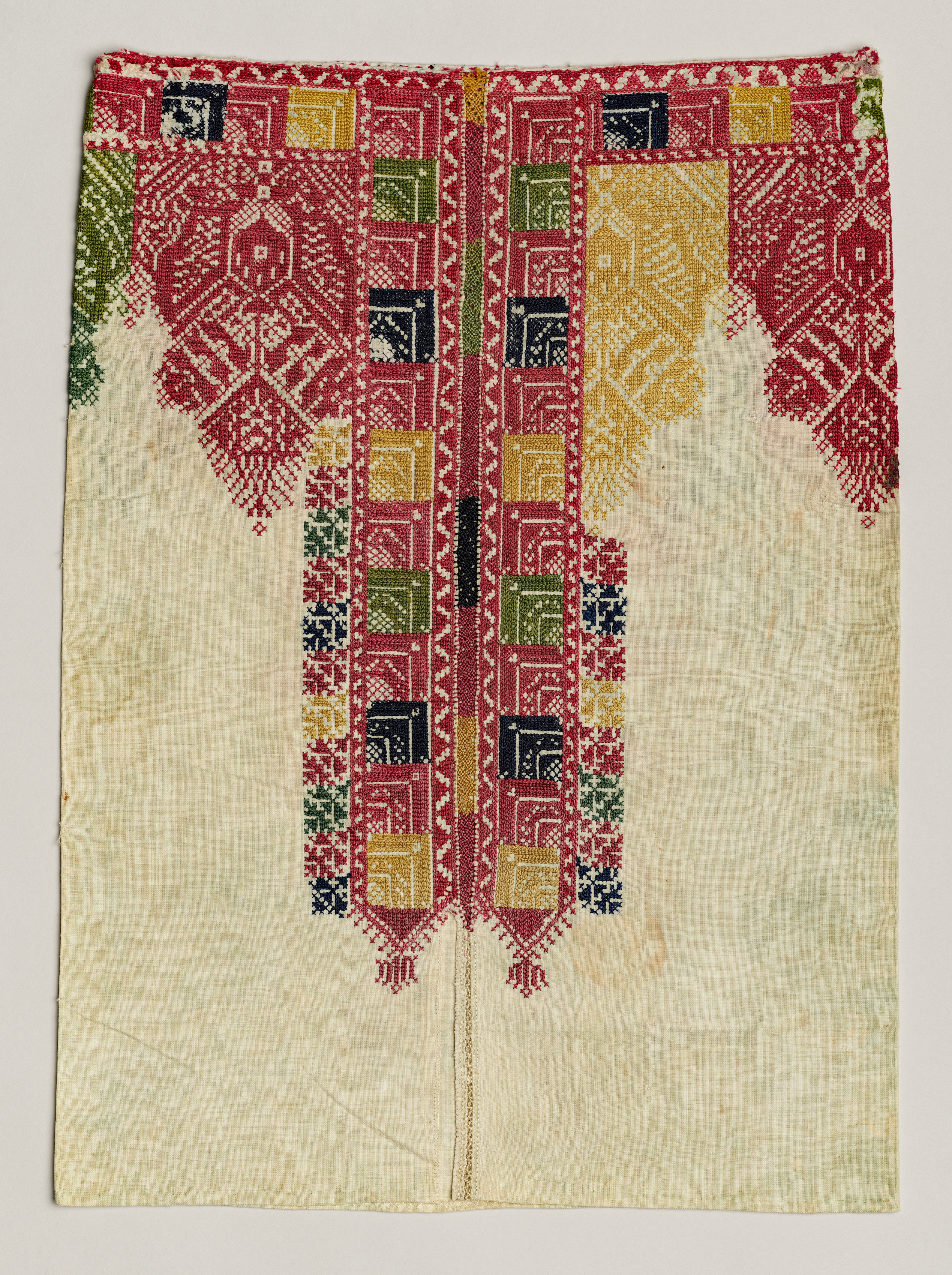
At Zoey Fashion Lab, our mandate is to dismantle the conventional, to probe the silent narratives woven into fabric, and to re-imagine them through an avant-garde lens. We turn our attention to a singular artifact: a furnishing textile originating from Meknès, Morocco, dating from the 16th to 17th centuries. This piece, a resonance of an era when the Mediterranean was a crucible of empires, is not merely a decorative object. It is a complex archive of cultural collision, technical mastery, and suppressed histories. Our analysis will deconstruct its material components—cotton, silk, and dye—and its geopolitical context to extract a radical blueprint for contemporary design.
Materiality as a Manifesto: Cotton, Silk, and the Alchemy of Dye
The textile’s foundation is a cotton ground, a material that speaks to the pragmatic, everyday world of North African domestic life. Cotton, robust and breathable, was a canvas for the extraordinary. This humble base is then punctuated by the luminous presence of silk threads, used for the intricate embroidery. Silk, a material of immense value and foreign origin—often traded from the East or produced in Andalusia—introduces a dialogue between the local and the global. The tension between the humble cotton and the luxurious silk is the first point of deconstruction. It is not a hierarchy but a dialectic: the mundane supports the precious, the local frames the imported. This juxtaposition is a precursor to the avant-garde’s love of incongruous materials.
The dye palette is the most eloquent witness to this era’s alchemy. We find indigo blues, derived from plants like woad or indigofera, a color that traversed continents from India to the Mediterranean. Madder reds, from the Rubia tinctorum root, evoke the earth of the Atlas Mountains. Saffron yellows and cochineal carmines—the latter a New World introduction via Spanish trade—complete the spectrum. These are not static colors; they are chemical records of trade routes, colonial extraction, and botanical knowledge. The dyeing process itself was a form of alchemy, transforming raw plant and insect matter into enduring symbols of status and spirituality. For the avant-garde designer, this palette is not a historical reference but a chemical provocation: how can we re-create these hues using sustainable, bio-engineered sources, challenging the petrochemical dominance of modern textiles?
The Embroiderer’s Hand: Geometry, Symbolism, and the Subversive Stitch
The embroidery of Meknès is a testament to a matriarchal lineage of craftsmanship. The patterns—geometric stars, stylized floral motifs, and interlacing arabesques—are not merely decorative. They are a visual language, encoding concepts of protection, fertility, and cosmic order. The “Meknès stitch”, a dense, raised satin stitch, creates a tactile topography that invites touch. This is a haptic archive, a surface that records the pressure of the embroiderer’s hand, the rhythm of her breath, the patience of hours.
From an avant-garde perspective, we must re-read this embroidery as a subversive act of inscription. In a patriarchal society, the female embroiderer used her needle to claim space, to inscribe her presence onto a domestic object. The patterns are not passive; they are a form of resistance to erasure. The density of the stitch—often covering the entire cotton ground—can be seen as a textual overwriting, a layering of meaning that challenges the viewer to look deeper. For Zoey Fashion Lab, this informs a design philosophy where the “stitch” is not a finishing detail but the primary narrative device. We envision a garment where embroidery is not applied but integral to the structure, where the thread becomes a structural element, creating a new kind of textile architecture—a “woven manifesto.”
Archive Resonance: 16th–17th Century Meknès as a Global Crossroads
The phrase “Archive Resonance” is key. This textile is not a fossil; it is a vibrating node in a network of historical forces. The 16th and 17th centuries were a period of intense cultural collision in Morocco. The Saadi and later Alaouite dynasties were engaged in complex relationships with the Ottoman Empire, sub-Saharan Africa, and Europe, particularly Spain and Portugal. Meknès, under Sultan Moulay Ismail, became a monumental capital, a city built by forced labor and trade. This textile, therefore, is not purely “Moroccan.” It is a hybrid artifact, born from a confluence of Andalusian refugees bringing their silk-weaving techniques, sub-Saharan gold and slave trade routes, and European demand for exotic “Oriental” goods.
The design motifs themselves reveal this hybridization. The eight-pointed star, common in Islamic art, may also echo Jewish or Christian symbolism from the Iberian Peninsula. The sinuous arabesques recall both Roman mosaics and Persian carpets. This is not a pure, isolated tradition but a creolized aesthetic, a visual language forged in the crucible of trade, war, and migration. For the avant-garde, this is a crucial lesson: authenticity is not purity but the creative capacity to absorb and transform. Our design response must be equally hybrid, mixing digital fabrication with handcraft, bio-materials with industrial textiles, and historical motifs with abstract, deconstructed forms.
Towards an Avant-Garde Re-Imagining: The Zoey Fashion Lab Protocol
Our deconstruction leads to a radical proposition: the textile is not a finished product but a process. We propose a collection that does not copy these motifs but instead uses them as a generative algorithm. Imagine a garment where the cotton base is replaced by a bio-fabricated cellulose matrix, grown in a lab, referencing the organic origins of the original material. The silk embroidery is re-imagined as 3D-printed, biodegradable filaments, creating a raised, tactile surface that mimics the density of the Meknès stitch. The dye palette is synthesized from microbial pigments, grown in a bioreactor, echoing the alchemical transformation of plants into color.
The collection would be titled “Resonant Archive: Meknès.” Each piece would be a deconstructed map of the original textile’s journey. A coat might have the cotton base laser-cut into a lattice, revealing a second layer of silk-like, 3D-printed embroidery that forms a geometric pattern. The colors would shift from indigo to madder to cochineal, not as fixed blocks but as gradients that mimic the fading and aging of the historical piece, acknowledging the passage of time as a design element. The garment’s structure would be asymmetrical, referencing the imperfect, hand-made quality of the original embroidery. The stitch becomes a zipper, a seam, a structural element—not an afterthought but the primary architectural feature.
Finally, we must consider the ethical resonance. The original textile was made in a context of colonialism, forced labor, and gender inequality. Our re-imagining must not romanticize this past. Instead, we use it to critique our present. The bio-fabricated materials challenge the exploitative labor practices of the fast-fashion industry. The digital embroidery techniques democratize a craft that was once the domain of a skilled few. The collection would be produced in partnership with Moroccan artisans, using a fair-trade model that honors their lineage while embracing new technology. This is not cultural appropriation but cultural collaboration, a dialogue between the archive and the avant-garde.
In conclusion, this Meknès furnishing textile is not a relic. It is a living document, a testament to the power of material culture to encode history, resistance, and beauty. For Zoey Fashion Lab, it is a blueprint for a future where fashion is not about consumption but about critical engagement with our shared past. Our deconstruction is not an end but a beginning—a call to weave new narratives from the threads of history, using the needle of the avant-garde to stitch a more equitable, imaginative world.