The Rapier Deconstructed: A Steel-Boned Lexicon for SS26 Avant-Garde Couture
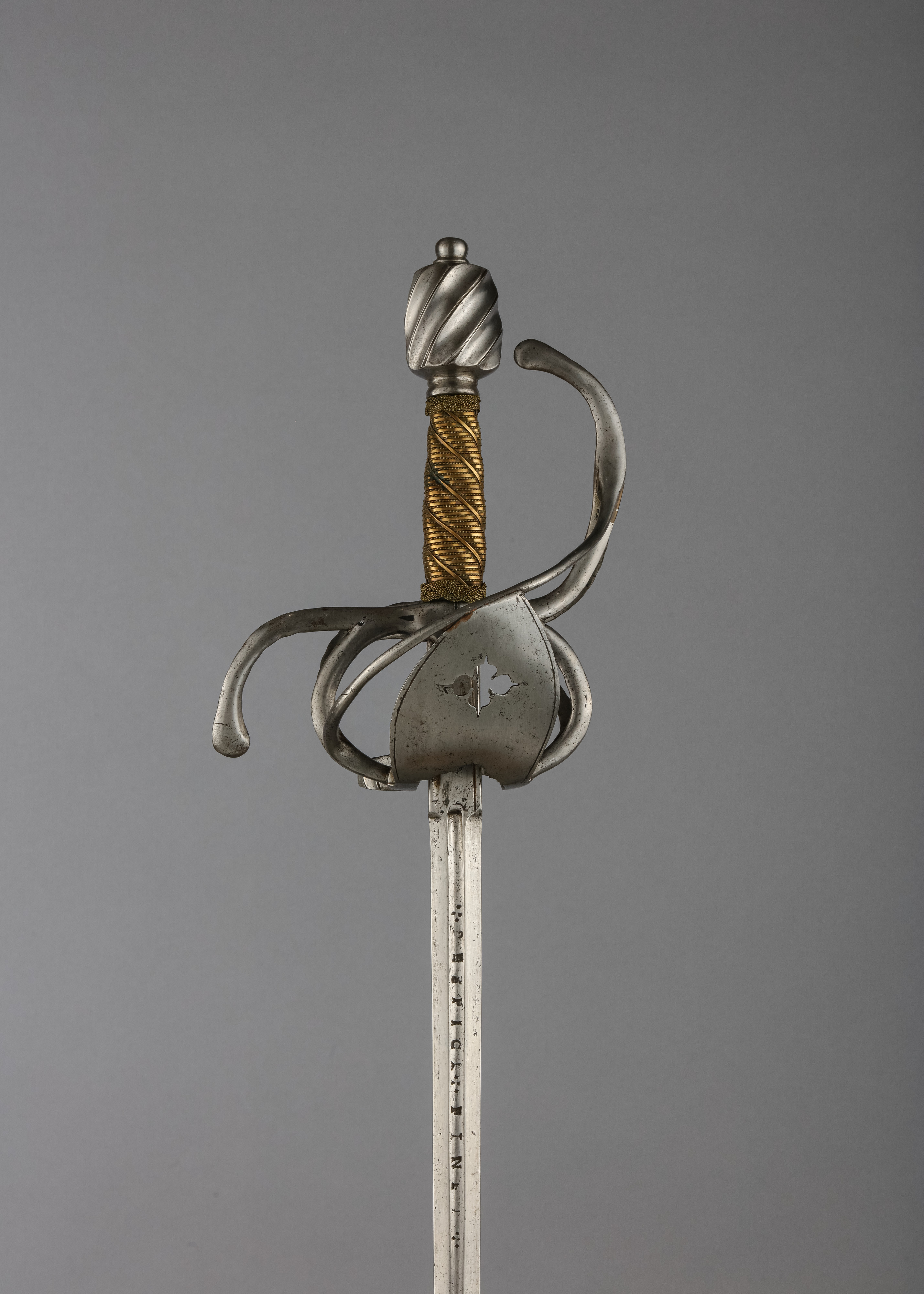
In the relentless pursuit of architectural transcendence, Zoey Fashion Laboratory turns its gaze to the rapier—a weapon of precision, elegance, and lethal grace. For SS26, this French-origin blade, forged in steel and brass, becomes more than a historical artifact; it is a generative matrix for futuristic silhouettes and structural innovation. This analysis deconstructs the rapier’s formal language—its slender profile, its hilt’s complex geometry, its balance of rigidity and fluidity—to propose a new lexicon for avant-garde couture. We are not merely referencing history; we are reprogramming its DNA into garments that defy gravity, challenge materiality, and redefine the body’s relationship with space.
I. The Blade as Silhouette: Linear Tension and Asymmetric Flow
The rapier’s defining characteristic is its tapered, double-edged blade, a study in extreme linearity. In SS26, this translates into garments that prioritize vertical elongation and asymmetric tension. Imagine a floor-length gown where the left side is a rigid, steel-boned column—a direct evocation of the blade’s straight edge—while the right side cascades into a fluid, organza drape, mimicking the blade’s subtle curve in motion. The structural core is a corset-like chassis of brass and steel wire, but instead of constricting, it extends the torso into a single, uninterrupted line from collarbone to hem. This is not a dress; it is a wearable incision in space.
The rapier’s fuller—the central groove designed to lighten the blade—inspires a negative-space technique. Cutouts along the spine or sleeves are not mere decoration; they are functional voids that reduce weight while maintaining structural integrity, like the blade’s own engineering. These “fuller cuts” are edged with polished brass piping, creating a metallic contour that catches light and emphasizes the garment’s skeletal architecture. The resulting silhouette is both severe and ethereal, a paradox of strength and vulnerability.
II. The Hilt as Armature: Articulated Joints and Modular Geometry
The rapier’s hilt—a complex assembly of quillons, pommel, and grip—is a masterclass in articulated design. For SS26, this becomes the foundation for modular couture. Garments are not sewn; they are assembled. A jacket’s shoulders are constructed from interlocking brass and steel plates, each joint pivoting like a quillon, allowing the wearer to reshape the silhouette in real-time. The pommel—the weighted end of the hilt—inspires counterbalance panels at the hem or cuffs, sewn with steel beads or brass chainmail, anchoring the garment’s movement and creating a dynamic equilibrium.
The grip, traditionally wrapped in leather or wire, is reimagined as textural contrast. A bodice might feature a spiral wrap of brass wire over a steel mesh base, creating a tactile, almost robotic epidermis. This is not decorative; it is functional tension, allowing the garment to be tightened or loosened at key stress points, much like a fencer adjusts their grip. The hilt’s guard—a sweeping, protective arc—becomes a collar or shoulder piece that extends beyond the body, a metal aura that challenges the traditional boundary between garment and environment.
III. Material Alchemy: Steel and Brass as Second Skin
The rapier’s materiality—steel for rigidity, brass for accent—is not merely referenced but transubstantiated. Steel is not cold; it is structural poetry. For SS26, we employ laser-cut steel mesh that drapes like liquid metal, its rigidity softened by micro-hinges at every intersection. This allows for flexible armor that moves with the body while retaining the blade’s uncompromising line. Brass, traditionally an alloy of copper and zinc, is used in oxidized finishes—deep patinas of green and bronze—to evoke the rapier’s age and temporal depth. These metals are not overlays; they are woven into the garment’s warp and weft, creating a hybrid fabric that is half textile, half sculpture.
Consider a steel-boned corset with brass rivets at every seam, but the boning is exposed—a deliberate deconstruction of the rapier’s internal structure. The garment’s interior becomes its exterior, a celebration of mechanical honesty. For softer elements, we use liquid steel paint on silk organza, creating a sheen that mimics polished metal without weight. This is illusion as structure, a nod to the rapier’s deceptive lightness.
IV. The Fencer’s Physics: Motion, Balance, and the Lunge
The rapier is a weapon of finesse, not force. Its use—the lunge, the parry, the riposte—informs the garment’s kinetic architecture. SS26 pieces are designed for dynamic poses, not static displays. A lunge-inspired jumpsuit features a single, elongated leg that trails behind, anchored by a brass-weighted hem, while the other leg is cropped high, revealing a steel-boned boot. The torso is twisted, with seams spiraling from left hip to right shoulder, mimicking the fencer’s rotational torque. This is not a costume; it is a performance apparatus.
The parry—a defensive motion—inspires detachable shields of steel mesh that can be worn as sleeves or capes, their edges wired with brass to maintain shape. The riposte—a counter-attack—is embodied in sharp, angular darts that jut from the waist or shoulder, like blades emerging from the body. Every garment has a center of gravity calculated to shift with movement, challenging the wearer to adapt their posture—a dialogue between human and architecture.
V. Deconstruction as Liberation: The Unfinished Edge
Avant-garde couture thrives on deliberate incompleteness. The rapier’s unsharpened edge—a safety feature for practice—becomes a design principle. Seams are left raw, edges are unfinished brass, and hems are cut at angles that suggest a blade mid-swing. This is not sloppiness; it is temporal honesty, a refusal to pretend the garment is anything but a work in progress. The steel’s patina is allowed to develop organically, with rust spots intentionally introduced through chemical treatment, creating a living surface that evolves with wear.
The pommel’s weight is echoed in asymmetric hemlines that drag on one side, a deliberate imbalance that forces the wearer to counteract—a physical metaphor for the fencer’s constant adjustment. This is structural vulnerability as strength, a core tenet of deconstructive aesthetics. The garment is not a finished object; it is a proposition, an invitation to explore the boundary between protection and exposure.
VI. Conclusion: The Rapier as a Futuristic Archetype
For SS26, the rapier is not a nostalgic reference but a blueprint for the future. Its steel and brass become structural verbs, its silhouette a grammar of tension and release. Zoey Fashion Laboratory’s collection will not merely dress the body; it will redefine its spatial presence, turning the wearer into a living blade—precise, elegant, and dangerous. This is armor for the modern psyche, a testament to the enduring power of material innovation. The rapier, deconstructed, is reborn as a wearable manifesto for a new era of fashion.