Deconstructing the Velvet Fragment: A 16th-Century Italian DNA Strand for Avant-Garde Fashion
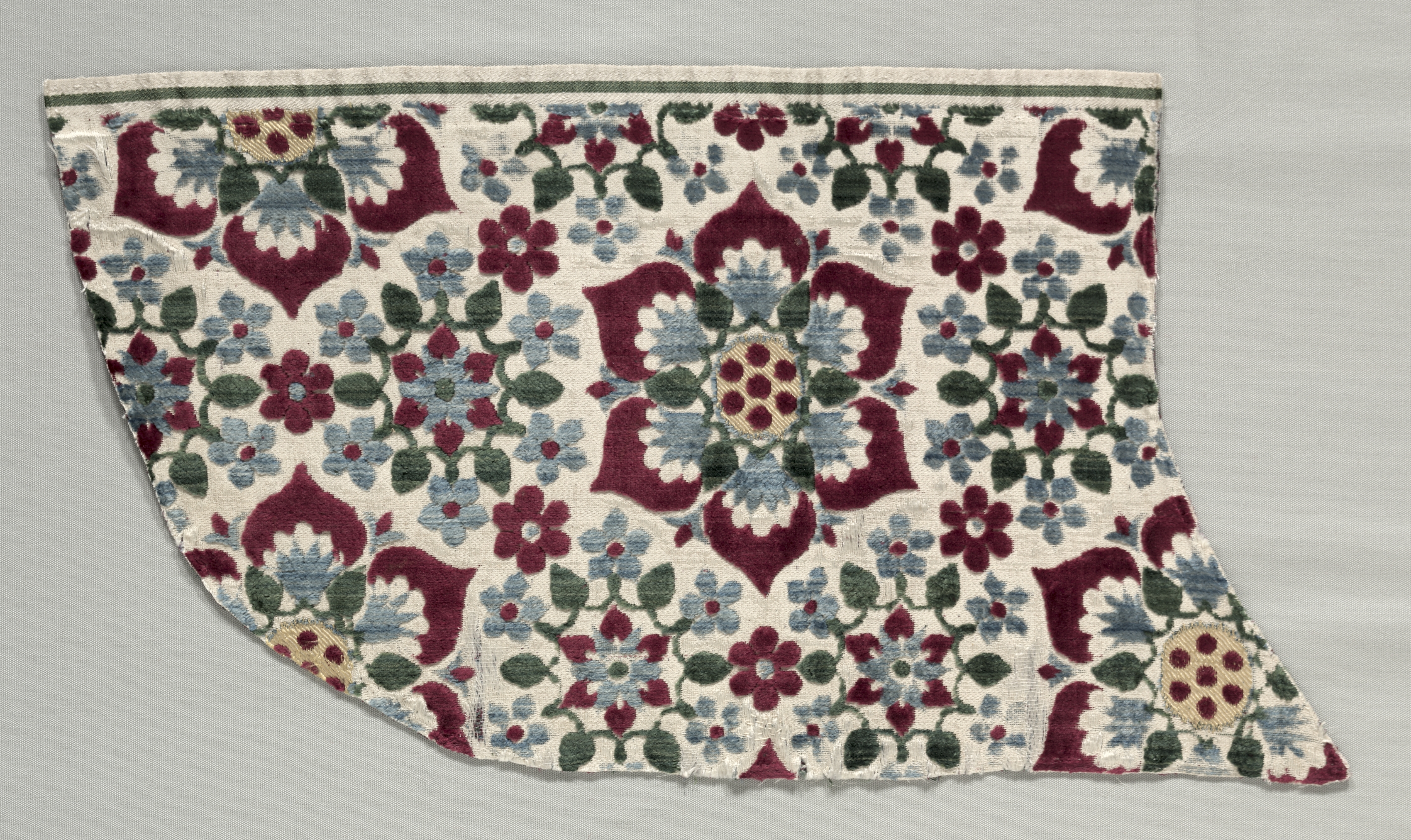
As Chief Fabric Deconstructionist for Zoey Fashion Lab, my role is to excavate the latent potential within historical textiles, transforming them from static artifacts into dynamic, generative sources for avant-garde design. The subject of this analysis—a 16th-century velvet fragment originating from the textile powerhouses of Padua and Venice—presents a particularly rich case. This is not merely a piece of cloth; it is a New DNA Strand, a genetic code for radical, contemporary expression. By dissecting its technical composition—cut, uncut, voided, and brocaded velvet in silk—we can extract principles that defy historical nostalgia and instead fuel a future-oriented, disruptive aesthetic.
Technical Deconstruction: The Four Velvet Languages
The fragment’s power lies in its polyphonic construction. Velvet, at its core, is a weave of two distinct layers: a ground warp and weft, and a pile warp that creates the plush surface. The 16th-century Italian weavers mastered a sophisticated vocabulary within this structure, and each technique speaks a different design language.
Cut Velvet is the most familiar—the pile loops are sheared, creating a dense, reflective, and almost liquid surface. In avant-garde terms, this is the primary texture, a field of pure sensation. Its light absorption and reflection create a mutable, almost photographic surface that can be manipulated through folding, draping, or laser etching. For Zoey Fashion Lab, cut velvet serves as the base canvas, a deep, absorbent ground that can be both a void and a presence.
Uncut Velvet, or ciselé, retains the loops, producing a matte, granular, and slightly irregular texture. This is the tactile dissonance—a deliberate disruption of the cut velvet’s smoothness. In a contemporary context, uncut loops can be engineered to create three-dimensional, almost sculptural surfaces. They act as negative space within the fabric’s own architecture, forming a subtle topography that catches light differently. For an avant-garde silhouette, uncut velvet can be used to create raised, non-functional patterns that mimic organic growth, such as lichen or coral, or to form a soft, protective armor.
Voided Velvet is the most radical technique for our purposes. Here, the pile is omitted in specific areas, revealing the ground weave—often a contrasting silk satin or twill. This creates a deliberate absence, a void within the plush field. In the 16th century, this was used for intricate, often religious, patterns. For Zoey, the void is not a flaw but a critical element. It represents the deconstruction of surface, a window into the fabric’s internal structure. We can reimagine voided velvet as a digital glitch—a deliberate, pixelated erasure that breaks the uniform surface. This can be achieved through laser cutting or chemical etching, creating negative spaces that reveal the body or a secondary, contrasting layer beneath.
Brocaded Velvet introduces a third dimension: the insertion of supplementary weft threads—often metallic gold or silver, or colored silks—to create intricate, raised patterns. This is the ornamental intrusion. In the 16th century, brocading was used for heraldic motifs and floral arabesques. For an avant-garde interpretation, we treat brocading as algorithmic embroidery. The metallic threads can be replaced with conductive fibers, fiber optics, or rigid, sculptural elements like thin metal strips or recycled plastic. The pattern becomes a functional circuit or a structural exoskeleton, transforming the velvet from a soft textile into a hybrid material—part fabric, part machine.
From Historical Pattern to Avant-Garde Code
The 16th-century Italian velvet fragment is not a pattern to be copied; it is a system of relationships to be decoded. The weavers operated within a strict set of rules—loom constraints, material properties, and cultural symbolism. Our task is to break those rules, to extract the underlying logic and re-apply it in a new, disruptive context.
The New DNA Strand metaphor is critical. The fragment’s technical DNA—cut, uncut, voided, brocaded—is a sequence of instructions. For Zoey Fashion Lab, we can mutate this sequence:
- Replace the silk ground with a high-tech, sustainable base—recycled nylon, biodegradable polyester, or a bio-fabricated cellulose membrane.
- Reinterpret the pile not as soft yarn but as 3D-printed, flexible filaments that can be programmed to change shape or color with temperature or light.
- Transform the void into a literal window: a laser-cut aperture that reveals a second, kinetic layer of fabric, or a digital screen embedded within the garment.
- Repurpose the brocading as a network of conductive threads that power LEDs, sensors, or haptic feedback modules, turning the garment into an interactive, wearable technology.
The historical pattern—a pomegranate, a thistle, a geometric lattice—is not sacred. It is a starting point for distortion. We can use generative AI to analyze the fragment’s pattern and then produce infinite, non-repeating variations. The resulting design is not a reproduction but a digital mutation—a velvet that has evolved beyond its original form.
Avant-Garde Silhouette and Materiality
The avant-garde style demands a departure from the body’s natural form. The velvet fragment’s inherent weight, drape, and reflectivity are assets here. Instead of a fluid, clinging garment, we propose a structural, architectural approach:
- Exaggerated Volume: Use the cut velvet’s density to create massive, sculptural sleeves or a rigid, bell-shaped skirt. The pile can be brushed in opposing directions to create a moiré effect that shifts with movement.
- Layered Transparency: Combine voided velvet with sheer, high-gauge mesh. The voids become portals through which the body or a contrasting color is glimpsed, creating a sense of fragmented visibility.
- Asymmetry and Deconstruction: Deliberately cut and reassemble the velvet fragment, exposing the raw edges. The uncut loops can be left as a fringe, while the brocaded sections are detached and re-applied as floating, metallic appendages. This creates a garment that appears to be in the process of unraveling—a deliberate, controlled decay.
- Hybrid Materiality: Bond the velvet to a rigid substrate like carbon fiber or a flexible, 3D-printed lattice. The soft pile becomes a skin over a skeleton, allowing for sharp, angular forms that defy the fabric’s traditional fluidity.
Conclusion: The Fragment as a Generative Source
The 16th-century velvet fragment from Padua and Venice is not a relic to be preserved in a museum case. For Zoey Fashion Lab, it is a living code—a New DNA Strand that can be edited, recombined, and expressed in radical new forms. By deconstructing its technical languages—cut, uncut, voided, brocaded—we extract principles of texture, absence, and ornament that are timeless. We then apply these principles through the lens of avant-garde disruption: digital mutation, sustainable innovation, and architectural silhouette. The result is not a costume of the past, but a prototype for the future—a garment that wears its history as a scar, a mutation, and a source of endless, generative power. This is the core of our work at Zoey: to see the past not as a destination, but as a launchpad.