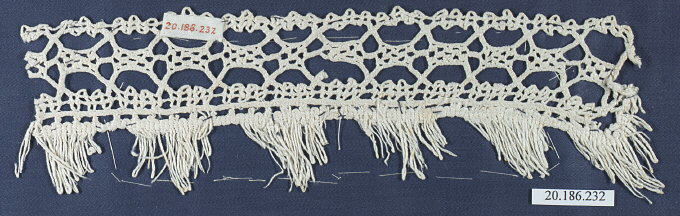
The Edge as Threshold: Deconstructing Bobbin Lace for the SS26 Frontier
In the lexicon of avant-garde couture, the edge is seldom a terminus; it is a site of transformation, a liminal space where fabric meets void and structure dissolves into atmosphere. For Zoey Fashion Laboratory’s SS26 collection, the concept of edging is reimagined not as a decorative afterthought but as a primary architectural principle. The chosen material—bobbin lace, a textile historically bound to domesticity and ornament—is subjected to a radical deconstruction, emerging as a medium for futuristic silhouettes that challenge the very ontology of garment construction. This analysis dissects how bobbin lace, through meticulous structural innovation, becomes a tool for redefining the boundary between body, space, and time.
Deconstructing Tradition: Bobbin Lace as Structural Membrane
Bobbin lace, with its intricate network of twisted and braided threads, has long been a testament to precision and patience. Yet, in the hands of Zoey’s laboratory, its historical connotations of fragility and femininity are weaponized. The material is re-engineered through a process of strategic abrasion, chemical stiffening, and laser-cut perforation, transforming it from a delicate web into a rigid, almost architectural membrane. This is not lace as trim; it is lace as exoskeleton. The traditional floral motifs are abstracted into geometric, fractal patterns, echoing the digital and the organic simultaneously. The edge of each lace panel is no longer a scalloped border but a sharp, asymmetrical boundary—a threshold that both contains and exposes the body. This recontextualization challenges the viewer to perceive lace not as a soft, secondary layer but as a primary structural element, capable of supporting volume, tension, and even kinetic movement.
Futuristic Silhouettes: The Edge as Architectural Frame
The SS26 silhouettes are defined by what Zoey terms “negative-space architecture.” Bobbin lace is cut and layered to create garments that appear to float, suspended by invisible tension. The edge becomes a structural frame, delineating voids where the body is partially obscured, partially revealed. Consider a gown where the bodice is a single, continuous sheet of stiffened lace, its lower edge jagged and asymmetrical, tracing a diagonal line from the waist to the hip. The skirt, conversely, is composed of multiple lace panels, each with a distinct, frayed edge, creating a cascading effect that mimics digital pixelation. The shoulder line is a key site of innovation: lace is molded into sharp, wing-like protrusions that extend beyond the natural frame, their edges laser-cut into micro-serrated teeth. This creates a silhouette that is both predatory and ethereal, a hybrid of armor and gossamer. The hemline is similarly subverted; instead of a clean finish, the lace is allowed to unravel into long, filamentous threads, blurring the boundary between garment and environment. This deliberate fragmentation suggests a garment that is perpetually in a state of becoming, its edges dissolving into the air.
Material Alchemy: Bobbin Lace and the Digital Hand
The transformation of bobbin lace for SS26 is not merely visual but material. Zoey’s laboratory employs a hybrid process that marries traditional handcraft with digital fabrication. 3D-printed connectors, made from a translucent, bio-resin, are embedded within the lace structure at key stress points. These connectors serve as articulated joints, allowing the lace to flex and fold without losing its architectural integrity. The edges of these connectors are micro-textured to interlock with the lace’s threadwork, creating a seamless transition between organic and synthetic. Additionally, the lace is treated with a thermo-reactive coating that shifts opacity when exposed to body heat. At the edge of a sleeve or a neckline, this coating creates a gradient, the lace fading from opaque white to translucent, almost invisible, at the very extremity. This thermal gradient introduces a temporal dimension to the edge: it is not a fixed line but a fluctuating boundary that responds to the wearer’s physiology. The result is a garment that is alive, its edges breathing and shifting in real-time.
Structural Innovation: The Edge as a Site of Tension and Release
Perhaps the most radical innovation lies in how the edge is used to generate tension within the garment’s structure. Traditional couture relies on seams and darts to create shape. Zoey, however, uses the edge itself as a tensioning device. Bobbin lace panels are cut with deliberately irregular, non-linear edges and then stretched across the body using internal, invisible corsetry made of carbon-fiber filaments. The lace’s own tensile strength is exploited: the edge, when pulled taut, creates a web of diagonal folds and pleats that contour the body without a single stitch. This technique, which Zoey calls “edge-tension draping,” produces silhouettes that are simultaneously rigid and fluid. A jacket, for example, might have its front panel anchored at the shoulder and hip, with the lace edge pulled outward to form a dramatic, wing-like flare. The release of this tension, achieved through a hidden magnetic clasp, allows the garment to collapse into a flat, almost two-dimensional form—a commentary on the duality of presence and absence. The edge, therefore, is not merely a boundary but an active participant in the garment’s kinetic life.
Context and Conclusion: The Edge as a Global Frontier
The global frontier of SS26 is not a geographical location but a conceptual space—the zone of the edge. Zoey Fashion Laboratory positions bobbin lace as a metaphor for this frontier: a material that is both ancient and futuristic, delicate and formidable. The collection rejects the notion of the edge as a finish line, instead embracing it as a starting point for new forms of expression. In a fashion landscape increasingly dominated by digital simulation and synthetic materials, this return to a handcrafted textile, reimagined through radical innovation, is a powerful statement. The edge becomes a site of resistance against the homogenization of fashion, a place where the handmade and the high-tech coalesce. For the avant-garde consumer, this is not merely clothing; it is a manifesto. The bobbin lace edge, frayed, stiffened, and illuminated, is a declaration that the future of couture lies not in seamless perfection but in the deliberate, poetic imperfection of the boundary. As the SS26 collection unfolds, the edge will be the threshold through which we glimpse a new paradigm of garment architecture—one where every line is a question, and every thread is a possibility.