Technical Deconstruction: Je T'aime (No. 632)
The foundation of Je T'aime (No. 632) is its specified material: silk crepe in a plain weave. This is a deliberate and sophisticated choice. Silk crepe, characterized by its finely twisted yarns, provides a matte, pebbled texture with a sublime, dry hand-feel. It possesses a dignified drape that is fluid without being clingy, a crucial canvas for avant-garde expression that relies on form and movement. The plain weave structure—the most fundamental interlacing of warp and weft—is a masterstroke of contradiction. It provides structural integrity and a subtle, uniform texture, serving as a quiet, stable ground for the visual and conceptual complexity imposed upon it. This is not a fabric chosen for overt luxury, but for its architectural potential and its ability to hold both print and shape with intellectual rigor.
The Print as Genetic Code: Deciphering "New DNA Strand"
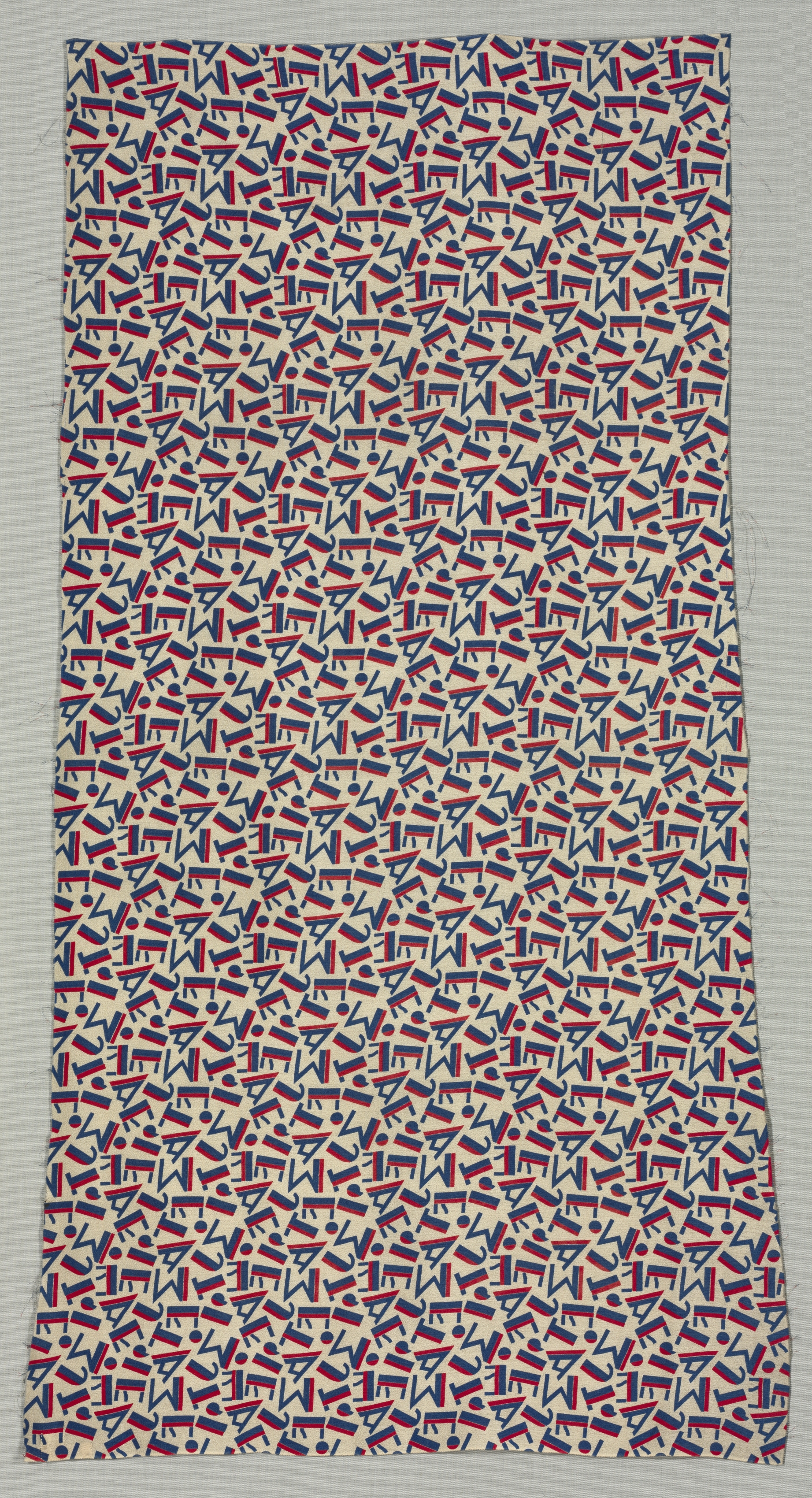
The core referential directive—New DNA Strand—is the conceptual heartbeat of this piece. The technical notation "roller printed" is key here. Roller printing, a method allowing for continuous, precise, and repeatable patterns, is ironically employed to depict the very blueprint of life, which is itself a repetitive yet infinitely variable code. We must analyze the print not as a floral or geometric motif, but as a data visualization.
We envision the print on the silk crepe as a representation of a nucleotide sequence. The "strand" likely manifests as a helical or linear arrangement of abstracted, symbolic forms. These could be rendered in a stark, scientific color palette: deep indigos, hematite reds, and sterile teals against the silk's natural field, or perhaps in monochromatic shades to emphasize form over color. The repeat of the pattern is critical—it should feel both systematic and organic, echoing the double helix's perfect yet unique structure. The roller print technique ensures this repeat is flawless, creating a rhythm across the garment that mimics genetic sequencing. This is not a random artistic flourish; it is a deliberate, coded language applied to the fabric with mechanical precision, challenging the viewer to parse its meaning.
Avant-Garde Synthesis: From Concept to Form
The Avant-garde style directive, married to the New York origin, demands a translation that is both intellectually rigorous and disruptively elegant. New York's fashion ethos is a blend of downtown edge, architectural minimalism, and conceptual fearlessness. Je T'aime (No. 632) must embody this.
The garment's form likely deconstructs the traditional silhouette to reflect its deconstructed genetic theme. Imagine the DNA strand print not merely sitting on the surface, but informing the garment's construction. Seams could follow the helical path, creating twisted, asymmetrical panels. A sleeve might spiral around the arm. The drape of the silk crepe could be manipulated to suggest protein folding or cellular mitosis—fullness erupting from a sleek line, a controlled mutation in the silhouette.
The Contradiction of "Je T'aime"
The name itself, Je T'aime, introduces a profound and necessary emotional tension. It is a human, romantic, and deeply personal declaration superimposed on a fabric that references impersonal, fundamental science. This is the avant-garde dialectic at work. The piece becomes a meditation on the biology of emotion, the coded sequences that potentially underlie feeling. Does the "New DNA Strand" signify a genetic predisposition for love? Or does the cold, printed code contrast with the warm sentiment, questioning whether something as complex as love can be reduced to a pattern?
This contradiction must be felt in the wearing. The garment, for all its scientific reference, must have an intimacy conferred by the silk's touch and the name's whisper. It is armor and a second skin, data and poetry. The New York influence ensures this is not purely academic; it is wearable art with a sharp, contemporary attitude. The finish, the seam placement, the hardware (if any)—all would be executed with a precision that mirrors the print's exactitude.
Conclusion: A Garment as Specimen
Je T'aime (No. 632) stands as a formidable specimen in the Zoey Fashion Lab archive. It successfully synthesizes a technical fabric base (silks crepe in plain weave), an industrial printing technique (roller print), a dense scientific reference (New DNA Strand), and an evocative, contradictory nomenclature into a cohesive avant-garde statement rooted in a New York sensibility.
It moves beyond aesthetic novelty to propose fashion as a site of interdisciplinary inquiry. The fabric is no longer just a material; it is a membrane displaying the code of life. The print is not decoration; it is a diagram. The love declared in its name is not simple sentiment, but a complex phenomenon to be examined. This piece challenges the wearer and observer to engage with the very building blocks of identity and emotion, making it a profoundly relevant and intellectually charged work of modern fashion. It is, in essence, a prototype for a new mode of being—a garment that questions what we are made of, both literally and metaphorically.