Deconstructing the Portrait: Avant-Garde Silhouette Analysis for SS26
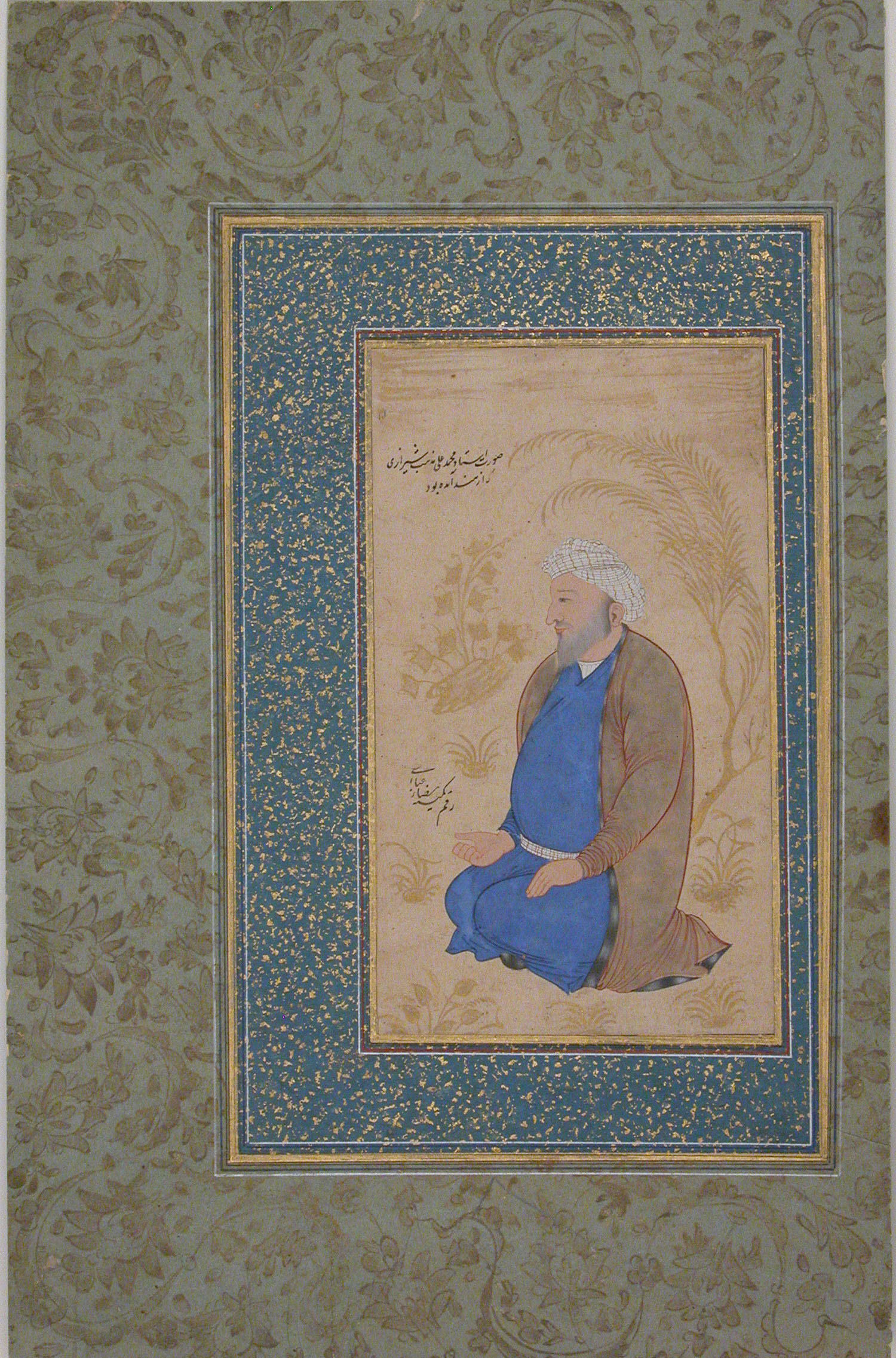
The intersection of historical portraiture and futuristic couture presents a radical opportunity for structural innovation. In Zoey Fashion Laboratory’s SS26 study, the Portrait of Ustad Muhammad Ali—rendered in opaque watercolor and gold on paper—serves as a deconstructive blueprint. This is not a mere homage to Mughal aesthetics; it is a deliberate subversion of classical representation, reimagined through the lens of avant-garde garment architecture. The portrait’s static, two-dimensional form becomes a dynamic catalyst for three-dimensional, kinetic silhouettes that challenge conventional draping and tailoring.
Material Alchemy: From Pigment to Structural Fabric
The medium itself—opaque watercolor and gold—dictates the material language of the collection. The opacity of the watercolor suggests a non-transparent, volumetric surface that refuses to reveal the body beneath, while the gold leaf introduces a reflective, almost digital quality. For SS26, this translates into a hybrid textile: a double-faced neoprene fused with micro-encapsulated metallic particles. The neoprene provides the structural rigidity needed for sharp, architectural folds, while the gold particles create a shifting, iridescent surface that mimics the portrait’s light-capturing quality. This fabric is not draped; it is sculpted and bonded using ultrasonic welding, eliminating traditional seams and creating a monolithic, armor-like silhouette that echoes the portrait’s static authority.
Silhouette as Narrative: The Deconstructed Turban and Flowing Robe
Ustad Muhammad Ali’s turban is not a headpiece but a volumetric counterbalance to the verticality of the figure. In our SS26 interpretation, this becomes a detachable, asymmetrical hood that extends into a cape, anchored by a single shoulder seam. The hood is constructed from a lightweight, laser-cut carbon fiber frame, covered in the gold-neoprene composite. It rises like a crest, defying gravity and transforming the wearer’s profile into a living sculpture. The robe’s traditional flow is reimagined as a series of interlocking, modular panels that can be reconfigured. These panels are fastened with magnetic closures embedded in the fabric, allowing for a dynamic shift from a closed, regal silhouette to an open, deconstructed form that reveals the inner structure—a direct nod to the portrait’s layered composition.
Structural Innovation: The Kinetic Spine and Floating Collar
The most radical departure lies in the garment’s internal architecture. The portrait’s rigid posture inspires a kinetic spine—a flexible, articulated exoskeleton made from 3D-printed titanium alloys. This spine runs along the back of the garment, connecting to a series of tension cables that control the drape of the fabric. When the wearer moves, the spine contracts or expands, altering the silhouette in real-time. This is a direct response to the static nature of the portrait; the garment becomes a living, breathing canvas. The collar, traditionally a simple framing element, is transformed into a floating, cantilevered structure that hovers around the neckline, supported by invisible carbon-fiber struts. It is a literal deconstruction of the portrait’s framing, suggesting that the subject is no longer contained by the canvas but liberated into space.
Color and Light: The Gold as a Temporal Agent
The gold in the portrait is not decorative; it is a temporal marker, a symbol of permanence and divinity. In the SS26 collection, gold is used as a functional surface that interacts with ambient light. The micro-encapsulated gold particles are programmed to shift hue based on body heat and movement, creating a chromatic dialogue between the wearer and the environment. This is achieved through a thermochromic coating applied to the neoprene base. The effect is a garment that appears to breathe, with gold tones deepening in areas of tension and fading in areas of repose. This dynamic color field mirrors the portrait’s original opacity, but introduces a futuristic, almost sentient quality to the textile.
Deconstructive Zeroboundary: The Absent Body and the Armor of Presence
In the portrait, the subject’s body is partially obscured by the robe, creating a zeroboundary between figure and ground. Our SS26 collection exploits this by designing garments that erase the body’s natural contours in favor of exaggerated, geometric forms. The shoulders are extended with angular, wing-like panels; the waist is cinched not by a belt but by an internal, adjustable corset made from memory-foam and carbon fiber. The result is a silhouette that is both alien and regal, a portrait of absence where the garment itself becomes the subject. The body is a mere scaffolding for the architectural expression of the fabric. This is avant-garde couture at its most radical: the garment does not dress the body; it redefines it as a purely structural entity.
Conclusion: The Future of Portrait Couture
Zoey Fashion Laboratory’s SS26 analysis of the Portrait of Ustad Muhammad Ali is not a retrospective study but a prescriptive manifesto for the future of fashion. By deconstructing the static, two-dimensional portrait into a dynamic, three-dimensional garment, we propose a new paradigm: wearable architecture that is both historical and futuristic. The use of opaque watercolor and gold is not a limitation but a liberation, inspiring materials that are structural, reactive, and sculptural. This collection challenges the very notion of silhouette, transforming the body into a canvas for temporal, kinetic, and architectural expression. In doing so, it redefines what it means to wear a portrait—not as a costume, but as a living, breathing work of art that exists in the space between past and future.